Illuminating Innovation: The Science Behind Photocatalytic Air Purifiers
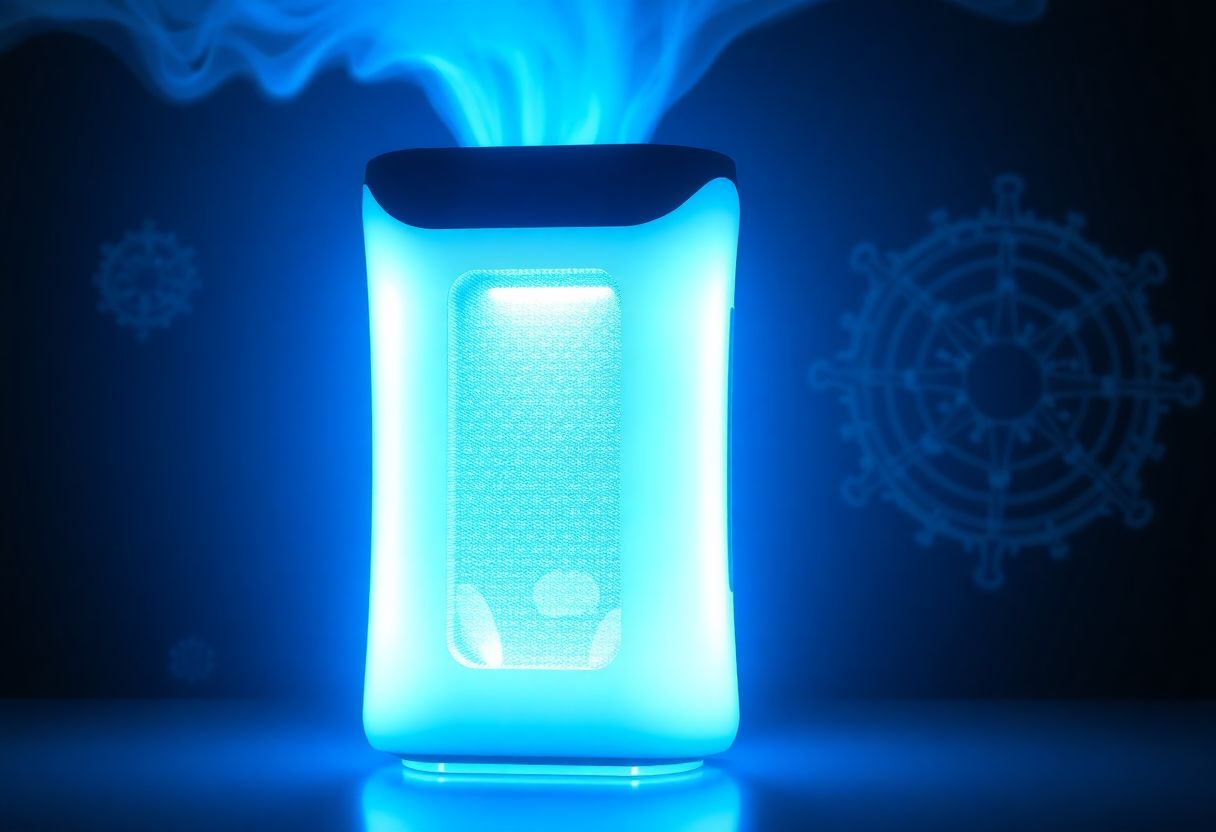
In our modern world, where indoor air quality has become a pressing concern, photocatalytic air purifiers emerge as a beacon of hope. These innovative devices harness the power of light to transform our living spaces into safer, cleaner environments. But how exactly do they work, and what makes them so effective? Let's embark on a fascinating journey through the world of photocatalysis and explore the intricate science that powers these remarkable air purifiers.
The Fundamentals of Photocatalysis
At the heart of photocatalytic air purifiers lies a process known as photocatalysis. This term might sound complex, but it's essentially a marriage of two simpler concepts: "photo," meaning light, and "catalysis," referring to the acceleration of a chemical reaction using a catalyst. In essence, photocatalysis is the process of using light energy to activate a catalyst, which then speeds up a chemical reaction.
To truly appreciate the genius of this technology, we need to understand the role of catalysts. A catalyst is a substance that increases the rate of a chemical reaction without being consumed in the process. It's like a molecular matchmaker, bringing reactants together and lowering the energy barrier needed for them to interact, all without getting involved in the final product.
In the realm of photocatalytic air purifiers, the most commonly used catalyst is titanium dioxide (TiO2). This remarkable compound has several properties that make it ideal for air purification:
- High efficiency in utilizing light energy
- Chemical stability
- Non-toxicity
- Abundance and cost-effectiveness
- Versatility in application
When exposed to ultraviolet (UV) light, titanium dioxide undergoes a transformation that sets the stage for its pollution-fighting capabilities.
The Photocatalytic Process: A Step-by-Step Breakdown
Let's delve deeper into the photocatalytic process and examine how it unfolds within an air purifier:
-
Light Activation: The process begins when UV light, typically in the UVA range (315-400 nm), shines on the titanium dioxide coating. This exposure causes the TiO2 to enter an excited state, where electrons are promoted from the valence band to the conduction band, creating electron-hole pairs.
-
Water Transformation: The excited electrons interact with water molecules (H2O) in the air. This interaction leads to the formation of superoxide anions (O2•-). Simultaneously, the positively charged holes react with water or hydroxide ions (OH-) to produce hydroxyl radicals (OH•).
-
Formation of Reactive Species: The superoxide anions and hydroxyl radicals are highly reactive oxygen species (ROS). These ROS are the workhorses of the photocatalytic process, capable of breaking down a wide range of pollutants.
-
Pollutant Destruction: As air flows over the photocatalytic surface, pollutant molecules come into contact with these reactive species. The ROS attack the chemical bonds of the pollutants, breaking them down into simpler, harmless substances.
-
End Products: The final products of this process are typically water vapor (H2O) and carbon dioxide (CO2), along with other harmless byproducts depending on the original pollutant.
This cycle continues as long as there is light activating the catalyst and air flowing over the photocatalytic surface, providing continuous air purification.
The Power of Hydroxyl Radicals
Among the reactive species produced in the photocatalytic process, hydroxyl radicals (OH•) deserve special attention. Often referred to as "nature's detergent," these molecules are incredibly effective at breaking down other compounds. In fact, hydroxyl radicals play a crucial role in cleaning the Earth's atmosphere naturally.
The hydroxyl radical's power lies in its high oxidation potential. With an oxidation potential of 2.8 volts, it's second only to fluorine in its oxidizing strength among common substances. This means it can react with and break down a vast array of pollutants, including volatile organic compounds (VOCs), bacteria, viruses, and even some odor-causing molecules.
In the context of photocatalytic air purifiers, the production of hydroxyl radicals essentially brings this natural atmospheric cleaning process indoors, amplifying it to create a more effective air purification system.
Ultraviolet Light: The Catalyst Activator
The role of ultraviolet light in photocatalytic air purifiers cannot be overstated. UV light, particularly UVA, provides the energy necessary to kickstart the photocatalytic reaction. But what makes UV light special?
Ultraviolet light occupies the portion of the electromagnetic spectrum between visible light and X-rays, with wavelengths ranging from 10 to 400 nanometers. It's further divided into three categories:
-
UVA (315-400 nm): This is the type most commonly used in photocatalytic air purifiers. It's the least energetic but safest form of UV light.
-
UVB (280-315 nm): More energetic than UVA, UVB is responsible for sunburns and is not typically used in air purifiers due to safety concerns.
-
UVC (100-280 nm): The most energetic and potentially harmful, UVC is sometimes used in air purifiers for its germicidal properties, but not for photocatalysis.
The energy of UVA light is just right for exciting the electrons in titanium dioxide without posing significant risks to human health. This makes it the ideal choice for use in household air purification devices.
Titanium Dioxide: The Superstar Catalyst
Titanium dioxide (TiO2) stands out as the preferred catalyst for photocatalytic air purifiers, and for good reason. Let's explore the properties that make it so effective:
-
Band Gap: TiO2 has a band gap of about 3.2 eV for the anatase phase, which corresponds well with the energy of UVA light. This means it can be effectively activated by readily available and relatively safe UV sources.
-
Surface Area: When applied as a nanoparticle coating, TiO2 provides an enormous surface area for reactions to occur. A single gram of nano-TiO2 can have a surface area of up to 50 square meters!
-
Stability: TiO2 is chemically stable and doesn't degrade easily, allowing for long-term use without frequent replacement.
-
Photocorrosion Resistance: Unlike some other semiconductors, TiO2 resists photocorrosion, maintaining its effectiveness over time.
-
Multiple Crystal Structures: TiO2 exists in several crystal structures, with anatase and rutile being the most common. Anatase is generally preferred for photocatalysis due to its higher photocatalytic activity.
These properties combine to make titanium dioxide an excellent photocatalyst, capable of efficiently converting light energy into chemical energy for air purification.
Types of Pollutants Targeted
Photocatalytic air purifiers are particularly effective against a wide range of indoor air pollutants. Let's examine some of the key contaminants these devices can tackle:
-
Volatile Organic Compounds (VOCs): These are gases emitted from various household products, including paints, cleaning supplies, and building materials. Common VOCs like formaldehyde, benzene, and toluene can be effectively broken down by photocatalysis.
-
Nitrogen Oxides (NOx): These pollutants, often from outdoor sources like vehicle exhaust, can be converted into less harmful substances through photocatalytic oxidation.
-
Sulfur Compounds: Odor-causing sulfur compounds, such as hydrogen sulfide, can be oxidized into odorless substances.
-
Bacteria and Viruses: The reactive oxygen species produced during photocatalysis can damage the cell walls of microorganisms, effectively neutralizing them.
-
Mold Spores: While photocatalysis can't remove existing mold growth, it can help reduce airborne mold spores, potentially inhibiting further mold growth.
-
Allergens: Some airborne allergens, particularly those of organic origin, can be broken down by the photocatalytic process.
-
Particulate Matter: While not directly affected by photocatalysis, many photocatalytic air purifiers incorporate additional filtration methods to capture particulate matter.
Advantages Over Traditional Filtration Methods
Photocatalytic air purifiers offer several advantages over traditional filtration methods:
-
Pollutant Destruction: Unlike traditional filters that simply trap pollutants, photocatalytic purifiers actually destroy them, converting them into harmless substances.
-
Continuous Operation: As long as the light source is active and air is flowing, the purification process continues without the need for frequent filter replacements.
-
Broad Spectrum Effectiveness: Photocatalysis can address a wide range of pollutants, including many that traditional filters struggle with, such as VOCs and odors.
-
Low Maintenance: With no filters to replace regularly, photocatalytic purifiers can be more convenient and potentially more cost-effective in the long run.
-
No Pollutant Accumulation: Since pollutants are destroyed rather than trapped, there's no risk of releasing accumulated contaminants back into the air.
Limitations and Considerations
While photocatalytic air purifiers offer impressive benefits, it's important to be aware of their limitations:
-
Ozone Production: Some photocatalytic reactions can produce small amounts of ozone as a byproduct. While manufacturers work to minimize this, it's a factor to consider, especially for individuals sensitive to ozone.
-
Incomplete Reactions: In some cases, the photocatalytic process might not completely break down all pollutants, potentially creating intermediate compounds.
-
Particulate Matter: Photocatalysis is most effective against gaseous pollutants and microorganisms. It's less effective against particulate matter, which is why many purifiers combine photocatalysis with traditional filtration.
-
Light Dependency: The purifier's effectiveness depends on the UV light source. If the light fails or degrades, the photocatalytic process will be compromised.
-
Catalyst Degradation: Over time, the effectiveness of the catalyst can decrease, requiring replacement of the photocatalytic component.
-
Energy Consumption: The need for continuous UV illumination can lead to higher energy consumption compared to some passive filtration methods.
Advancements and Future Directions
The field of photocatalytic air purification is constantly evolving, with researchers and engineers working to enhance its effectiveness and address its limitations. Some exciting areas of development include:
-
Visible Light Photocatalysts: Researchers are developing catalysts that can be activated by visible light, potentially eliminating the need for UV lamps and making the technology more energy-efficient.
-
Doped TiO2: By introducing small amounts of other elements (doping) into TiO2, scientists can modify its band gap, allowing it to be activated by a broader spectrum of light.
-
Nanostructured Catalysts: Advanced nanostructures, such as nanotubes and nanofibers, can provide even greater surface area for reactions, potentially increasing efficiency.
-
Hybrid Systems: Combining photocatalysis with other air cleaning technologies, such as plasma or advanced oxidation processes, could lead to more comprehensive air purification solutions.
-
Self-Cleaning Surfaces: The principles of photocatalysis are being applied to create self-cleaning surfaces for buildings and other structures, potentially reducing outdoor air pollution as well.
-
Quantum Dot Photocatalysts: These nanoscale semiconductor particles offer tunable optical properties and high quantum yields, potentially leading to more efficient photocatalytic systems.
Conclusion: A Bright Future for Clean Air
Photocatalytic air purifiers represent a fascinating convergence of chemistry, physics, and environmental science. By harnessing the power of light to transform harmful pollutants into harmless substances, these devices offer a unique and effective approach to improving indoor air quality.
As we continue to spend more time indoors, the importance of clean air in our living and working spaces cannot be overstated. Photocatalytic air purification technology, with its ability to continuously destroy a wide range of pollutants, is poised to play an increasingly important role in our quest for healthier indoor environments.
While not a panacea for all air quality issues, photocatalytic air purifiers, especially when combined with other air cleaning technologies and good ventilation practices, offer a powerful tool in our arsenal against indoor air pollution. As research in this field progresses, we can look forward to even more efficient, effective, and versatile air purification solutions.
The future of clean air is bright indeed, illuminated by the remarkable interplay of light, advanced materials, and human ingenuity embodied in photocatalytic air purifiers. As we move forward, these devices will undoubtedly continue to evolve, bringing us closer to the ideal of indoor air as fresh and clean as a mountain breeze, even in the heart of our bustling cities.