The Electrifying World of Electricity: How It Powers Our Modern Life
Electricity is the lifeblood of our modern world, powering everything from the smallest handheld devices to entire cities. But have you ever wondered how this invisible force actually works? Let's embark on an enlightening journey to unravel the mysteries of electricity and explore its profound impact on our daily lives.
The Fundamental Nature of Electricity
At its core, electricity is a form of energy resulting from the movement of electric charge. This charge is carried by subatomic particles called electrons, which are found orbiting the nuclei of atoms – the building blocks of all matter. To truly understand electricity, we must first delve into the basic structure of an atom.
The Atomic Foundation
Atoms consist of three primary particles:
- Protons: Positively charged particles located in the nucleus
- Neutrons: Neutral particles also found in the nucleus
- Electrons: Negatively charged particles that orbit the nucleus in shells
In a stable atom, the number of protons equals the number of electrons, resulting in a neutral charge. However, under certain conditions, electrons can be induced to move from one atom to another. This movement of electrons is what we fundamentally refer to as electricity.
Static vs. Current: The Two Faces of Electricity
Electricity manifests itself in two primary forms: static electricity and current electricity. Each has unique characteristics and applications in our world.
Static Electricity: The Stationary Charge
Static electricity occurs when there's an imbalance of electric charges within or on the surface of a material. Unlike its dynamic counterpart, static electricity doesn't flow continuously but rather builds up and discharges rapidly. The shock you feel when touching a doorknob after walking across a carpet is a perfect example of static electricity in action.
Current Electricity: The Flowing Force
Current electricity, on the other hand, is the continuous flow of electric charges through a conductor, such as a wire. This is the form of electricity we harness to power our homes, offices, and myriad devices. Understanding how current electricity works is crucial to grasping the fundamentals of our electrified world.
The Circuit: Electricity's Playground
To comprehend how current electricity functions, let's examine a simple circuit. A basic circuit consists of four key components:
- Power Source: This could be a battery or a wall outlet, providing the electromotive force (voltage) that propels electrons through the circuit.
- Conductor: Usually a metal wire, offering a path for electrons to flow.
- Load: The device that utilizes the electrical energy, such as a light bulb or motor.
- Switch: A control mechanism that opens or closes the circuit, regulating the flow of electricity.
When you close the switch in a circuit, an fascinating sequence of events unfolds. The power source generates an electric field within the conductor. This field exerts a force on the free electrons in the metal atoms of the conductor, causing them to move and create an electric current. As these electrons flow through the load (like a light bulb), they transfer energy, resulting in the desired effect – in this case, illumination.
Key Concepts in the World of Electricity
To gain a deeper understanding of how electricity works, we need to familiarize ourselves with some fundamental concepts that govern its behavior.
Voltage: The Electrical Pressure
Voltage, measured in volts (V), represents the electrical pressure or force that drives electrons through a circuit. It's analogous to water pressure in a hose – higher voltage means electrons can flow more forcefully through the circuit.
Current: The Flow of Charge
Current, measured in amperes (A) or amps, quantifies the flow rate of electric charge through a circuit. If we continue our water analogy, current would be equivalent to the amount of water flowing through the hose per second.
Resistance: The Opposition to Flow
Resistance, measured in ohms (Ω), is the opposition to the flow of electric current in a circuit. In our water analogy, resistance would be similar to the diameter of the water hose. A narrower hose (higher resistance) allows less water (current) to flow.
Ohm's Law: The Fundamental Relationship
These three concepts – voltage, current, and resistance – are intrinsically linked by Ohm's Law, a fundamental principle in electrical engineering. Ohm's Law states that the current flowing through a conductor is directly proportional to the voltage and inversely proportional to the resistance. Mathematically, this is expressed as V = I × R, where V is voltage, I is current, and R is resistance.
The Two Faces of Electric Current
Electric current comes in two primary forms, each with its own characteristics and applications:
Direct Current (DC): The Steady Flow
In DC, electrons flow steadily in one direction. This is the type of current produced by batteries and used in many portable electronic devices. DC is characterized by its constant voltage level and unidirectional flow.
Alternating Current (AC): The Oscillating Force
AC, on the other hand, features a flow of electrons that periodically reverses direction. This is the type of electricity supplied to homes and businesses. AC's ability to be easily transformed to different voltage levels makes it ideal for long-distance power transmission.
The Marvel of Electricity Generation
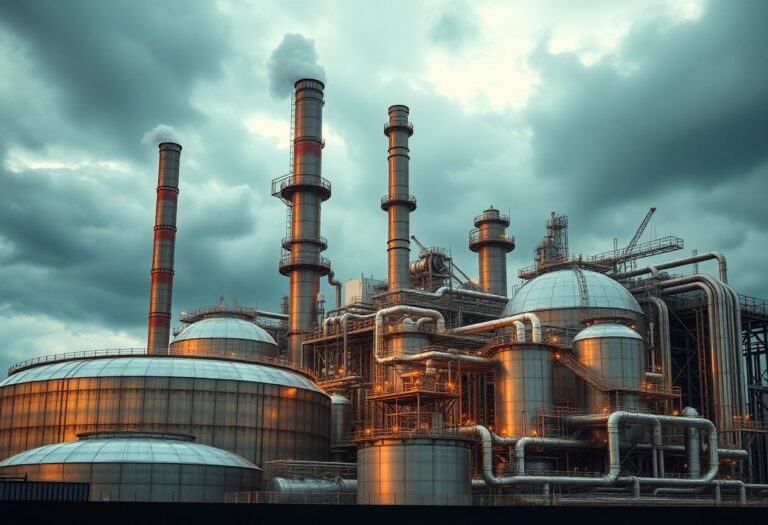
The process of generating electricity on a large scale is a testament to human ingenuity and our understanding of natural laws. Most power plants employ a similar basic principle: converting mechanical energy into electrical energy using turbines and generators.
The Power Plant Process
-
Energy Source: The process begins with an energy source. This could be the heat from burning fossil fuels, the fission of atomic nuclei in nuclear plants, or renewable sources like wind or falling water.
-
Turbine: The energy source is used to spin a turbine. In thermal plants, water is heated to create steam, which drives the turbine. In hydroelectric plants, falling water directly spins the turbine.
-
Generator: The turbine is connected to a generator. Inside the generator, a large electromagnet (rotor) spins inside a stationary ring of wire coils (stator).
-
Electromagnetic Induction: As the rotor spins, it creates a changing magnetic field. This changing field induces an electric current in the stator coils, a process known as electromagnetic induction.
-
Transformer: The generated electricity is then stepped up to very high voltages for long-distance transmission, and later stepped down for distribution to end-users.
The Principle of Electromagnetic Induction
The key to electricity generation lies in the principle of electromagnetic induction, discovered by Michael Faraday in 1831. This principle states that a changing magnetic field can induce an electric current in a nearby conductor. Conversely, an electric current can create a magnetic field. This reciprocal relationship between electricity and magnetism, known as electromagnetism, is fundamental to how many electrical devices work, from simple electric motors to complex electronic gadgets.
Electricity in Our Homes: From Grid to Gadget
Once electricity is generated and transmitted, it enters our homes through a complex system designed to deliver power safely and efficiently.
The Journey into Your Home
-
Main Service Panel: Electricity first enters your home through the main service panel, often called the breaker box. This is the central distribution point for all the circuits in your home.
-
Circuit Breakers: Within the service panel are circuit breakers, crucial safety devices that protect your home's wiring from overload. If too much current flows through a circuit, the breaker trips, cutting off power to prevent potential fires or damage.
-
Wiring: From the service panel, a network of wires carries electricity throughout your home to various outlets and fixtures.
-
Grounding: A critical safety feature in modern electrical systems is grounding. A grounding wire provides a safe path for excess electricity to dissipate into the earth, protecting against electric shock and equipment damage.
How Different Devices Harness Electricity
Once electricity reaches our devices, it's put to work in various ways:
-
Incandescent Light Bulbs: In these traditional bulbs, electrons flow through a thin tungsten filament, heating it until it glows brightly.
-
LED Lights: Light-Emitting Diodes (LEDs) use semiconductors that emit light when an electric current passes through them, a much more energy-efficient process than incandescent bulbs.
-
Electric Motors: These devices use the relationship between electricity and magnetism. When electricity flows through wire coils in the motor, it creates a magnetic field that interacts with permanent magnets, causing the motor to spin.
-
Heaters: Electric heaters use resistive heating elements. As electricity flows through these elements, they heat up due to their electrical resistance, radiating heat into the surrounding area.
-
Electronic Devices: In computers, smartphones, and other complex electronics, electricity is used to power intricate circuits that process and store information using millions of tiny switches called transistors.
The Future of Electricity: Innovations on the Horizon
As we look to the future, several exciting developments are poised to revolutionize how we generate, distribute, and use electricity:
-
Renewable Energy: There's an increasing focus on solar, wind, and other renewable sources to generate clean electricity. Advances in photovoltaic technology are making solar panels more efficient and affordable, while offshore wind farms are harnessing the power of ocean breezes on an unprecedented scale.
-
Smart Grids: These advanced power networks use digital technology to efficiently manage electricity distribution and consumption. Smart grids can detect and react to local changes in usage, reduce power outages, and integrate renewable energy sources more effectively.
-
Energy Storage: Improved battery technologies are crucial for storing excess energy from intermittent renewable sources. Innovations like solid-state batteries and flow batteries promise to increase storage capacity and longevity while reducing costs.
-
Superconductors: These materials can conduct electricity with zero resistance, potentially revolutionizing power transmission. High-temperature superconductors, which don't require extreme cooling, could make long-distance power transmission nearly lossless.
-
Wireless Power Transfer: Technologies that can transmit electricity without wires over short to medium distances are advancing rapidly. This could lead to more convenient charging solutions for electric vehicles and consumer electronics.
-
Fusion Power: Nuclear fusion, the process that powers the sun, promises virtually limitless clean energy. While still in the experimental stage, projects like ITER (International Thermonuclear Experimental Reactor) are bringing us closer to harnessing this incredible power source.
Safety and Electricity: Respecting the Power
While electricity has become an indispensable part of our lives, it's crucial to remember that it can be dangerous if not handled properly. Here are some key safety tips:
- Never attempt to work on your home's electrical system without proper training and certification.
- Keep all electrical devices and cords away from water sources.
- Avoid overloading outlets with too many high-wattage devices.
- Regularly inspect and replace frayed or damaged cords.
- Use ground fault circuit interrupters (GFCIs) in areas near water, such as kitchens and bathrooms.
- Teach children about electrical safety from an early age.
Conclusion: The Spark of Modern Civilization
Electricity is truly the lifeblood of our modern world. From the smallest electronic devices to massive power grids spanning continents, understanding how electricity works gives us insight into the energy that drives our technological society. As we continue to innovate and develop new technologies, electricity will undoubtedly play a crucial role in shaping our future.
By harnessing the power of moving electrons, we've illuminated the darkest nights, connected global communications networks, and enabled countless technological marvels that would seem like magic to our ancestors. As we face the challenges of the 21st century, including climate change and increasing energy demands, our understanding and use of electricity will be key to creating a sustainable, efficient, and interconnected world.
The journey of discovery in the realm of electricity is far from over. As we push the boundaries of quantum physics and materials science, who knows what new electrical marvels await us? One thing is certain: the future is electric, and it's brighter than ever.