The Evolution of Computer Technology: From Abacus to Artificial Intelligence
In our increasingly digital world, computers have become an indispensable part of daily life. From the powerful smartphone in your pocket to the complex systems driving global industries, computer technology has fundamentally transformed how we live, work, and communicate. This article will take you on an enlightening journey through the fascinating realm of computer technology, exploring its rich history, core concepts, and exciting future possibilities.
The Birth of Computing: A Historical Perspective
Ancient Calculators to Mechanical Computers
The story of computing stretches back far beyond the electronic age, with roots in ancient civilizations. The abacus, one of the earliest known computing devices, emerged around 2400 BCE in Babylon. This simple yet effective tool, consisting of beads sliding on rods, allowed for basic arithmetic calculations and laid the groundwork for future computational devices.
Fast forward to the 17th century, and we encounter Blaise Pascal's mechanical calculator, the Pascaline. Invented in 1642, this remarkable device could perform addition and subtraction, representing a significant leap in computational capability. The Pascaline's influence extended well into the 19th century, inspiring further innovations in mechanical computing.
The 19th century saw the birth of Charles Babbage's ambitious projects: the Difference Engine and the Analytical Engine. The Difference Engine, designed in the 1820s, was intended to calculate and print mathematical tables automatically. Although never fully completed in Babbage's lifetime, a functioning replica was built in 1991, demonstrating the validity of his design.
Babbage's Analytical Engine, conceived in the 1830s, was even more revolutionary. It introduced the concept of programmable computing, featuring memory, a central processing unit, and the ability to use punched cards for input – elements that would become fundamental to modern computers. Ada Lovelace, often regarded as the world's first computer programmer, wrote theoretical programs for the Analytical Engine, foreseeing its potential beyond mere number crunching.
The Electronic Revolution
The true watershed moment in computing history came with the advent of electronic computers. The Electronic Numerical Integrator and Computer (ENIAC), completed in 1946 at the University of Pennsylvania, marked the dawn of the electronic computing era. ENIAC filled an entire room and used around 18,000 vacuum tubes, weighing nearly 30 tons. Despite its size, ENIAC was a general-purpose computer capable of solving a wide range of mathematical problems at unprecedented speeds.
The invention of the transistor in 1947 by John Bardeen, Walter Brattain, and William Shockley at Bell Labs revolutionized electronics. Transistors were smaller, faster, and more reliable than vacuum tubes, paving the way for more compact and efficient computers. This innovation earned the inventors the Nobel Prize in Physics in 1956 and set the stage for rapid advancements in computing technology.
The introduction of integrated circuits in 1958 by Jack Kilby at Texas Instruments and Robert Noyce at Fairchild Semiconductor was another pivotal moment. Integrated circuits allowed for the miniaturization of electronic components, dramatically increasing processing power while reducing size and cost. This technology formed the basis for the microprocessor, the heart of modern computers.
The 1970s and 1980s saw the rise of personal computers, bringing computing power to homes and offices. Pioneering machines like the Altair 8800, Apple II, and IBM PC democratized access to computing technology, sparking a revolution that continues to shape our world today.
Understanding Computer Architecture: The Fundamentals
To truly appreciate the marvel of modern computing, it's essential to understand the basic architecture of computers. At its core, a computer system comprises four fundamental components: input, processing, storage, and output.
Input: The Gateway to Computing
Input devices serve as the interface between the user and the computer, allowing us to feed information into the system. Common input devices include keyboards, mice, touchscreens, microphones, and cameras. Each of these devices translates human actions into digital signals that the computer can understand and process.
For instance, when you type on a keyboard, each keystroke completes an electrical circuit. The keyboard controller interprets this as a specific character and sends the information to the computer for processing. Similarly, optical mice use LED or laser light to detect movement, translating it into cursor position on the screen.
Processing: The Brain of the Computer
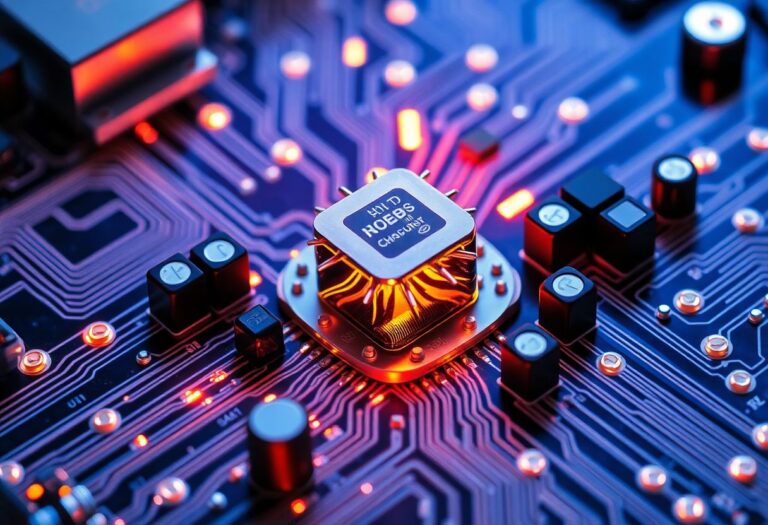
The Central Processing Unit (CPU) is the heart of computer processing. Often referred to as the "brain" of the computer, the CPU executes instructions and performs calculations. Modern CPUs can perform billions of operations per second, thanks to advances in semiconductor technology and computer architecture.
The CPU operates in a continuous cycle of fetch-decode-execute-store:
- Fetch: The CPU retrieves instructions from memory.
- Decode: It interprets what the instruction means.
- Execute: The CPU carries out the instruction.
- Store: Results are saved back to memory.
This process happens at an astounding speed in modern CPUs, enabling complex computations and rapid data processing.
Memory and Storage: The Computer's Filing System
Computers utilize two main types of memory: Random Access Memory (RAM) and long-term storage devices like Hard Disk Drives (HDDs) or Solid State Drives (SSDs).
RAM serves as the computer's short-term memory, providing quick access to data that the CPU needs for immediate processing. It's volatile, meaning it loses all data when power is turned off. In contrast, HDDs and SSDs offer permanent storage, retaining data even when the computer is powered down.
When you open a document, the computer copies it from long-term storage to RAM for faster access. This system of tiered storage allows computers to balance speed and capacity effectively.
Output: Bringing Data to Life
Output devices are how computers present processed information to users. Monitors, speakers, and printers are common examples of output devices.
Display technology has evolved dramatically over the years. Cathode Ray Tube (CRT) monitors, once the standard, have given way to Liquid Crystal Display (LCD) and Organic Light Emitting Diode (OLED) screens. Modern displays can produce vibrant colors and sharp images by controlling millions of individual pixels.
Printers bridge the digital and physical worlds, allowing us to create tangible copies of digital information. From basic dot-matrix printers to advanced 3D printers capable of producing three-dimensional objects, output technology continues to expand the possibilities of what computers can create.
The Software Revolution: Breathing Life into Hardware
While hardware forms the physical foundation of computing, software is what brings computers to life. Software consists of programs and data that instruct the hardware on what to do.
Operating Systems: The Foundation of Computing
Operating Systems (OS) serve as the fundamental software layer, managing hardware resources and providing services for other software to run. Examples include Microsoft Windows, macOS, and Linux. The OS handles tasks like file management, memory allocation, and process scheduling, creating an abstraction layer that simplifies interaction between software and hardware.
Applications: Tools for Every Task
Application software is designed to perform specific tasks for users. Word processors, web browsers, photo editing software, and video games are all examples of application software. The diversity of available applications has expanded the utility of computers, making them indispensable tools in virtually every field of human endeavor.
Networking and the Internet: Connecting the World
The true power of computers is unleashed when they're connected. Networking allows computers to share resources and information, dramatically expanding their capabilities.
Local and Wide Area Networks
Local Area Networks (LANs) connect computers within a limited area, such as an office or home. Wide Area Networks (WANs) extend this concept, connecting computers across larger geographical distances. These networks form the backbone of modern communication and data sharing in organizations worldwide.
The Internet: A Global Information Highway
The Internet, often described as a "network of networks," has revolutionized how we access and share information. It has its roots in ARPANET, a project initiated by the U.S. Department of Defense in the late 1960s. Today, the Internet connects billions of devices worldwide, facilitating everything from email communication to video streaming and e-commerce.
The World Wide Web, invented by Tim Berners-Lee in 1989, provides a user-friendly interface to access internet resources through web browsers. It has become so ubiquitous that many people use the terms "Internet" and "Web" interchangeably, although the Web is actually just one of many services that run on the Internet infrastructure.
Emerging Technologies: The Future of Computing
As we look to the future, several exciting technologies are poised to reshape the computing landscape.
Artificial Intelligence and Machine Learning
Artificial Intelligence (AI) and Machine Learning (ML) represent one of the most dynamic and promising fields in computer science. AI systems can analyze vast amounts of data, recognize patterns, and make decisions, often outperforming humans in specific tasks.
Machine Learning, a subset of AI, focuses on creating algorithms that can improve through experience. Deep Learning, a further specialization, uses artificial neural networks inspired by the human brain to process data and make decisions. These technologies are already being applied in areas like voice recognition, image processing, and autonomous vehicles, with potential applications expanding rapidly.
Quantum Computing: Harnessing Quantum Mechanics
Quantum computing represents a paradigm shift in computational power. Unlike classical computers that use bits (0s and 1s), quantum computers use quantum bits or qubits. Qubits can exist in multiple states simultaneously thanks to the principle of superposition, potentially allowing quantum computers to solve certain problems exponentially faster than classical computers.
While still in its early stages, quantum computing shows promise in fields like cryptography, drug discovery, and complex system simulation. Companies like IBM, Google, and Microsoft are investing heavily in this technology, with some already offering cloud-based quantum computing services.
Virtual and Augmented Reality: Blending Digital and Physical Worlds
Virtual Reality (VR) and Augmented Reality (AR) are changing how we interact with digital information. VR creates fully immersive digital environments, while AR overlays digital information on the physical world.
These technologies have applications far beyond gaming and entertainment. They're being used in fields like education, healthcare, and industrial design. For instance, surgeons can use AR to visualize complex procedures, while engineers can use VR to design and test products in a virtual environment before physical prototyping.
The Environmental Impact of Computing
As our reliance on computer technology grows, so does its environmental impact. The production of electronic devices requires significant resources and energy, and the disposal of electronic waste (e-waste) poses serious environmental challenges.
However, the tech industry is increasingly focusing on sustainability. Many companies are setting ambitious goals for carbon neutrality and investing in renewable energy. There's also a growing emphasis on designing products for longevity and recyclability, as well as improving the energy efficiency of data centers and devices.
Moreover, computer technology itself plays a crucial role in addressing environmental challenges. From optimizing energy grids to modeling climate change scenarios, computers are essential tools in the fight against global warming and other environmental issues.
Conclusion: The Ongoing Computer Revolution
From the ancient abacus to quantum computers, the evolution of computer technology is a testament to human ingenuity and innovation. Computers have transformed from room-sized calculators to pocket-sized supercomputers, fundamentally altering how we live, work, and interact with the world around us.
The principles we've explored – from the basic architecture of computers to the complexities of AI and quantum computing – form the foundation of our digital world. Understanding these concepts not only helps us appreciate the technology we use daily but also prepares us for the innovations yet to come.
As we stand on the brink of new frontiers in computing, from AI that rivals human intelligence to computers that harness the bizarre world of quantum mechanics, one thing is clear: the computer revolution is far from over. It continues to shape our world in ways we're only beginning to understand, promising a future limited only by our imagination and creativity.
Whether you're a tech enthusiast, a curious student, or simply someone trying to make sense of our digital world, remember that at its core, computer technology is about solving problems and expanding human capabilities. As we continue to push the boundaries of what's possible, we're not just advancing technology – we're expanding the horizons of human potential itself.
The journey of computer technology is ongoing, and we are all part of this exciting narrative. As we look to the future, we can anticipate even more remarkable innovations that will continue to transform our world in ways we can scarcely imagine. The computer revolution marches on, and its next chapter promises to be the most exciting yet.