Understanding Residual-Current Devices (RCDs): Your Electrical Guardian Angel
In our modern world, electricity powers nearly every aspect of our lives. From the smartphones in our pockets to the industrial machinery that drives our economies, electrical energy is ubiquitous. However, with this incredible utility comes an often-overlooked danger. Electricity, when not properly managed, can be a silent and deadly threat. This is where Residual-Current Devices (RCDs) come into play, serving as our invisible guardians against electrical hazards. In this comprehensive exploration, we'll delve deep into the world of RCDs, uncovering how these remarkable devices work, why they're critically important, and how they've revolutionized electrical safety.
The Hidden Peril of Electrical Current
Before we dive into the intricacies of RCDs, it's crucial to understand the dangers they protect us from. Electricity, for all its benefits, can be lethal in alarmingly small amounts. Medical research has shown that it takes a mere 50 milliamps (0.05 amperes) flowing through the human heart for just a fraction of a second to potentially cause ventricular fibrillation – a often fatal disruption of the heart's rhythm. To put this in perspective, a typical household circuit in many countries can deliver 15-20 amperes, hundreds of times more than what's needed to be life-threatening.
The speed at which electrical injuries occur is equally alarming. Neurophysiological studies indicate that the human nervous system can't react quickly enough to let go of an electrically charged object before serious harm occurs. This combination of low thresholds for injury and the rapidity of electrical accidents underscores the vital importance of preventative safety measures like RCDs.
What Exactly is an RCD?
A Residual-Current Device, known by various names including Ground Fault Circuit Interrupter (GFCI) in North America or Safety Switch in Australia, is a sophisticated electrical safety device. At its core, an RCD is designed to instantly detect imbalances in electrical current flow and cut off power before a potentially dangerous situation can develop.
The principle behind RCDs is rooted in one of the fundamental laws of electricity: Kirchhoff's Current Law. This law states that the sum of currents entering a node must equal the sum of currents leaving that node. In a properly functioning electrical circuit, the current flowing through the live wire should be exactly equal to the current returning through the neutral wire. Any deviation from this balance could indicate a dangerous leak of current – potentially through a person's body.
The Inner Workings of RCDs: A Technological Marvel
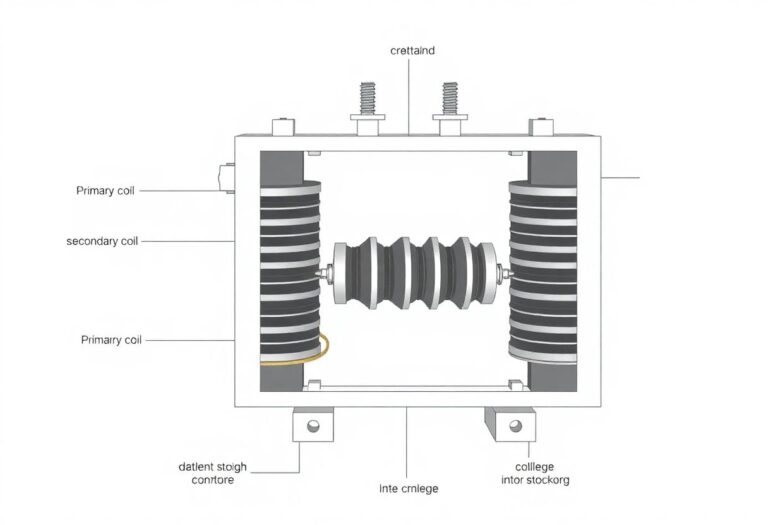
To truly appreciate the ingenuity of RCDs, we need to examine their internal mechanisms. The heart of an RCD is a differential current transformer, a device that leverages the principles of electromagnetic induction discovered by Michael Faraday in the 19th century.
Here's how it works in detail:
-
The Differential Transformer: This component consists of a toroidal (doughnut-shaped) iron core. Both the live and neutral wires of the protected circuit pass through this core, essentially forming single-turn primary windings.
-
Magnetic Field Balance: Under normal conditions, the current in the live wire creates a magnetic field in one direction, while the return current in the neutral wire creates an equal but opposite magnetic field. These fields cancel each other out, resulting in no net magnetic flux in the core.
-
The Sensing Coil: A secondary winding, often called the sensing or pick-up coil, is wrapped around the iron core. This coil is connected to sensitive electronic circuitry.
-
Detection of Imbalance: If a fault occurs and current leaks from the circuit (for example, through a person touching a faulty appliance), it creates an imbalance. The live wire will carry more current than returns through the neutral, resulting in a net magnetic flux in the core.
-
Induced Current: This changing magnetic field induces a small current in the sensing coil, as predicted by Faraday's law of induction.
-
Electronic Amplification: The induced current, while small, is detected and amplified by the RCD's electronic circuitry.
-
Tripping Mechanism: If the detected imbalance exceeds a preset threshold (typically 30mA for personnel protection), the RCD activates a tripping mechanism. This is usually a spring-loaded switch held closed by an electromagnet.
-
Power Interruption: The tripping mechanism opens the circuit, cutting off power to the protected area in a matter of milliseconds – far faster than the time it takes for a lethal amount of current to affect the human heart.
RCD Response Time: A Race Against Electricity
The speed at which RCDs operate is truly remarkable and is a critical factor in their life-saving capability. According to standards set by the International Electrotechnical Commission (IEC), a Type A RCD must trip within 40 milliseconds when exposed to a 150mA fault current. For larger fault currents, the response time is even faster – as little as 25 milliseconds.
To put this in perspective, consider that the average human blink takes about 100-400 milliseconds. RCDs are capable of detecting a fault and cutting power in less time than it takes you to blink! This incredible speed is what makes RCDs so effective at preventing electrocution.
Types of RCDs: Tailored Protection for Every Scenario
As our understanding of electrical safety has evolved, so too have the types of RCDs available. Each type is designed to offer protection in specific scenarios:
-
Type AC RCDs: These are the most basic type, designed to detect alternating sinusoidal currents. They're suitable for most household applications but may not detect certain types of fault currents.
-
Type A RCDs: An improvement over Type AC, these can detect both sinusoidal AC and pulsating DC fault currents. They're more versatile and are often required in circuits that may involve electronic equipment.
-
Type F RCDs: These are designed for circuits that may experience high frequency fault currents, such as those with inverter-based equipment like variable speed drives.
-
Type B RCDs: The most comprehensive, Type B RCDs can detect smooth DC fault currents in addition to AC and pulsating DC. They're used in specialized applications like electric vehicle charging stations or photovoltaic systems.
-
Self-Testing RCDs: Advanced models that periodically perform automated self-tests to ensure they're functioning correctly.
RCDs vs. Circuit Breakers and Fuses: Understanding the Differences
While RCDs are crucial for electrical safety, they're often confused with other protective devices like circuit breakers and fuses. It's important to understand that these devices serve different, complementary purposes:
-
Fuses and Circuit Breakers: These devices are designed to protect against overcurrent situations. They trip when the current flowing through them exceeds a certain threshold, protecting wiring and devices from overheating and potential fire hazards.
-
RCDs: In contrast, RCDs are specifically designed to protect against earth leakage currents. They can detect much smaller current imbalances than fuses or circuit breakers, making them uniquely suited for protecting against electric shock.
A practical example illustrates this difference clearly: Imagine a scenario where a person comes into contact with a live wire. The current flowing through their body to the ground might be 50mA – enough to be potentially fatal, but far below the trip threshold of most circuit breakers. An RCD, however, would detect this small leakage current and cut the power almost instantly.
The Global Adoption of RCDs: A Public Health Success Story
The implementation of RCDs in electrical systems worldwide has been a significant public health achievement. Studies have shown dramatic reductions in electrical injury rates in countries that have mandated their use. For instance:
-
In Australia, the widespread adoption of RCDs (known there as safety switches) has been credited with reducing electrocution deaths by over 70% since the 1990s.
-
In the United States, the Consumer Product Safety Commission estimates that GFCIs (the American term for RCDs) save hundreds of lives each year and have helped reduce electrocutions by more than 50% since their introduction.
-
In the United Kingdom, the Electrical Safety First charity reports that RCD protection in homes could prevent almost half of all electric shock incidents.
These statistics underscore the life-saving potential of this technology when widely implemented.
Beyond Domestic Use: RCDs in Industrial and Specialized Applications
While we often think of RCDs in the context of home safety, their applications extend far beyond domestic settings. In industrial environments, where the potential for electrical accidents is often higher due to the presence of high-power equipment and complex systems, RCDs play a crucial role:
-
Construction Sites: Portable RCDs are mandatory on many construction sites, protecting workers using power tools in potentially damp or hazardous conditions.
-
Mining Operations: Specialized RCDs are used in mining to protect against the unique electrical hazards present in underground environments.
-
Marine Applications: Boats and ships use specialized marine-grade RCDs designed to withstand corrosive saltwater environments.
-
Medical Facilities: Hospitals and other healthcare settings use ultra-sensitive RCDs in areas where patients might be particularly vulnerable to even small electrical currents.
The Future of RCD Technology: Smart Protection for a Connected World
As we move into an era of smart homes and the Internet of Things (IoT), RCD technology is also evolving. Some exciting developments on the horizon include:
-
Smart RCDs: These devices can communicate with home automation systems, providing real-time data on power usage and potential faults. They can even be remotely monitored and reset.
-
Predictive Maintenance: Advanced RCDs equipped with AI algorithms can analyze patterns in electrical usage to predict potential faults before they occur.
-
Integration with Arc Fault Detection: Some newer devices combine RCD functionality with arc fault detection, providing comprehensive protection against both leakage currents and dangerous arcing faults.
-
Micro RCDs: Miniaturized RCDs that can be integrated directly into plugs or small appliances, providing point-of-use protection.
-
Energy Management: Future RCDs might play a role in smart grid systems, helping to balance loads and improve overall energy efficiency.
Conclusion: RCDs – The Unsung Heroes of Electrical Safety
As we've explored in this deep dive, Residual-Current Devices are remarkable pieces of technology that have quietly revolutionized electrical safety. From their clever use of electromagnetic principles to their lightning-fast response times, RCDs exemplify how innovative engineering can have a profound impact on public safety.
While it's easy to take them for granted, it's worth remembering that every time we plug in an appliance or flip a light switch, these invisible guardians are working tirelessly to keep us safe. As our world becomes increasingly electrified, the importance of RCDs will only grow.
Understanding how RCDs work not only gives us an appreciation for the technology that protects us but also reinforces the need for proper electrical safety practices. Regular testing of RCDs, proper installation by qualified professionals, and ongoing education about electrical hazards all play crucial roles in maintaining a safe electrical environment.
As we look to the future, the continued evolution of RCD technology promises even greater levels of safety and functionality. From smart homes to industrial applications, these devices will undoubtedly play a central role in shaping our relationship with electricity for years to come.
In the end, RCDs stand as a testament to human ingenuity – a simple yet profound solution to a complex problem, silently saving lives every day. The next time you hear that subtle click of an RCD during a test, remember: it's the sound of your electrical guardian angel, ever-vigilant and ready to protect.