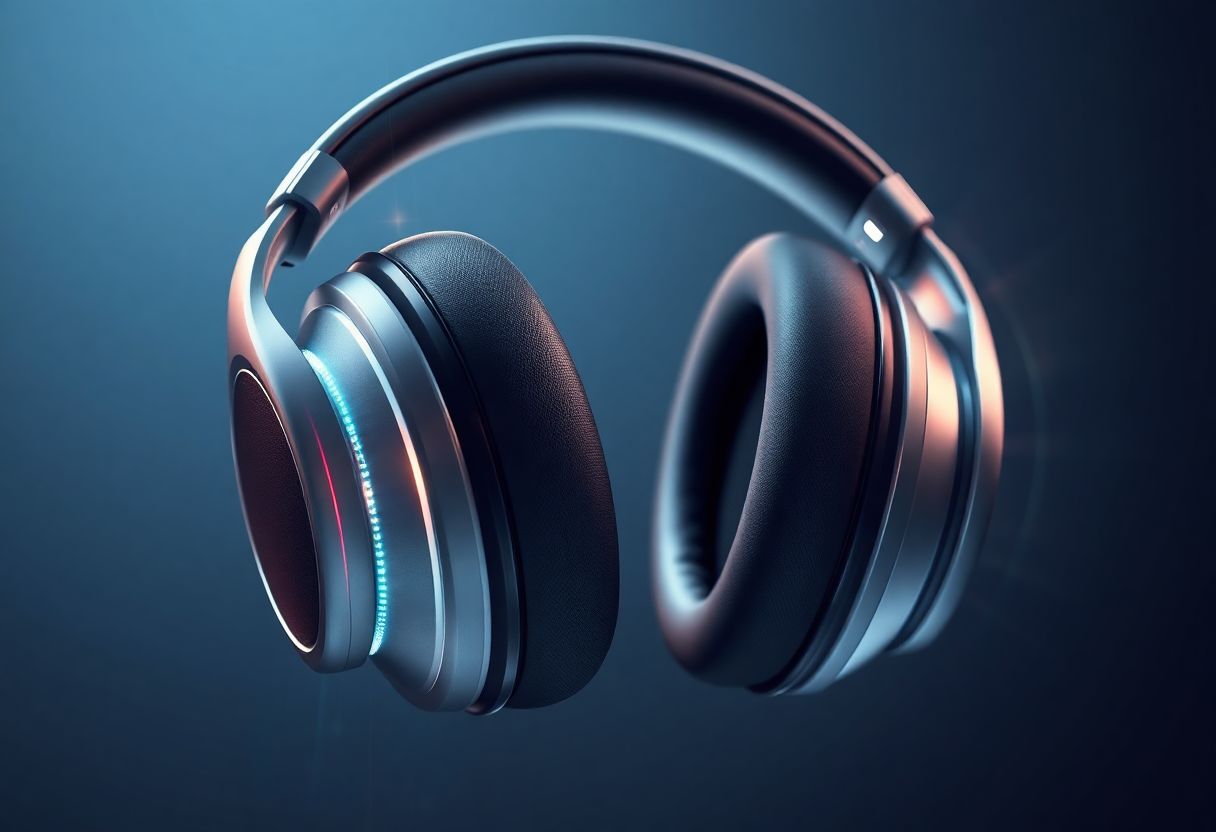
The Evolution of Noise-Cancelling Headphones: Engineering Silence in a Noisy World
In our increasingly cacophonous world, the ability to carve out a personal oasis of quiet has become more valuable than ever. Enter noise-cancelling headphones – a technological marvel that has revolutionized how we experience sound, or rather, the absence of it. But when exactly were these ingenious devices invented, and how have they evolved over time? Let's embark on an auditory journey through history to explore the fascinating development of noise-cancelling technology.
The Roots of Noise Cancellation: Early Concepts and Experiments
While many associate noise-cancelling headphones with modern technology, the fundamental concepts underpinning this innovation reach back much further than one might expect. The seeds of noise cancellation were first planted in the late 19th century, with early experiments in telephone technology. In 1878, inventors were already exploring ways to reduce unwanted noise in telephone transmissions, laying the groundwork for future advancements.
However, it wasn't until the 1930s that the first formal patents for noise cancellation technology emerged. Two figures stand out in this early period: Henri Coandă, a Romanian aircraft engineer, and Dr. Paul Lueg, a German physicist. Coandă filed a patent in 1932 for a system designed to reduce noise in aircraft cabins. But it was Lueg's 1933 patent that would prove particularly influential in the development of modern active noise cancellation.
Dr. Lueg's patent described a process of silencing sound oscillations by superimposing additional sound waves with a 180-degree phase difference. This concept, known as destructive interference, forms the cornerstone of active noise cancellation technology. Lueg's work was truly ahead of its time, presenting a theoretical framework that would take decades to implement practically.
Mid-20th Century: Refinement and Specialized Applications
The mid-1900s saw continued development and refinement of noise cancellation technology, though it remained largely in the realm of specialized applications. In the 1950s, Harry F. Olson, a pioneer in acoustical engineering, further developed noise cancellation techniques. Olson's work at RCA Laboratories expanded on earlier concepts, exploring practical applications for noise control in various environments.
During this period, from the 1950s through the 1980s, noise cancellation technology found its primary use in industrial and aviation settings. The technology was particularly valuable in aircraft cockpits, where clear communication was crucial amidst the constant drone of engines. However, the systems of this era were bulky, expensive, and far from the sleek consumer products we know today.
It's worth noting that these early noise cancellation systems operated on analog principles. They used electronic circuits to generate inverse sound waves, a method that was effective but limited in its precision and adaptability. The digital revolution was still on the horizon, promising to transform noise cancellation technology in ways that early pioneers could scarcely have imagined.
The 1980s: Noise Cancellation Takes Flight
The 1980s marked a pivotal turning point in the history of noise-cancelling headphones, as the technology began its journey from specialized industrial applications to consumer products. The decade saw a convergence of technological advancements and market demands that would set the stage for a revolution in personal audio.
A key figure in this transformation was Dr. Amar Bose, founder of the Bose Corporation. According to company lore, Dr. Bose conceived the idea for noise-cancelling headphones during a flight in 1978. Frustrated by the inability to enjoy the airplane's audio system due to engine noise, Bose began to explore how technology could solve this problem.
This moment of inspiration led to nearly a decade of research and development at Bose Corporation. The company's efforts culminated in 1989 with the introduction of their first noise-cancelling headset, designed specifically for aviation use. This headset demonstrated the potential of noise-cancelling technology for enhancing communication and comfort in noisy environments.
The Bose aviation headset was a significant leap forward, utilizing digital signal processing to achieve more effective noise cancellation than previous analog systems. However, it was still a far cry from the consumer products we know today. The headset was bulky, expensive, and primarily intended for professional use by pilots and aviation personnel.
The 1990s: Noise Cancellation Enters the Consumer Market
The 1990s saw noise-cancelling technology transition from specialized applications to consumer products, marking the beginning of a new era in personal audio. This shift was driven by advancements in digital signal processing, miniaturization of electronics, and a growing consumer demand for high-quality audio experiences.
In 1995, Sennheiser, a well-respected name in audio equipment, released the LHM 45. This was one of the first noise-cancelling headsets marketed to consumers, rather than professionals. While still relatively large and expensive compared to standard headphones of the time, the LHM 45 represented a significant step towards making noise-cancelling technology accessible to the general public.
Towards the end of the decade, other major electronics companies began to enter the fray. Sony, leveraging its expertise in consumer electronics and audio technology, introduced its own line of noise-cancelling headphones aimed at travelers. These early consumer models were still relatively large and expensive, often requiring separate battery packs and control units. However, they paved the way for wider adoption of the technology and sparked competition that would drive rapid innovation in the coming years.
It's important to note that the noise cancellation technology of the 1990s, while impressive for its time, was still limited compared to modern standards. These early systems were most effective at cancelling low-frequency, constant noises like the hum of an airplane engine. They struggled with variable or high-frequency sounds, and the audio quality often suffered when noise cancellation was active.
The 2000s: Refinement and Popularization
The dawn of the new millennium brought significant improvements in noise-cancelling technology, making it more accessible, effective, and user-friendly. This decade saw noise-cancelling headphones transition from a niche product for frequent flyers to a mainstream audio accessory.
In 2000, Bose released the QuietComfort, its first noise-cancelling headphones designed specifically for consumers. This product marked a significant milestone, combining Bose's expertise in noise cancellation with a design tailored for everyday use. The QuietComfort set a new standard for the industry, offering impressive noise reduction in a relatively compact package.
Throughout the decade, Bose continued to refine its offerings. The release of the QuietComfort 2 in 2003 and the QuietComfort 3 in 2006 brought incremental improvements in noise cancellation performance, sound quality, and design. The QuietComfort 3 was particularly noteworthy for its more compact on-ear design, addressing consumer demand for greater portability.
During this period, other major audio companies expanded their noise-cancelling offerings, driving innovation and competition in the market. Sony, Sennheiser, and Audio-Technica, among others, introduced their own models, each with unique features and design philosophies.
The 2000s also saw significant advancements in the underlying technology. Digital signal processing became more sophisticated, allowing for more effective noise cancellation across a broader range of frequencies. Battery technology improved, extending the usable life of wireless models. Additionally, the integration of noise cancellation with Bluetooth technology began to emerge, laying the groundwork for the wireless revolution that would follow.
The 2010s and Beyond: The Golden Age of Noise Cancellation
The past decade has witnessed explosive growth in the noise-cancelling headphone market, characterized by dramatic improvements in technology, design, and user experience. This period can truly be considered the golden age of noise cancellation, with rapid advancements pushing the boundaries of what's possible in personal audio.
In 2016, Sony released the MDR-1000X, a product that would challenge Bose's long-standing dominance in the noise-cancelling market. The MDR-1000X offered superior sound quality alongside excellent noise cancellation, forcing the entire industry to raise its standards. Sony followed this with the WH-1000XM3 in 2018, which many considered to set a new benchmark for noise cancellation performance.
The competition between major players like Sony, Bose, and others has driven rapid innovation. Modern noise-cancelling headphones now offer features that would have seemed like science fiction just a few years ago:
- Adaptive noise cancellation that automatically adjusts to your environment
- Integration with voice assistants like Siri, Google Assistant, and Alexa
- Extended battery life, with some models offering 30+ hours of playback
- Quick charging capabilities, providing hours of use from just minutes of charging
- Improved comfort for long-term wear, with lightweight designs and breathable materials
- Touch controls for intuitive operation
- Companion apps that allow for extensive customization of sound profiles and noise cancellation settings
Moreover, the technology has become more accessible than ever. While high-end models continue to push the envelope of performance, the trickle-down of technology has made quality noise cancellation available at more affordable price points.
The Science Behind Modern Noise-Cancelling Headphones
To fully appreciate the evolution of noise-cancelling headphones, it's crucial to understand the underlying principles and how they've been refined over time. Modern noise-cancelling headphones employ a combination of passive and active noise cancellation techniques:
-
Passive Noise Cancellation (Noise Isolation):
This is the most basic form of noise reduction, achieved through physical design elements. It involves creating a seal around or within the ear to block out external sounds. High-quality materials like memory foam for ear cushions and precisely engineered ear cups contribute to effective passive noise isolation. This method is particularly effective for higher frequency sounds. -
Active Noise Cancellation (ANC):
This is where the real technological magic happens. Active noise cancellation uses electronic processing to counteract ambient noise. Here's a more detailed look at how it works:- Microphones on the headphones continuously monitor the ambient sound environment.
- A digital signal processor (DSP) analyzes this incoming audio in real-time.
- The DSP generates a sound wave that is the exact inverse (180 degrees out of phase) of the detected ambient noise.
- This "anti-noise" signal is played through the headphones' speakers, combining with the ambient noise.
- When the original noise and the anti-noise align, they cancel each other out through destructive interference.
Modern ANC systems have become incredibly sophisticated. They can adapt to different types of noise and even learn from their environment over time. Some of the latest advancements include:
- Multi-microphone arrays for more accurate noise detection
- AI-enhanced noise cancellation that can distinguish between different types of sounds (e.g., voices vs. machine noise)
- Adjustable ANC levels, allowing users to control how much environmental sound they want to let in
- Transparency modes that allow important external sounds to pass through when needed
The Impact and Future of Noise-Cancelling Technology
The invention and evolution of noise-cancelling headphones have had far-reaching effects beyond just providing a better listening experience for music enthusiasts. These devices have:
- Improved travel experiences, making long flights and train journeys more comfortable and less fatiguing.
- Enhanced productivity in open office environments by allowing workers to focus in noisy surroundings.
- Enabled safer listening habits by allowing users to enjoy audio content at lower volumes, potentially reducing the risk of noise-induced hearing loss.
- Contributed to stress reduction by providing moments of quiet in increasingly noisy urban environments.
- Opened up new possibilities in industries like aviation, manufacturing, and construction, where clear communication in noisy environments is crucial.
Looking to the future, several exciting developments are on the horizon:
-
AI-Enhanced Noise Cancellation: Machine learning algorithms will allow headphones to adapt more intelligently to complex and changing sound environments.
-
Improved Battery Technology: Advancements in battery tech will lead to even longer-lasting and faster-charging noise-cancelling headphones.
-
Integration with Augmented Reality: Future headphones may allow users to selectively cancel or amplify specific sounds based on their preferences or needs.
-
Health Monitoring: Some companies are exploring the integration of health monitoring sensors into headphones, potentially tracking stress levels, heart rate, and other metrics.
-
Even More Precise Cancellation: As digital signal processing continues to advance, we can expect noise cancellation to become even more effective, particularly for variable and high-frequency sounds.
-
Miniaturization: Ongoing efforts to shrink components may lead to even more compact and comfortable noise-cancelling earbuds.
Conclusion: A Quiet Revolution
The invention and evolution of noise-cancelling headphones represent a quiet revolution in audio technology. From the theoretical foundations laid by Paul Lueg in the 1930s to today's AI-enhanced, wireless marvels, these devices have transformed how we interact with sound in our daily lives.
The development of noise-cancelling technology has been a gradual process, building upon decades of research and innovation. While companies like Bose and Sony have played crucial roles in commercializing and advancing the technology, we owe a debt of gratitude to earlier pioneers who laid the groundwork for these modern marvels.
As we enjoy our personal bubbles of silence in noisy city streets or crowded airplanes, we're experiencing the culmination of nearly a century of acoustic engineering and signal processing advancements. The journey from bulky, analog systems to sleek, digital, wireless headphones illustrates the remarkable progress made in electronics miniaturization, digital signal processing, and our understanding of psychoacoustics.
Noise-cancelling headphones stand as a testament to human ingenuity and our ongoing quest to improve our quality of life through technology. They exemplify how a deep understanding of physics, creative engineering, and consumer-focused design can come together to solve real-world problems.
As we look to the future, it's clear that the evolution of noise-cancelling technology is far from over. With ongoing advancements in artificial intelligence, materials science, and audio processing, we can anticipate even more impressive innovations on the horizon. The quest for perfect silence – or perhaps more accurately, the perfect control over our auditory environment – continues.
So the next time you put on your noise-cancelling headphones, take a moment to appreciate the long journey of innovation that allows you to enjoy your own personal oasis of calm. In the grand symphony of technological progress, noise-cancelling headphones have certainly earned their place as one of the most harmonious inventions of our time.