The Fascinating World of Magnetic Reed Switches: Simple Yet Ingenious
In our increasingly electronic world, we often overlook the small components that make our devices work seamlessly. One such unsung hero is the magnetic reed switch – a clever invention that plays a crucial role in many of the gadgets we use daily. Let's embark on a journey into the captivating realm of reed switches and explore how these tiny marvels operate.
What is a Magnetic Reed Switch?
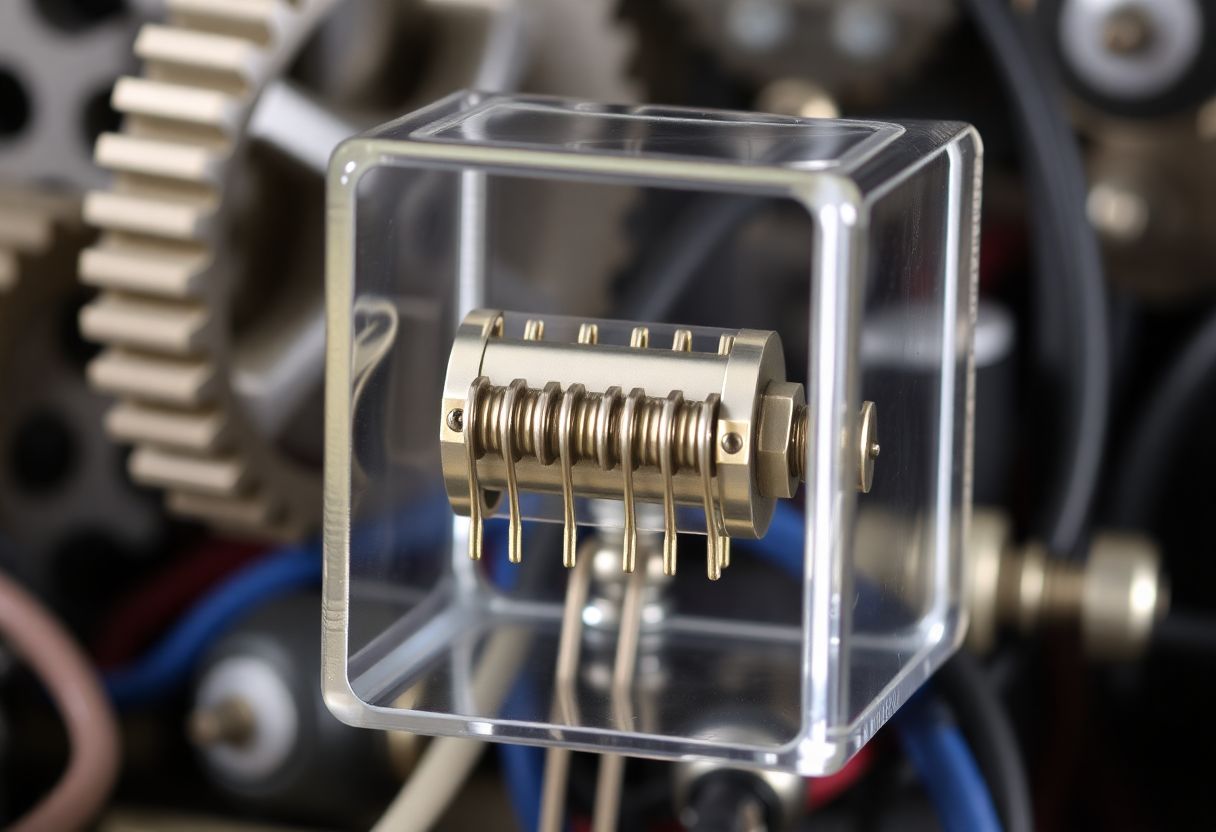
A magnetic reed switch is an elegantly simple electrical switch activated by a magnetic field. At its core, it consists of two or three ferromagnetic metal reeds (thin, flat strips) sealed within a glass tube filled with an inert gas, typically nitrogen. These reeds are specially designed to be easily magnetized but don't retain their magnetism for long, a property known as low magnetic retentivity.
The basic components of a reed switch include:
- Metal reeds: Usually made from a nickel-iron alloy, these are the heart of the switch.
- Glass envelope: A hermetically sealed tube that protects the reeds from dust and other contaminants.
- Inert gas: Typically nitrogen, fills the glass envelope to prevent oxidation of the contacts.
- Contact area: The overlapping ends of the reeds where the electrical connection is made or broken.
The Ingenious Workings of a Reed Switch
The operation of a reed switch is based on a simple yet ingenious principle. When a magnetic field is brought near the switch, it magnetizes the reeds. The magnetized reeds become opposite poles, causing them to attract each other. This attraction pulls the reeds together, closing the electrical circuit. When the magnetic field is removed, the reeds spring apart, opening the circuit. This process happens almost instantaneously, making reed switches ideal for rapid switching applications.
Reed switches come in two main varieties:
- Normally Open (NO): The contacts are separated when no magnetic field is present. They close when a magnet approaches.
- Normally Closed (NC): The contacts are touching by default and separate when a magnetic field is applied.
The choice between NO and NC switches depends on the specific application requirements.
The Physics Behind Reed Switches
To fully appreciate the elegance of reed switches, we need to delve deeper into the physics at play. The reeds in a reed switch are made from materials with high magnetic permeability, meaning they easily become magnetized when exposed to a magnetic field. However, they also have low magnetic retentivity, meaning they don't stay magnetized for long after the field is removed.
Reed switches exhibit a property called magnetic hysteresis. This means there's a slight delay between the application of a magnetic field and the switch's response. While this might sound like a disadvantage, it actually helps prevent the switch from rapidly oscillating on and off when exposed to small fluctuations in the magnetic field.
Another interesting phenomenon in reed switches is contact bounce. When the reeds come together, they don't make a perfect, stable contact immediately. Instead, they may bounce apart and together several times before settling. This can be an issue in some high-speed applications and may require additional circuitry to mitigate.
Real-World Applications of Reed Switches
Reed switches find their way into a surprising number of everyday devices. Here are some common applications:
Laptops and Flip Phones
In laptops and flip phones, reed switches detect when the lid is closed to put the device to sleep. A small magnet is embedded in the lid of the laptop, and a reed switch is placed in the body of the laptop, near the hinge. When you close the lid, the magnet comes close to the reed switch, closing it and sending a signal to the computer's power management system to put the laptop to sleep.
Home Security Systems
Reed switches play a crucial role in many home security systems. A reed switch is installed in the door frame, and a small magnet is attached to the door itself. When the door is closed, the magnet keeps the reed switch closed. If an intruder opens the door, the magnet moves away from the reed switch, opening it and triggering the alarm.
Other Applications
Reed switches are also used in refrigerators to turn the interior light on and off as the door opens and closes, in washing machines to help detect water levels, and in anemometers to measure wind speed in weather stations.
The Inventor and History of Reed Switches
The reed switch was invented in the mid-1930s by Walter B. Elwood at Bell Laboratories. Elwood filed the patent for his "Electromagnetic switch" on June 27, 1940, and it was granted on December 2, 1941. Elwood's original design is remarkably similar to the reed switches we use today, demonstrating the enduring nature of this simple yet effective technology.
Advantages and Limitations of Reed Switches
Like any technology, reed switches have their strengths and weaknesses. Their advantages include simplicity, with no complex moving parts, making them reliable and long-lasting. The sealed environment of the glass envelope protects the contacts from dust and corrosion. They also have low power consumption, requiring no power to maintain their state, and can operate in milliseconds.
However, reed switches also have limitations. The glass envelope can be fragile and break if handled roughly. They generally have limited current capacity, suitable for low to moderate currents only. Additionally, very strong magnetic fields can potentially damage the switch.
Design Considerations for Using Reed Switches
When incorporating reed switches into a design, several factors need to be considered. The switch must be matched with a magnet of appropriate strength, and its orientation can affect its response. Environmental factors such as temperature, vibration, and nearby magnetic fields can all impact performance. For high-speed applications, contact bounce may need to be addressed.
The Future of Reed Switches
Despite being an older technology, reed switches continue to find new applications in our increasingly connected world. They're particularly valuable in Internet of Things (IoT) devices, where their low power consumption is a significant advantage. Emerging applications include smart home devices, where reed switches can help create energy-efficient homes by detecting open windows or doors. They're also finding use in wearable technology, such as smart glasses, and in electric vehicles for monitoring battery compartments and charging port covers.
DIY Projects with Reed Switches
For those interested in electronics, reed switches offer an excellent opportunity for hands-on learning. Here are a few simple projects you can try:
- Door alarm: Create a simple alarm system for your room using a reed switch and a buzzer.
- Bike speedometer: Use a reed switch and a magnet on the wheel to measure your bicycle's speed.
- Hidden switch: Make a secret switch activated by a magnet to control a light or other device.
Conclusion: The Enduring Charm of Reed Switches
In an age of complex electronic systems and sophisticated sensors, the humble reed switch continues to prove its worth. Its simplicity, reliability, and versatility make it a favorite among engineers and hobbyists alike. From securing our homes to enhancing our gadgets, reed switches play a silent but crucial role in our daily lives.
As we continue to innovate and create new technologies, it's likely that the magnetic reed switch, with its elegant simplicity, will remain an important part of our electronic world for years to come. The next time you flip open your laptop or close your refrigerator door, take a moment to appreciate the clever little switch that's making it all work seamlessly. In the grand tapestry of modern technology, the magnetic reed switch stands as a testament to the power of simple, elegant solutions.