The Science Behind Pressure Washers: How Water Becomes a Powerful Cleaning Force
Pressure washers have revolutionized cleaning tasks, transforming ordinary water into a formidable tool capable of tackling the toughest grime. But how exactly do these machines work their magic? Let's dive deep into the fascinating world of pressure washers, exploring their inner workings, components, and the physics that make them so effective.
The Fundamentals of Pressure Washing
At its core, a pressure washer amplifies water's natural cleaning properties by dramatically increasing its pressure and velocity. To truly appreciate how these machines function, we must first understand what makes water such an excellent cleaning agent.
Water's Unique Properties
Water possesses several characteristics that contribute to its cleaning prowess:
-
Polarity: Water molecules have a slight electrical charge imbalance, with the oxygen atom carrying a partial negative charge and the hydrogen atoms carrying partial positive charges. This polarity allows water to easily adhere to many surfaces and substances, aiding in the cleaning process.
-
Surface Tension: Water molecules are strongly attracted to each other, creating a "skin-like" surface. This property helps water to pick up and carry away dirt particles.
-
Solvent Properties: Often called the "universal solvent," water can dissolve more substances than any other liquid, making it highly effective at breaking down many types of dirt and grime.
-
Kinetic Energy: When water moves at high speeds, it carries significant kinetic energy, which can dislodge dirt and debris upon impact.
A pressure washer harnesses and amplifies these properties, turning water into a supercharged cleaning force.
The Anatomy of a Pressure Washer
To understand how a pressure washer works, let's break down its main components:
1. Water Inlet
The journey begins at the water inlet, where the pressure washer connects to a water source, typically via a garden hose. This inlet usually includes a filter to prevent debris from entering the system and potentially damaging the pump.
2. Motor or Engine
The power source of a pressure washer can be either an electric motor or a gas engine. Electric models are common for home use due to their lower maintenance requirements and quieter operation. Gas-powered models, while louder and requiring more upkeep, offer greater power and portability, making them ideal for commercial applications.
3. Water Pump
The pump is the heart of the pressure washer. It's responsible for increasing the water pressure from standard household levels (typically around 40-60 PSI) to anywhere between 1,300 and 4,000 PSI for consumer models, and even higher for industrial units.
Two main types of pumps are used in pressure washers:
- Axial Pump: Found in most consumer-grade washers, these are directly driven by the motor and are suitable for occasional use.
- Triplex Pump: Used in professional-grade washers, these are more durable and efficient, making them ideal for frequent or heavy-duty use.
Both types work on a similar principle, using pistons or plungers to rapidly compress the water, creating the high pressure needed for effective cleaning.
4. High-Pressure Hose
This specially reinforced hose is designed to withstand the extreme pressures generated by the pump. It typically features multiple layers of high-density plastic and wire mesh to prevent bursting.
5. Spray Gun and Nozzle
The spray gun allows the user to control the flow of water. It's connected to the high-pressure hose and features a trigger mechanism to start and stop the water flow. The nozzle at the end of the spray gun further concentrates the water stream and can be interchanged to adjust the spray pattern for different cleaning tasks.
The Physics of Pressure Washing
Now that we understand the components, let's explore the physics that make pressure washers so effective:
Pressure and Force
The key to a pressure washer's cleaning power lies in the relationship between pressure and force. Pressure is defined as force per unit area (P = F/A). By dramatically increasing the pressure, a pressure washer applies a much greater force to a small area, allowing it to dislodge dirt and grime more effectively than a standard hose.
Bernoulli's Principle
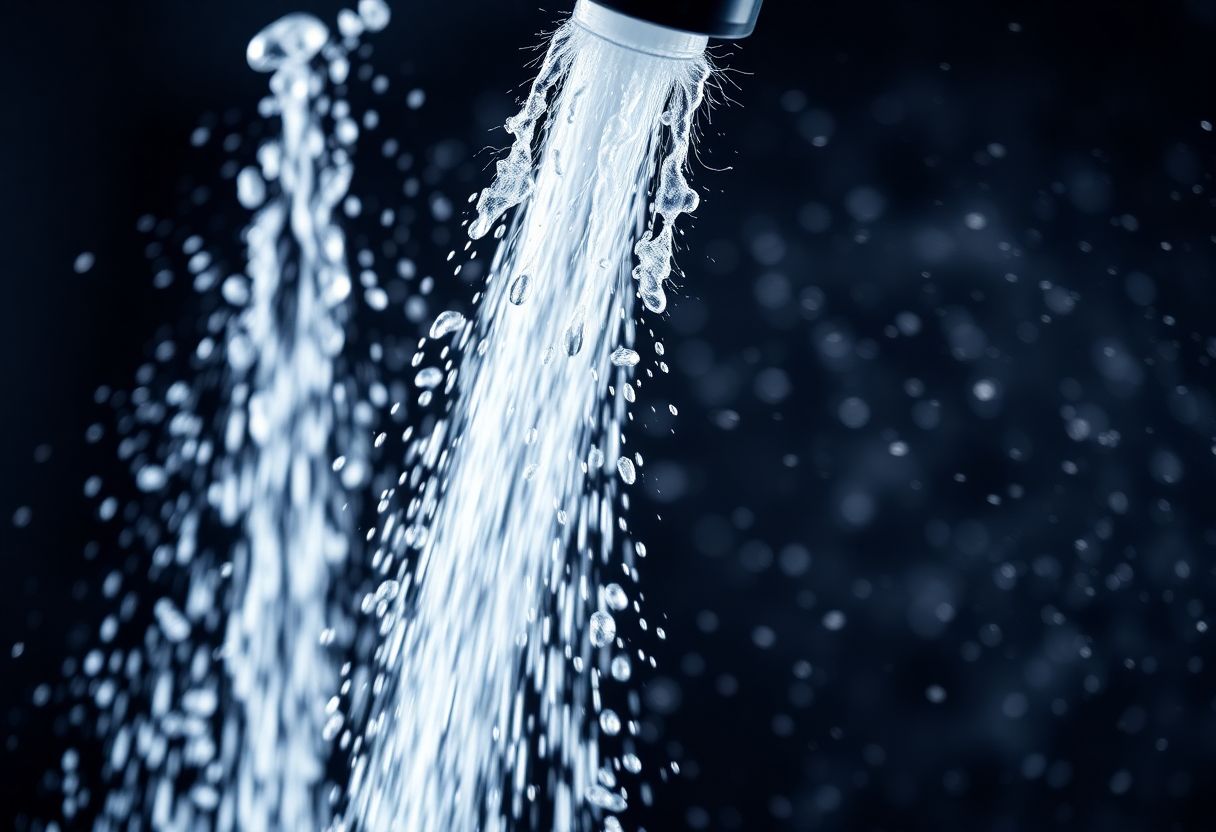
As water moves through the pressure washer, it demonstrates Bernoulli's principle, which states that an increase in the speed of a fluid occurs simultaneously with a decrease in pressure or a decrease in the fluid's potential energy. In a pressure washer, as the water is forced through the narrow nozzle, its velocity increases significantly, creating a high-speed jet.
Impact Force and Impulse
When the high-speed water jet hits a surface, it exerts an impact force. This force, applied over a very short time interval, creates an impulse that can dislodge dirt particles. The effectiveness of this impulse is why pressure washers are so much more efficient at cleaning than simply scrubbing with water and a brush.
The Pressure Washing Process: Step by Step
Let's walk through the process of how a pressure washer transforms ordinary tap water into a powerful cleaning jet:
-
Water Intake: Water enters the pressure washer through the inlet at typical municipal water pressure (around 40-60 PSI).
-
Filtration: The water passes through a filter to remove any debris that could damage the pump.
-
Pump Activation: When the pressure washer is turned on, the motor or engine starts running, powering the water pump.
-
Pressure Build-up: The pump rapidly compresses the water, increasing its pressure by 30 to 80 times normal atmospheric pressure.
-
High-Pressure Flow: The highly pressurized water flows through the high-pressure hose to the spray gun.
-
Nozzle Acceleration: When the trigger is pulled, water is forced through the small opening in the spray nozzle, dramatically increasing its velocity.
-
Jet Formation: As the water exits the nozzle, it forms a concentrated, high-pressure jet.
-
Impact and Cleaning: This high-pressure jet strikes the surface being cleaned with considerable force, dislodging dirt and grime.
Pressure Ratings and Water Flow
Pressure washers are typically rated by two key measurements:
-
Pounds per Square Inch (PSI): This measures the water pressure. Most home-use pressure washers range from 1,300 to 2,800 PSI, while professional models can exceed 4,000 PSI.
-
Gallons Per Minute (GPM): This measures the water flow rate. Home models usually deliver 1.5 to 3 GPM, while commercial units can reach 4 GPM or more.
The cleaning power of a pressure washer is determined by multiplying these two figures, resulting in a "cleaning units" (CU) value. For example, a washer with 2,000 PSI and 2 GPM would have 4,000 cleaning units.
Advanced Features and Technologies
Modern pressure washers incorporate various advanced features to enhance their performance and usability:
Variable Pressure Control
Some high-end models allow users to adjust the pressure output, providing greater versatility for different cleaning tasks.
Detergent Injection Systems
Many pressure washers feature built-in systems for mixing cleaning solutions with the water stream, enhancing cleaning power for certain applications.
Thermal Relief Valves
These valves protect the pump from overheating during extended periods of use by releasing a small amount of water when temperatures rise too high.
Total Stop System (TSS)
This feature automatically shuts off the pump when the trigger is released, extending the life of the pump and reducing energy consumption.
Environmental and Safety Considerations
While pressure washers are incredibly effective cleaning tools, they also come with some environmental and safety considerations:
Water Usage
Pressure washers can use a significant amount of water, typically between 90 to 180 gallons per hour. To minimize environmental impact, consider using water-saving nozzles and collecting and properly disposing of wastewater, especially when using detergents.
Chemical Use
When detergents are necessary, opt for biodegradable, environmentally friendly options. Always follow local regulations regarding the disposal of cleaning wastewater.
Safety Precautions
The high-pressure jet from a pressure washer can cause serious injuries if mishandled. Always wear appropriate personal protective equipment, including safety goggles and closed-toe shoes. Never point the spray at people or animals, and be cautious of kickback when starting the spray.
The Future of Pressure Washing Technology
As technology continues to advance, we can expect to see further innovations in pressure washer design and functionality:
Smart Pressure Washers
Integration with IoT (Internet of Things) technology could allow for remote monitoring and control of pressure washers, optimizing performance and maintenance schedules.
Eco-Friendly Designs
Future models may incorporate water recycling systems or use alternative power sources like solar energy to reduce environmental impact.
Advanced Materials
Development of lighter, stronger materials could lead to more portable and durable pressure washers, expanding their range of applications.
Conclusion
Pressure washers are marvels of engineering that harness the fundamental properties of water and the principles of physics to create a powerful cleaning tool. By understanding the science behind how these machines work, we can appreciate their effectiveness and use them more efficiently and safely.
From the polarity of water molecules to the application of Bernoulli's principle, pressure washers demonstrate how scientific principles can be applied to solve everyday problems. As technology continues to evolve, we can look forward to even more innovative and efficient pressure washing solutions in the future.
Whether you're a homeowner tackling weekend cleaning projects or a professional in the cleaning industry, understanding the inner workings of pressure washers can help you make the most of these powerful tools. By respecting their capabilities and using them responsibly, we can enjoy cleaner environments while minimizing our impact on the world around us.