The Fascinating World of Submarines: Engineering Marvels Beneath the Waves
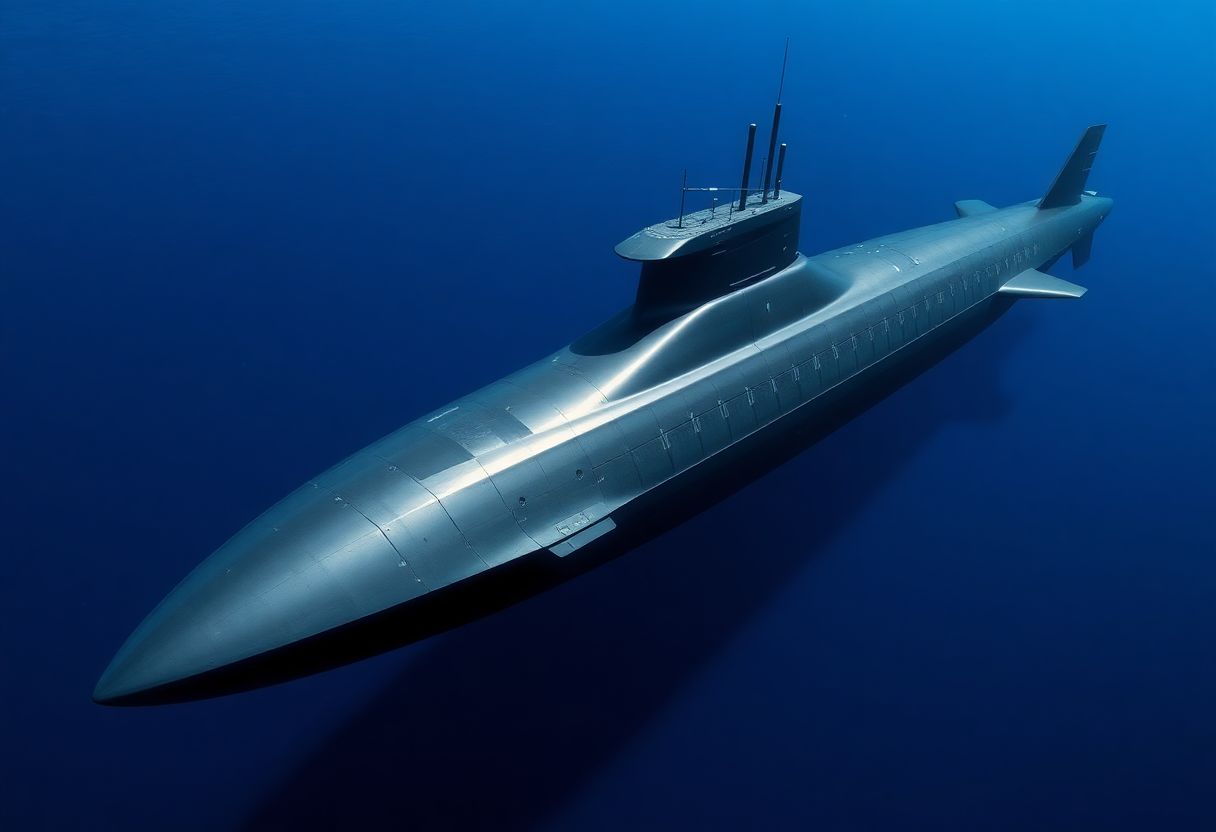
Imagine gliding silently through the inky depths of the ocean, surrounded by crushing pressure yet protected within a technological marvel of human engineering. This is the remarkable world of submarines – vessels that have revolutionized naval warfare, ocean exploration, and our understanding of the underwater realm. In this deep dive, we'll explore the incredible science and engineering behind submarines, from their humble beginnings to the cutting-edge marvels of today.
A Brief History: From Wooden Boats to Nuclear Behemoths
The dream of underwater exploration has captivated humans for centuries. As early as 1620, Cornelis Drebbel constructed a leather-covered wooden rowboat that could submerge in the River Thames. However, it wasn't until the American Revolution that submarines saw their first military application. In 1776, American inventor David Bushnell created the Turtle, a hand-powered egg-shaped vessel designed to attach explosives to enemy ships.
The 19th century saw further experimentation, including Robert Fulton's human-powered Nautilus in 1800. But it was John Philip Holland's designs at the turn of the 20th century that ushered in the modern submarine era. The USS Holland, commissioned in 1900, became the U.S. Navy's first submarine.
World War I demonstrated the devastating potential of submarine warfare, with German U-boats wreaking havoc on Allied shipping. This conflict spurred rapid advancements in submarine technology. By World War II, submarines had become formidable weapons, playing crucial roles in both the Atlantic and Pacific theaters.
The Cold War era brought perhaps the most significant leap in submarine capability – nuclear power. In 1955, the USS Nautilus became the world's first nuclear-powered submarine, capable of remaining submerged for months at a time. This technology fundamentally changed naval strategy and opened up new possibilities for underwater exploration.
The Science of Submergence: How Submarines Work
At their core, submarines operate on a deceptively simple principle – Archimedes' principle of buoyancy. This states that the upward force on an object in a fluid is equal to the weight of the fluid displaced. By carefully controlling their buoyancy, submarines can sink, float, or hover at any depth.
Pressure Hulls: Engineering Against the Crushing Deep
The most critical component of any submarine is its pressure hull. As a submarine descends, the hydrostatic pressure increases linearly with depth. At 1,000 meters (3,280 feet), the pressure reaches a staggering 100 atmospheres – equivalent to balancing a fully loaded jumbo jet on your chest.
To withstand these immense forces, modern submarines employ a double-hull design. The outer hull is relatively thin and hydrodynamic, while the inner pressure hull is a fortress of high-strength steel or titanium. The cylindrical shape isn't just for hydrodynamics; it's crucial for evenly distributing the crushing force of the deep.
Materials science plays a vital role in submarine design. High-yield HY-80 steel, developed in the 1950s, allowed for deeper dives. Today, advanced materials like maraging steel and titanium alloys push the boundaries even further. Some deep-diving research submersibles use ceramic pressure spheres, trading off internal space for extreme depth capabilities.
Ballast and Trim: The Art of Underwater Flight
Controlling a submarine's depth and attitude requires a delicate balance of systems. Main ballast tanks run along the outer hull, capable of being filled with either air or water. When surfaced, these tanks are filled with air, providing positive buoyancy. To submerge, the tanks are flooded, making the submarine negatively buoyant.
Fine control comes from smaller trim tanks and variable ballast systems. These allow submariners to achieve neutral buoyancy – the holy grail of submarine operation where the vessel neither sinks nor rises. It's a constant battle against changing pressures, temperatures, and the gradual consumption of onboard supplies that affect the submarine's weight.
Hydrodynamic control surfaces, called dive planes, work in conjunction with the ballast systems. These wing-like structures on the sail (conning tower) and stern can be angled to generate lift or downforce, allowing for precise depth control and the ability to change depth without altering buoyancy.
Propulsion: From Diesel-Electric to Nuclear Power
Early submarines relied on human power or primitive engines that required frequent surfacing. The development of the diesel-electric propulsion system in the early 20th century was a game-changer. These submarines use diesel engines to charge batteries while surfaced or snorkeling near the surface. When submerged, they switch to quiet electric motors powered by those batteries.
The advent of nuclear propulsion in the 1950s revolutionized submarine capabilities. A small nuclear reactor generates steam to drive turbines, providing virtually unlimited underwater endurance. The USS Nautilus' famous transmission "Underway on nuclear power" in 1955 marked the beginning of a new era.
Modern nuclear submarines can remain submerged for months, limited only by food supplies and crew endurance. The newest reactors, like those in the US Navy's Virginia-class submarines, are designed to last the entire 33-year lifespan of the vessel without refueling.
For non-nuclear nations, Air-Independent Propulsion (AIP) systems offer extended submerged endurance without the complexity of nuclear power. Technologies like fuel cells or closed-cycle diesel engines allow conventional submarines to remain underwater for weeks instead of days.
Navigation and Sensing: Masters of the Silent Realm
Operating in the lightless world beneath the waves requires a suite of sophisticated navigation and sensing systems.
Inertial navigation systems use highly precise gyroscopes and accelerometers to track the submarine's movement from a known starting point. Modern fiber-optic gyroscopes can detect rotation rates as small as 0.0001 degrees per hour, allowing for incredibly accurate dead reckoning.
When near the surface, submarines can use GPS for precise positioning. Some advanced designs incorporate retractable GPS masts, allowing for brief exposures to update position without fully surfacing.
Sonar remains the primary means of sensing the underwater environment. Passive sonar systems listen for sounds from other vessels or marine life. Active sonar sends out pulses of sound and analyzes the returning echoes, much like echolocation in bats or dolphins. Advanced processing techniques can differentiate between natural sounds, other vessels, and even identify specific ship types.
Modern submarines also carry sophisticated electronic support measures (ESM) to detect radar and radio emissions from surface ships and aircraft. Periscopes, once purely optical, now incorporate high-resolution cameras and thermal imaging systems for enhanced situational awareness.
Life Support: A Self-Contained Underwater World
Sustaining human life in the sealed environment of a submarine for months at a time is an engineering challenge on par with space exploration. Every breath, every drop of water, and every watt of power must be carefully managed.
Oxygen generation typically relies on electrolysis of water, splitting H2O molecules into breathable oxygen and hydrogen (which is usually vented overboard). Carbon dioxide scrubbers use materials like soda lime to chemically remove CO2 from the air, maintaining a breathable atmosphere.
Fresh water is produced through reverse osmosis desalination of seawater. Modern systems can produce thousands of liters per day, enough for drinking, cooking, and even showers – a luxury unheard of in early submarines.
Careful waste management is crucial. Advanced treatment systems allow for the recycling of greywater and the safe storage or treatment of other waste products.
Perhaps the most challenging aspect of submarine life support is maintaining the psychological well-being of the crew. Submarines incorporate exercise equipment, entertainment systems, and carefully planned routines to combat the effects of long-term confinement in a windowless environment.
Military Applications: Silent Sentinels of the Deep
The primary military advantage of submarines lies in their stealth. A well-operated nuclear submarine can remain undetected for its entire deployment, silently patrolling or approaching targets.
Strategic deterrence remains a key role for submarines. Nuclear-powered ballistic missile submarines (SSBNs) carry a significant portion of many nations' nuclear arsenals. The ability to hide these powerful weapons in the vast expanse of the oceans makes them a crucial part of the nuclear triad (along with land-based missiles and strategic bombers).
Attack submarines hunt other submarines and surface ships, using their stealth to gain tactical advantage. They can also launch cruise missiles against land targets, as seen in various conflicts since the 1990s.
Intelligence gathering is another crucial submarine mission. Their ability to operate covertly near shorelines allows for surveillance, electronic intelligence collection, and even the tapping of undersea communications cables.
Special operations support has become increasingly important. Submarines can covertly insert and extract special forces teams, and some are equipped with specialized lockout chambers for divers or even mini-submarines for covert operations.
Scientific Research: Unveiling the Ocean's Secrets
Beyond their military roles, submarines and submersibles have become indispensable tools for ocean research and exploration.
Deep-sea exploration submersibles like Alvin (Woods Hole Oceanographic Institution) and Nautile (French oceanographic fleet) have allowed scientists to study hydrothermal vents, discover new species, and explore the most extreme environments on Earth.
Oceanographic research submarines collect vital data on ocean currents, temperature variations, and chemical composition at depths unreachable by surface vessels. This data is crucial for understanding global climate patterns and the health of marine ecosystems.
Underwater archaeology has been revolutionized by submarine technology. Submersibles have allowed for the detailed study of shipwrecks like the Titanic and ancient underwater cities, providing invaluable historical insights.
The Future of Submarine Technology
As we look to the future, several exciting developments promise to push submarine capabilities even further:
-
Unmanned Underwater Vehicles (UUVs) are becoming increasingly sophisticated. These autonomous or remotely operated submarines can perform dangerous or repetitive tasks without risking human lives. Some naval strategists envision swarms of UUVs working in concert with crewed submarines for enhanced capabilities.
-
Advanced power systems, such as lithium-ion batteries and more efficient AIP technologies, are extending the underwater endurance of conventional submarines.
-
Biomimetic designs inspired by marine life could lead to more efficient and quieter submarines. The U.S. Navy has already experimented with ray-inspired submersibles for mine detection.
-
Additive manufacturing (3D printing) may allow for rapid production of spare parts or even entire submarine hulls, revolutionizing construction and maintenance.
-
Quantum sensing technologies could provide unprecedented accuracy in navigation and detection capabilities, potentially rendering traditional stealth techniques obsolete.
Conclusion: The Endless Frontier Beneath the Waves
From their humble beginnings as leather-covered wooden boats to today's nuclear-powered leviathans, submarines represent one of humanity's greatest engineering triumphs. They have reshaped naval warfare, opened up new frontiers in scientific exploration, and continue to guard the silent depths of our planet's oceans.
As technology advances, submarines will undoubtedly play an even greater role in our understanding and utilization of the underwater realm. Whether for military deterrence, scientific discovery, or yet unimagined applications, these extraordinary vessels will continue to push the boundaries of what's possible beneath the waves.
The oceans, covering more than 70% of our planet's surface, remain largely unexplored. Submarines are our key to unlocking the mysteries of this vast, alien world. As we face global challenges like climate change and resource scarcity, the knowledge and capabilities provided by submarine technology may prove more vital than ever.
The silent world beneath the waves holds untold wonders and challenges. Thanks to the ingenious combination of scientific principles, engineering prowess, and human determination embodied in submarines, we stand ready to meet those challenges and uncover those wonders. The fascinating world of submarines continues to evolve, promising exciting discoveries and innovations in the years to come.