The Geiger Counter: Unveiling the Hidden World of Radiation
In our modern world, we are constantly surrounded by an invisible realm of radiation. While our senses cannot directly perceive it, this hidden phenomenon can have profound impacts on living organisms and the environment. Enter the Geiger counter – a remarkable device that serves as our window into this unseen world. This comprehensive guide will explore the fascinating science behind Geiger counters, their history, and their crucial role in various fields of science and safety.
Understanding Radioactivity: The Foundation of Geiger Counter Technology
To truly appreciate how Geiger counters function, we must first delve into the atomic world and understand the nature of radioactivity.
The Building Blocks of Matter
At the heart of all matter lies the atom, a microscopic structure composed of even smaller subatomic particles. The nucleus, residing at the center of the atom, contains positively charged protons and neutral neutrons. Orbiting this nucleus are negatively charged electrons. While most atoms exist in a stable state, some possess an imbalance in their nuclear structure, rendering them unstable. These unstable atoms are known as radioactive isotopes.
Isotopes can be thought of as atomic siblings – they belong to the same element (having the same number of protons) but differ in their neutron count. For instance, carbon-12 with its 6 protons and 6 neutrons is stable, while carbon-14, containing 6 protons and 8 neutrons, is radioactive.
The Decay Process and Ionizing Radiation
Radioactive isotopes undergo a process called radioactive decay in an attempt to achieve stability. During this decay, the atom emits particles or energy in the form of radiation. The most common types of radiation produced during this process are alpha particles (consisting of 2 protons and 2 neutrons), beta particles (high-energy electrons), and gamma rays (high-energy electromagnetic waves).
A key characteristic of this emitted radiation is its ability to ionize matter – to knock electrons off atoms it encounters, creating ions. This ionizing property is what makes radiation detection possible and forms the basis for how Geiger counters operate.
The Geiger Counter: Design and Components
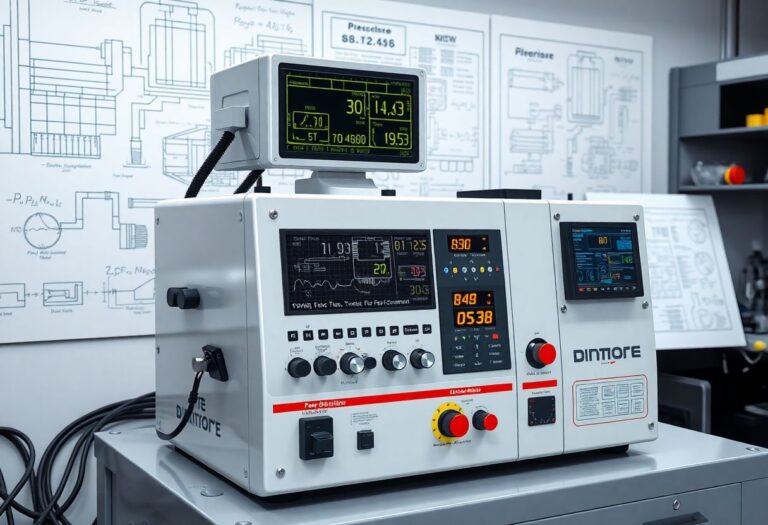
A Geiger counter, also known as a Geiger-Müller counter, is an instrument specifically designed to detect and measure ionizing radiation. Its primary components include:
- A Geiger-Müller tube
- Electronics for signal processing
- A display (either an analog meter or digital readout)
- Often, a speaker to provide audible feedback
The Geiger-Müller Tube: The Heart of the Device
The Geiger-Müller tube is the core component where radiation detection occurs. It typically consists of a metal cylinder filled with a low-pressure gas, often argon or helium. A thin wire runs through the center of the tube, and one end features a window (frequently made of mica) that allows radiation to enter.
The Inner Workings of a Geiger Counter
The process by which a Geiger counter detects radiation is a fascinating interplay of physics and electronics. Let's explore this process step by step:
-
As a particle of ionizing radiation passes through the window of the Geiger-Müller tube, it collides with gas molecules inside, creating ions and free electrons.
-
A high voltage (typically ranging from 400 to 900 volts) is applied between the central wire (anode) and the tube wall (cathode). This creates a strong electric field that accelerates the free electrons towards the central wire.
-
As these accelerated electrons move, they collide with more gas molecules, creating additional ions and electrons. This cascading effect is known as a Townsend avalanche.
-
When this avalanche of electrons reaches the central wire, it generates a brief pulse of electric current.
-
The electronic circuitry detects this pulse and registers it as a "count."
-
This count is then displayed on the meter or digital readout. If the device is equipped with a speaker, you hear the characteristic "click" for each detected particle.
-
Following each detection event, there's a brief period called "dead time" that allows the tube to reset before it can detect another particle.
The Geiger Discharge: Nature's Particle Amplifier
One of the most ingenious aspects of the Geiger counter's design is how it amplifies a minuscule initial ionization event into a detectable signal. This process, known as the Geiger discharge, works as follows:
- The initial radiation particle might create only a handful of ion pairs.
- The strong electric field accelerates these electrons to high speeds.
- These accelerated electrons then ionize more gas molecules, releasing additional electrons.
- This process repeats, creating an avalanche effect of electrons.
- Remarkably, this avalanche can multiply the original signal by a factor of 10^8 or more!
This natural amplification is what gives Geiger counters their exceptional sensitivity, allowing them to detect even single particles of radiation.
Quenching: The Reset Button
After a discharge event, the Geiger-Müller tube needs to "reset" before it can detect another particle. This crucial process is called quenching and can be achieved through two primary methods:
-
External Quenching: This involves using an electronic circuit to briefly lower the voltage across the tube.
-
Internal Quenching: This method involves adding a small amount of alcohol vapor or halogen gas to the tube. These molecules absorb the positive ions, preventing continuous discharge.
Types of Radiation Detected
Geiger counters are versatile instruments capable of detecting multiple types of ionizing radiation:
- Alpha Particles: These are only detected if the tube has a very thin window, as alpha particles don't penetrate far into materials.
- Beta Particles: These are easily detected, as they readily pass through the tube window.
- Gamma Rays: While detectable, gamma rays are measured with lower efficiency compared to alpha or beta particles.
The Evolution of the Geiger Counter
The development of the Geiger counter is a testament to scientific collaboration and innovation spanning over a century:
-
In 1908, Ernest Rutherford and Hans Geiger developed the first version, capable of detecting alpha particles.
-
In 1928, Geiger and Walther Müller significantly improved the design, creating the Geiger-Müller tube that forms the basis of modern Geiger counters.
-
During the 1940s and 1950s, Geiger counters became widely used in nuclear research, playing a crucial role in the Manhattan Project and uranium prospecting.
-
The Chernobyl disaster in 1986 highlighted the critical importance of radiation detection for public safety, leading to increased public awareness of Geiger counters.
-
Following the Fukushima nuclear accident in 2011, there was a renewed interest in personal radiation detection devices, with many civilians seeking to purchase their own Geiger counters.
Real-World Applications
The versatility and reliability of Geiger counters have led to their adoption in a wide array of fields:
Nuclear Power Industry
In nuclear power plants, Geiger counters play a crucial role in monitoring radiation levels both within the facility and in the surrounding environment. They are used to ensure the safety of workers and to detect any potential leaks or abnormalities in radiation levels.
Medical Physics
Geiger counters are essential tools in medical physics departments. They are used to calibrate medical radiation equipment, ensuring that patients receive the correct dosage during radiotherapy treatments. They also play a role in monitoring radiation exposure for medical staff working with radioactive materials.
Environmental Monitoring
Environmental scientists use Geiger counters to check for radioactive contamination in soil, water, or air. This is particularly important in areas near nuclear facilities or in regions affected by nuclear accidents.
Space Exploration
In the realm of space exploration, Geiger counters are used to measure cosmic radiation levels on spacecraft. This data is crucial for understanding the radiation environment in space and for ensuring the safety of astronauts on long-duration missions.
Archaeology
Archaeologists utilize Geiger counters in carbon-14 dating techniques. By measuring the remaining radioactivity in organic materials, they can estimate the age of artifacts and archaeological samples.
Industrial Applications
In industry, Geiger counters find use in non-destructive testing and thickness measurements. They can be used to detect flaws in materials or to measure the thickness of coatings without damaging the item being tested.
Limitations and Considerations
While Geiger counters are incredibly useful instruments, it's important to understand their limitations:
-
Energy Discrimination: Standard Geiger counters can't distinguish between different types or energies of radiation without additional equipment. They simply count ionization events, regardless of the source.
-
Saturation: At very high radiation levels, the detector can become saturated. This means it might underreport the true intensity of radiation in extremely radioactive environments.
-
Background Radiation: There's always some natural background radiation present in the environment. This needs to be accounted for when taking measurements, especially when trying to detect low levels of artificial radiation.
-
Directional Sensitivity: Geiger counters generally can't determine the direction of incoming radiation. They simply detect its presence.
Modern Developments in Geiger Counter Technology
While the basic principle of the Geiger counter hasn't changed significantly since its invention, modern technology has brought about several improvements:
Miniaturization
Advancements in electronics have led to the development of portable, handheld Geiger counters. These compact devices make radiation detection more accessible for field work and personal use.
Digital Displays
Modern Geiger counters often feature digital displays instead of analog meters. These are easier to read and can provide more detailed information, such as cumulative exposure over time.
Computer Interfaces
Many contemporary models can interface with computers, allowing for data logging and advanced analysis. This feature is particularly useful in scientific and industrial applications where long-term monitoring is required.
Smartphone Integration
Some cutting-edge Geiger counters can connect to smartphones, enabling extended functionality. Users can log data, create maps of radiation levels, and even share information with others through dedicated apps.
DIY Geiger Counters: A Hands-On Approach to Understanding Radiation
For science enthusiasts and those who love to tinker, building a DIY Geiger counter can be an exciting and educational project. Many kits are available that provide the necessary components:
- A Geiger-Müller tube
- A high-voltage power supply
- A microcontroller for signal processing
- Display and interface components
Building your own Geiger counter can provide a deep, hands-on understanding of the principles behind radiation detection. However, it's crucial to remember that homemade devices should be considered learning tools rather than certified safety equipment.
Safety and Responsible Use of Geiger Counters
While Geiger counters are fascinating devices that allow us to peer into the invisible world of radiation, it's paramount to use them responsibly:
- Always adhere to proper safety procedures when working with or around radioactive materials.
- Understand that detecting radiation doesn't necessarily indicate danger – natural background radiation is omnipresent in our environment.
- For serious concerns about radiation exposure or contamination, always consult with qualified radiation safety professionals.
Conclusion: Our Ears to the Atomic World
Geiger counters represent a remarkable achievement in science and engineering, allowing us to detect and measure an otherwise imperceptible phenomenon. From their early development by Geiger and Müller to modern digital devices, these instruments continue to play a vital role in our understanding and management of radiation.
As we navigate the complexities of nuclear power, advance medical treatments, explore space, and monitor our environment, the humble Geiger counter remains an indispensable tool. It serves as our sentinel in the atomic realm, translating the language of particles into clicks and counts we can comprehend.
In an age where invisible threats can seem overwhelming, the Geiger counter stands as a testament to human ingenuity – a device that allows us to quantify the unseen and make informed decisions about our safety and our environment. As we continue to push the boundaries of science and technology, the principles behind the Geiger counter will undoubtedly continue to inform and inspire new generations of radiation detection technologies, helping us to better understand and safely coexist with the radioactive world around us.