How Does an Electrostatic Precipitator Work? Cleaning Up Our Skies with Static Electricity
Introduction: The Battle Against Smoke and Pollution
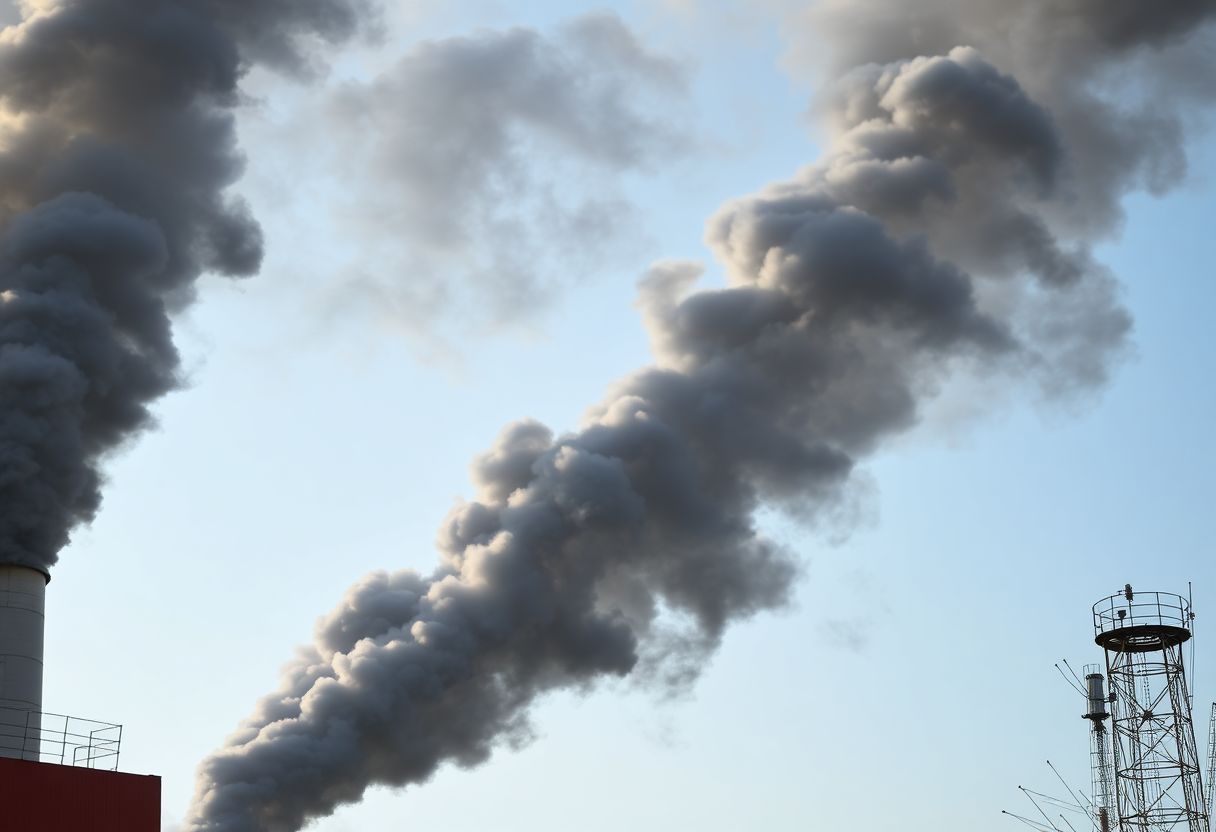
Imagine standing in a bustling city center, surrounded by towering skyscrapers and the constant hum of activity. Now, picture thick plumes of dark smoke billowing from factory chimneys, obscuring the sky and leaving a sour taste in your mouth. This scene was once a common sight in many industrial areas, but thanks to innovative technologies like electrostatic precipitators, our urban landscapes have become considerably cleaner.
In this article, we'll dive deep into the fascinating world of electrostatic precipitators, focusing particularly on electrostatic smoke precipitators. We'll explore how these ingenious devices use the power of static electricity to clean our air, making industrial processes more environmentally friendly. So, let's roll up our sleeves and discover how we're using science to breathe easier!
The Basics: What Is an Electrostatic Precipitator?
Before we delve into the intricacies of how electrostatic precipitators work, let's start with a simple definition:
An electrostatic precipitator (ESP) is a filtration device that uses electrical charges to remove particles from flowing gases, such as smoke from industrial processes.
Think of it as a high-tech air purifier for industrial smokestacks. Its primary job is to catch tiny particles of soot, ash, and other pollutants before they can escape into the atmosphere. But how does it accomplish this seemingly magical feat? The secret lies in harnessing the power of static electricity – the same force that makes your hair stand on end when you rub a balloon on it!
A Brief History: From Balloons to Smokestacks
The story of electrostatic precipitators begins with a simple observation that many of us have experienced: static electricity. In the early 20th century, scientists and inventors began to wonder if this phenomenon could be put to practical use.
In 1906, an American chemist named Frederick Cottrell had a groundbreaking idea. He realized that the principles of static electricity could be applied on a larger scale to remove particles from gases. Cottrell filed a patent for his invention in 1907, describing how high-voltage electrodes could clean factory fumes and dust.
The first large-scale precipitator was built in 1911 for a cement company in California. From there, the technology spread rapidly, finding applications in various industries where air pollution was a concern.
The Science Behind the Magic: How Static Electricity Cleans Air
To understand how an electrostatic precipitator works, we need to grasp a few key concepts about electricity and particles. Let's break it down step by step:
-
Static Electricity: This is the imbalance of electric charges within or on the surface of a material. It's called "static" because the charges remain in one area rather than flowing through a conductor.
-
Particles in Smoke: Smoke might look like a gas, but it's actually an aerosol – tiny solid particles suspended in a gas. These particles are what we want to remove.
-
Charging Particles: If we can give these particles an electrical charge, we can control where they go.
-
Attraction of Opposite Charges: Remember the old saying "opposites attract"? This principle is key to how electrostatic precipitators work.
Now, let's see how these concepts come together in an electrostatic precipitator:
-
Ionization: As dirty air enters the precipitator, it passes through an ionization section. Here, electrodes charged with a high negative voltage create a corona discharge, which ionizes the gas molecules.
-
Particle Charging: The ionized gas molecules collide with the smoke particles, transferring their negative charge. Now all the particles in the airstream carry a negative charge.
-
Collection: The charged particles then pass into a collection section. Here, they encounter plates or tubes with a strong positive charge. Remember, opposites attract! The negatively charged particles are drawn to these positively charged surfaces like moths to a flame.
-
Cleaning: The particles stick to the collection surfaces, effectively removing them from the air. Periodically, these surfaces are cleaned to remove the accumulated particles, often by vibrating or washing them.
-
Clean Air Exit: The air, now stripped of most of its particulate pollutants, exits the precipitator and can be safely released into the atmosphere.
Types of Electrostatic Precipitators: One Size Doesn't Fit All
While the basic principle remains the same, there are several types of electrostatic precipitators designed to handle different situations:
-
Plate-Wire Precipitators: This is the most common type. It uses wires to create the corona discharge and plates for collection. Imagine a series of curtains (the plates) with wires running between them.
-
Tubular Precipitators: Instead of plates, these use tubes. The particles are collected on the inner surfaces of positively charged tubes. This design is often used when space is limited or when dealing with sticky particles.
-
Wet Precipitators: These combine the electrostatic principle with water sprays. The water helps to cool the gas and can also neutralize certain gaseous pollutants. They're particularly useful in situations where there's a risk of sparks or fires.
-
Two-Stage Precipitators: These separate the ionization and collection stages more distinctly, which can be more efficient for certain types of particles.
Each type has its strengths and is chosen based on factors like the composition of the smoke, the volume of gas to be treated, and the specific pollutants involved.
Inside a Real Electrostatic Smoke Precipitator: A Journey Through the Cleaning Process
Let's take a virtual tour through a typical electrostatic smoke precipitator to see how all these components work together:
-
Inlet: Our journey begins as the dirty flue gas enters the precipitator. This gas is a complex mixture of various pollutants – soot, ash, and potentially harmful gases.
-
Pre-treatment: In some systems, the gas first passes through a conditioning stage. This might involve cooling the gas or adjusting its moisture content to optimize the precipitation process.
-
Ionization Section: As the gas flows into the main chamber, it encounters the first set of electrodes. These are typically thin wires charged to an extremely high negative voltage – often between 50,000 to 100,000 volts! This creates a corona discharge, ionizing the gas molecules.
-
Particle Charging: In this electric field, the ionized gas molecules collide with the smoke particles, transferring their negative charge. Now, every tiny speck of soot or ash carries a negative electrical charge.
-
Collection Section: The charged particles move into the collection area. Here, they encounter large plates or tubes with a strong positive charge. The negatively charged particles are irresistibly drawn to these surfaces.
-
Particle Removal: As particles accumulate on the collection surfaces, they form a layer. To maintain efficiency, these surfaces need regular cleaning. This is often done through a process called "rapping" – literally, striking the collection surfaces to shake off the accumulated particles.
-
Particle Disposal: The dislodged particles fall into hoppers at the bottom of the precipitator. From here, they can be removed for disposal or, in some cases, recycled.
-
Clean Air Exit: The air, now stripped of most of its particulate matter, exits the precipitator. It's not 100% clean, but it's dramatically improved – often with more than 99% of particulates removed.
-
Monitoring and Control: Throughout this process, various sensors and control systems ensure that voltages are maintained at optimal levels and that the system is functioning efficiently.
Real-World Applications: Where Electrostatic Precipitators Make a Difference
Electrostatic precipitators have found their way into a wide range of industries. Here are some of the most common applications:
-
Power Plants: Coal-fired power plants are one of the biggest users of ESPs. These plants produce large volumes of flue gas containing ash and other particulates that need to be removed before the gas can be released.
-
Cement Industry: Cement production creates a lot of dust. ESPs help capture this dust, not only reducing pollution but also allowing the dust to be recycled back into the production process.
-
Steel Mills: The production of steel involves high-temperature processes that generate metallic fumes and dust. ESPs are crucial in capturing these pollutants.
-
Paper Mills: The paper industry uses ESPs to control emissions from recovery boilers and lime kilns.
-
Waste Incineration: When waste is burned, it produces a complex mixture of pollutants. ESPs play a vital role in cleaning the emissions from these facilities.
-
Mining and Mineral Processing: ESPs help control dust emissions in various mining and mineral processing operations.
In each of these applications, electrostatic precipitators not only help companies comply with environmental regulations but also often improve process efficiency by allowing the recovery and reuse of captured materials.
The Effectiveness of Electrostatic Precipitators: Breathing Easier
So, how well do these devices actually work? The effectiveness of an electrostatic precipitator is typically measured by its collection efficiency – the percentage of particles it removes from the gas stream.
Modern electrostatic precipitators are incredibly effective. They can remove more than 99% of the particulates from a gas stream, even when dealing with very fine particles. For example:
- A well-designed ESP can capture 99.9% of particles larger than 1 micron (a micron is one-millionth of a meter).
- Even for smaller particles, in the range of 0.1 to 1 micron, collection efficiencies of 95-99% are achievable.
To put this in perspective, a human hair is about 70 microns in diameter. ESPs are capturing particles far smaller than we can see with the naked eye!
However, it's important to note that the effectiveness of an ESP can vary depending on several factors:
- Particle Properties: The size, electrical resistivity, and chemical composition of the particles all affect how well they can be captured.
- Gas Composition: The temperature, moisture content, and chemical makeup of the gas can influence the ESP's performance.
- Design Parameters: The size of the ESP, the strength of the electrical field, and the gas flow rate all play a role in its efficiency.
Challenges and Limitations: When Static Isn't Enough
While electrostatic precipitators are powerful tools in the fight against air pollution, they're not without their challenges:
-
High Resistivity Particles: Some types of particles, particularly those from low-sulfur coal, have high electrical resistivity. This can make them harder to charge and collect effectively.
-
Energy Consumption: ESPs require a continuous supply of high-voltage electricity to operate. This energy consumption can be significant in large industrial applications.
-
Maintenance: The high-voltage components and the need for regular cleaning of collection surfaces mean that ESPs require careful maintenance.
-
Space Requirements: Large-scale ESPs can be quite large, which can be a challenge in facilities with limited space.
-
Initial Cost: While they're often cost-effective in the long run, the initial investment for an ESP system can be substantial.
-
Ozone Production: The high-voltage discharges in ESPs can produce small amounts of ozone, which is itself a pollutant.
-
Ineffectiveness for Gases: While ESPs are excellent at removing particulates, they're not effective at removing gaseous pollutants. Additional systems are often needed for comprehensive air cleaning.
The Future of Electrostatic Precipitation: Innovations on the Horizon
As environmental regulations become stricter and our understanding of air pollution deepens, the technology of electrostatic precipitation continues to evolve. Here are some exciting developments to watch:
-
Hybrid Systems: Combining ESPs with other technologies like fabric filters or scrubbers can address a wider range of pollutants more effectively.
-
Smart Controls: Advanced control systems using artificial intelligence can optimize ESP performance in real-time, adjusting to changing conditions.
-
New Electrode Designs: Researchers are exploring novel electrode shapes and materials to improve charging efficiency and reduce energy consumption.
-
Nanofiber Technology: Some scientists are investigating the use of nanofibers to enhance particle collection, especially for ultrafine particles.
-
Low-Temperature Plasma: This technology could extend the capabilities of ESPs to handle a broader range of pollutants, including some gases.
-
Energy Recovery: There's growing interest in finding ways to recover and reuse the energy input into ESPs, improving their overall efficiency.
Conclusion: Clearing the Air, One Particle at a Time
From humble beginnings with balloons and sweaters, the principle of static electricity has grown into a powerful tool in our fight against air pollution. Electrostatic precipitators, particularly electrostatic smoke precipitators, have played a crucial role in cleaning up industrial emissions and improving air quality in cities around the world.
As we've explored in this article, these devices use ingenious applications of basic electrical principles to capture tiny particles that would otherwise escape into our atmosphere. While they're not a complete solution to air pollution – they can't capture gaseous pollutants, for instance – they're an essential part of our environmental protection toolkit.
The story of electrostatic precipitators is a testament to human ingenuity and our ability to turn scientific principles into practical solutions for real-world problems. As we continue to face environmental challenges, technologies like these give us hope that we can find ways to balance industrial progress with environmental stewardship.
So the next time you see a power plant or factory chimney without the thick plumes of smoke that were once so common, remember the invisible work being done by electrostatic precipitators. They're silently cleaning our air, one tiny particle at a time, helping us all breathe a little easier.