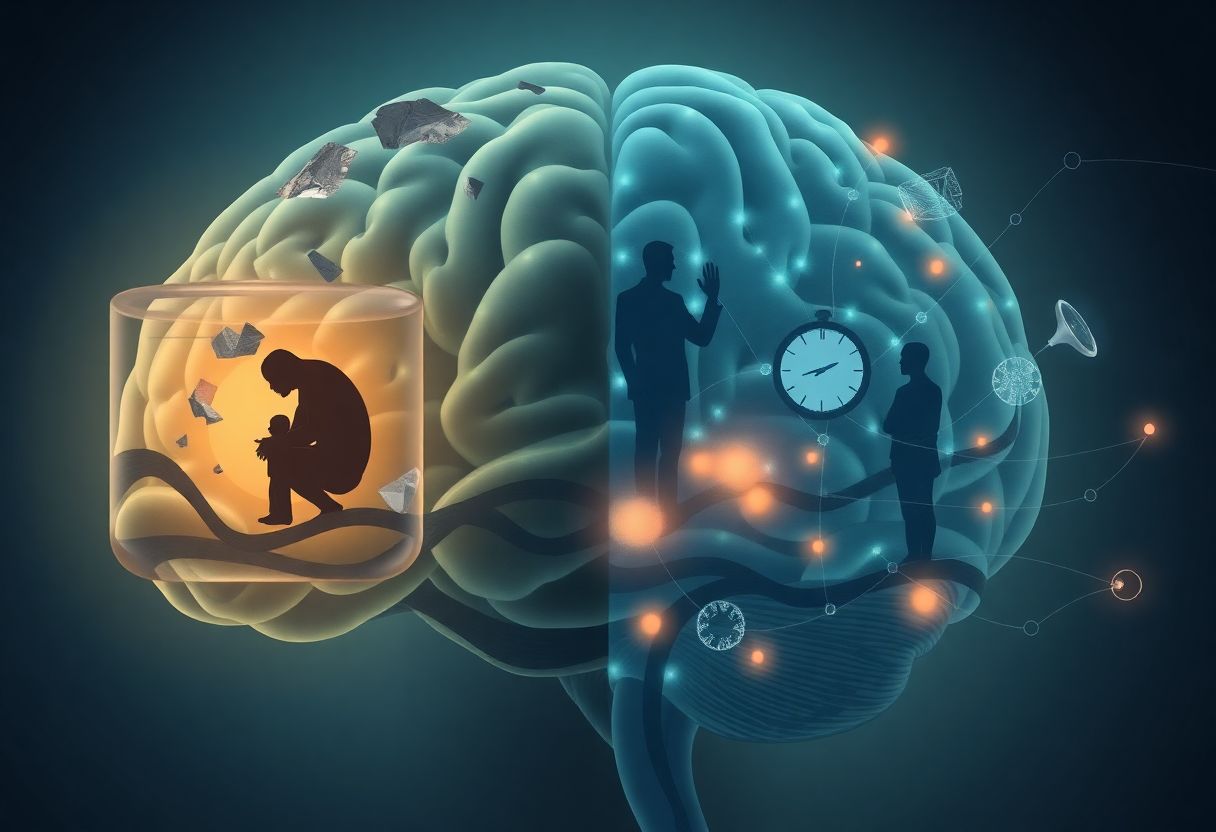
10 Fascinating Psychology Experiments That Reveal the Mysteries of Human Behavior
Psychology, the scientific study of the human mind and behavior, has given us profound insights into how we think, feel, and act. Through carefully designed experiments, researchers have uncovered surprising truths about human nature that challenge our assumptions and expand our understanding of ourselves. In this article, we'll explore ten groundbreaking psychology experiments that have shaped our knowledge of the human psyche and continue to influence how we view ourselves and others.
1. The Invisible Gorilla: How Our Intuitions Deceive Us
In 1999, psychologists Daniel Simons and Christopher Chabris conducted an experiment that would become one of the most famous demonstrations of inattentional blindness. Their study, known as "The Invisible Gorilla," revealed how easily we can miss seemingly obvious events when our attention is focused elsewhere.
In the experiment, participants were asked to watch a video of people passing basketballs and count the number of passes made by players wearing white shirts. Halfway through the video, a person in a gorilla suit walks into the frame, beats their chest, and exits. Astonishingly, about half of the participants failed to notice the gorilla, despite it being in clear view for several seconds.
This finding has profound implications for our understanding of attention and perception. It suggests that our brains are not like video cameras, passively recording everything in our field of view. Instead, we actively construct our perception of reality, and this construction can be surprisingly incomplete. The experiment highlights how we can be blind to unexpected events, even when they occur right in front of our eyes.
The implications of this study extend far beyond the laboratory. In everyday life, inattentional blindness can have serious consequences, particularly in situations that require vigilance, such as driving or monitoring security cameras. It serves as a humbling reminder that our perception of the world is far from infallible and that we should be cautious about overestimating our ability to notice everything around us.
2. The Pratfall Effect: How Imperfection Increases Attractiveness
In 1966, psychologist Elliot Aronson conducted a study that revealed a counterintuitive aspect of human attraction: the "pratfall effect." This phenomenon suggests that individuals who are perceived as highly competent become more likable when they make a small mistake.
Aronson's experiment involved participants listening to recordings of people answering a series of difficult quiz questions. In some versions of the recording, the person answering questions (who was actually an actor) performed exceptionally well, getting 92% of the answers correct. In other versions, the person performed averagely, getting only 30% correct. At the end of some recordings, participants heard the sound of a chair scraping and a cup spilling, followed by the person saying, "Oh my goodness, I've spilled coffee all over my new suit."
The results were fascinating. When the highly competent individual made this small blunder, participants rated them as significantly more likable than when they didn't make the mistake. Conversely, for the average performer, the coffee spill actually decreased their likability.
This experiment reveals a nuanced aspect of human social psychology. It suggests that we are drawn to individuals who demonstrate high competence but also show a degree of humanity or fallibility. The pratfall effect may occur because a small mistake humanizes a highly competent person, making them seem more relatable and approachable.
The implications of this study extend to various social and professional contexts. It suggests that leaders, public figures, or anyone in a position of expertise might benefit from occasionally showing their human side, rather than maintaining an image of flawless perfection. This insight has influenced approaches to personal branding, public relations, and even how we present ourselves in social situations.
3. The Malleability of Memory: How Easily Our Recollections Can Be Altered
Elizabeth Loftus and John Palmer's groundbreaking 1974 study on eyewitness testimony dramatically illustrated how easily our memories can be influenced and altered. Their experiment, which has become a cornerstone in the field of memory research, demonstrated that the way questions are phrased can significantly affect how people recall events.
In their study, participants watched films of automobile accidents and were then asked to estimate the speed of the vehicles involved. The crucial manipulation was in the wording of the question. Some participants were asked, "About how fast were the cars going when they smashed into each other?" Others were asked the same question, but with the word "smashed" replaced by "hit," "collided," "bumped," or "contacted."
The results were striking. Participants who were asked about cars that "smashed" into each other estimated significantly higher speeds than those who were asked about cars that "contacted" each other. Even more remarkably, when questioned a week later, those who had been asked about cars "smashing" were more likely to report having seen broken glass in the video, even though no broken glass was actually present.
This experiment revealed the profound impact that post-event information can have on our memories. It showed that memory is not like a video recording that can be played back with perfect accuracy. Instead, our recollections are reconstructed each time we recall them, making them susceptible to suggestion and modification.
The implications of this research are far-reaching, particularly in legal contexts where eyewitness testimony can play a crucial role. It has led to changes in how police conduct interviews with witnesses and has raised important questions about the reliability of eyewitness accounts in court proceedings.
Moreover, this study has broader implications for how we understand memory in everyday life. It suggests that our memories of past events may be less accurate than we believe, shaped not only by what actually happened but also by subsequent information, suggestions, and the way we are asked about them.
4. The Milgram Obedience Experiment: The Power of Authority
Stanley Milgram's obedience experiments, conducted in the early 1960s, remain some of the most shocking and thought-provoking studies in the history of psychology. Motivated by a desire to understand how ordinary people could participate in the atrocities of the Holocaust, Milgram designed an experiment to test the limits of obedience to authority.
In the experiment, participants were told they were taking part in a study on learning and memory. They were instructed to administer electric shocks to a "learner" (actually an actor) whenever the learner gave an incorrect answer to a series of questions. The voltage of the shocks increased with each wrong answer, reaching levels that would be extremely painful if real.
As the experiment progressed and the apparent intensity of the shocks increased, many participants became visibly distressed. The learner (who wasn't actually being shocked) would cry out in pain, beg to be released, and eventually fall silent, suggesting severe harm or unconsciousness. Despite this, a staggering 65% of participants continued to administer shocks to the maximum level when instructed to do so by the experimenter.
Milgram's findings sent shockwaves through the scientific community and the public. They suggested that ordinary people, under the right circumstances, could be compelled to act against their own moral judgments and inflict harm on others simply because an authority figure told them to do so.
The experiment has been replicated numerous times in various cultures, consistently finding high rates of obedience. While the ethics of the study have been debated, its impact on our understanding of human behavior is undeniable.
The Milgram experiment raises profound questions about the nature of authority, individual responsibility, and the potential for evil in ordinary people. It challenges our assumptions about our own moral strength and highlights the power of situational forces in shaping behavior.
In the decades since, the findings have been applied to understanding phenomena ranging from war crimes to corporate malfeasance. They serve as a stark reminder of the importance of questioning authority and maintaining individual moral responsibility, even in the face of powerful social pressures.
5. The Brain's Reward System: Unveiling the Neurobiology of Pleasure
In the 1950s, James Olds and Peter Milner conducted a series of experiments that would revolutionize our understanding of motivation, pleasure, and addiction. Their work on brain stimulation reward uncovered the existence of what came to be known as the brain's "pleasure centers."
The experiment involved implanting electrodes in specific areas of rats' brains. The rats were then placed in a box with a lever that, when pressed, would deliver a small electrical stimulation to the implanted electrode. What Olds and Milner observed was astonishing: some rats would press the lever thousands of times per hour, forgoing food, water, and sleep, seemingly in pursuit of the stimulation.
This discovery provided the first clear evidence of a neurological "reward system" in the brain. The areas that, when stimulated, produced this compulsive behavior were primarily located in the limbic system, particularly in a structure called the nucleus accumbens.
The implications of this research were profound. It suggested that the brain has specific circuits dedicated to producing feelings of pleasure or reward, and that these circuits could be artificially activated. This insight opened up new avenues for understanding motivation, learning, and the mechanisms underlying addiction.
Subsequent research has built upon Olds and Milner's findings, revealing the complex interplay of neurotransmitters, particularly dopamine, in the brain's reward system. We now know that this system plays a crucial role not just in obvious pleasures like food and sex, but in more complex behaviors like social interaction, learning, and even artistic creativity.
The discovery of the brain's reward system has had far-reaching implications in fields ranging from neuroscience to psychiatry. It has informed our understanding of addiction, helping to frame it as a disorder of the brain's reward circuitry rather than simply a moral failing. This perspective has influenced approaches to treatment and public health policy regarding substance abuse.
Moreover, this research has provided insights into the neurological basis of motivation and decision-making. It helps explain why we sometimes act against our better judgment in pursuit of immediate rewards, and why breaking bad habits can be so challenging.
While the original experiments raise ethical concerns by today's standards, their findings continue to influence how we understand the biological basis of pleasure, motivation, and addiction. They serve as a powerful reminder of the intricate relationship between our subjective experiences and the physical structures of our brains.
6. The Illusion of Free Will: Libet's Challenge to Conscious Decision-Making
In the 1980s, neuroscientist Benjamin Libet conducted a series of experiments that would ignite a fierce debate about the nature of free will and conscious decision-making. His findings suggested that our brains begin to prepare for actions before we become consciously aware of our decision to act, challenging our intuitive sense of voluntary control.
In Libet's classic experiment, participants were asked to flex their wrist at a time of their choosing while watching a specially designed clock. They were instructed to note the precise moment when they felt the urge or decision to move. Meanwhile, Libet used EEG to measure the participants' brain activity.
The results were startling. Libet found that a distinctive pattern of brain activity, which he called the "readiness potential," began to build up about 350 milliseconds before participants reported feeling the urge to move. In other words, it appeared that the brain had begun to initiate the action before the person was consciously aware of deciding to do so.
These findings sent shockwaves through the fields of neuroscience, psychology, and philosophy. They seemed to suggest that our conscious decisions might be the result of brain processes that have already been set in motion, rather than the cause of our actions.
However, the interpretation of Libet's results remains hotly debated. Some argue that the experiment demonstrates that free will is an illusion, and that our sense of conscious control is a post-hoc rationalization of decisions made unconsciously by our brains. Others point out that even if the initial impulse to act is unconscious, we may still have the ability to veto or modify the action in the brief window between becoming aware of the urge and carrying it out.
Subsequent research has both supported and challenged Libet's findings. More recent studies using more advanced brain imaging techniques have found similar patterns of pre-conscious brain activity, sometimes occurring even earlier than Libet observed. However, critics have questioned whether the readiness potential truly represents a decision to act, or whether it might reflect more general preparatory brain activity.
Regardless of how one interprets the results, Libet's experiments have had a profound impact on our understanding of consciousness and decision-making. They highlight the complex relationship between conscious awareness and unconscious brain processes, challenging our intuitive notions of how we make choices.
The implications of this research extend beyond academic debates about free will. They raise important questions about personal responsibility, particularly in legal contexts. If our actions are initiated before we're consciously aware of deciding to act, how does this affect our understanding of intentionality and culpability?
Moreover, these findings have influenced discussions in fields ranging from ethics to artificial intelligence. They prompt us to reconsider what it means to make a decision, and how we might design AI systems that mimic human-like decision-making processes.
While Libet's experiments don't definitively resolve the age-old debate about free will, they serve as a powerful reminder of the complexities of human consciousness and decision-making. They challenge us to reconsider our assumptions about the nature of choice and the relationship between our conscious experiences and the underlying processes of our brains.
7. The Nature of Attachment: Harlow's Controversial Monkey Experiments
In the 1950s and 1960s, psychologist Harry Harlow conducted a series of experiments that would revolutionize our understanding of attachment, love, and the importance of early caregiving experiences. While controversial due to their treatment of animal subjects, Harlow's studies provided crucial insights into the psychological needs of infants beyond mere physical sustenance.
Harlow's most famous experiments involved infant rhesus monkeys separated from their mothers shortly after birth. The young monkeys were presented with two surrogate "mothers": a wire mother equipped with a bottle for feeding, and a cloth mother that provided no food but was covered in soft terry cloth.
Contrary to the prevailing behaviorist theories of the time, which suggested that infants became attached to their mothers primarily because they provided food, Harlow found that the infant monkeys spent significantly more time clinging to the cloth mother, only visiting the wire mother when hungry. Even more strikingly, when frightened, the infants would rush to the cloth mother for comfort and security.
These findings challenged the dominant view that attachment was simply a learned association based on the satisfaction of physical needs. Instead, they suggested that comfort, contact, and warmth play a crucial role in the development of attachment and emotional well-being.
Harlow went on to conduct further studies exploring the long-term effects of maternal deprivation and social isolation. Monkeys raised without mothers or peers showed severe deficits in social behavior, emotional regulation, and even basic survival skills. Many exhibited stereotypical behaviors indicative of psychological distress, such as rocking and self-harm.
While ethically problematic by today's standards, Harlow's research had a profound impact on our understanding of child development and the importance of early caregiving experiences. It influenced theories of attachment, particularly the work of John Bowlby and Mary Ainsworth, who developed attachment theory as we know it today.
The implications of Harlow's work extend far beyond the realm of psychology. His findings have influenced childcare practices, adoption policies, and our broader understanding of the importance of early emotional bonds. They've highlighted the potential long-term consequences of early deprivation or neglect, informing interventions for children in orphanages or other institutionalized settings.
Moreover, Harlow's work has contributed to our understanding of the biological basis of attachment and social bonding. Subsequent research has identified neurochemicals like oxytocin that play crucial roles in social bonding and attachment, providing a biological underpinning for the behaviors Harlow observed.
While the ethical concerns surrounding Harlow's experiments cannot be ignored, their impact on our understanding of attachment and early development is undeniable. They serve as a powerful reminder of the fundamental importance of love, comfort, and social connection in healthy psychological development.
8. The Wason Selection Task: Exposing the Flaws in Human Reasoning
In 1966, cognitive psychologist Peter Wason devised a deceptively simple logic puzzle that would reveal profound insights into human reasoning. Known as the Wason Selection Task, this experiment exposed a significant flaw in how most people approach logical problems, particularly when it comes to testing hypotheses.
The classic version of the task presents participants with four cards. Each card has a letter on one side and a number on the other. The visible faces might show A, D, 4, and 7. Participants are then given a rule: "If a card has a vowel on one side, then it has an even number on the other side." Their task is to select only those cards that need to be turned over to test whether the rule is true or false.
The correct answer is to turn over the A card (to see if it has an even number on the other side) and the 7 card (to ensure it doesn't have a vowel on the other side). However, most people choose the A card and the 4 card, failing to recognize the importance of checking for potential falsifying evidence.
This pattern of responses reveals a strong bias towards confirmation rather than falsification in human reasoning. People tend to look for evidence that supports their hypothesis rather than evidence that could disprove it. This "confirmation bias" is a fundamental aspect of human cognition that affects everything from scientific reasoning to everyday decision-making.
The Wason Selection Task has been replicated numerous times with various modifications. Interestingly, when the same logical structure is presented in a familiar social context (e.g., checking whether people of a certain age are drinking alcohol), performance improves dramatically. This suggests that our ability to reason logically is heavily influenced by the context and content of the problem.
The implications of Wason's findings are far-reaching. In scientific reasoning, they highlight the importance of actively seeking disconfirming evidence and the potential pitfalls of only looking for data that support our hypotheses. In everyday life, they suggest that we may often fail to consider alternative explanations or seek out information that could challenge our beliefs.
The confirmation bias revealed by the Wason Selection Task has