The Magnetron: Powering Microwave Technology and Beyond
Introduction: Unveiling the Magic Behind Microwaves
In our modern world, we're surrounded by invisible waves that power our technologies and make our lives easier. Among these, microwaves stand out as particularly versatile and ubiquitous. At the heart of microwave technology lies an ingenious device called the magnetron. This unassuming vacuum tube has revolutionized everything from cooking to radar, yet remains largely unknown to the general public. In this comprehensive exploration, we'll dive deep into the world of magnetrons, unraveling their inner workings, applications, and the profound impact they've had on our technological landscape.
The Magnetron Unveiled: A Marvel of Engineering
What Exactly is a Magnetron?
A magnetron is a specialized vacuum tube designed to generate high-power microwave radiation. It achieves this feat through a clever interplay of electric and magnetic fields, coaxing electrons to dance in precise patterns that give birth to microwaves. These electromagnetic waves typically have wavelengths ranging from about 1 millimeter to 30 centimeters, placing them between radio waves and infrared radiation on the electromagnetic spectrum.
The Anatomy of a Magnetron
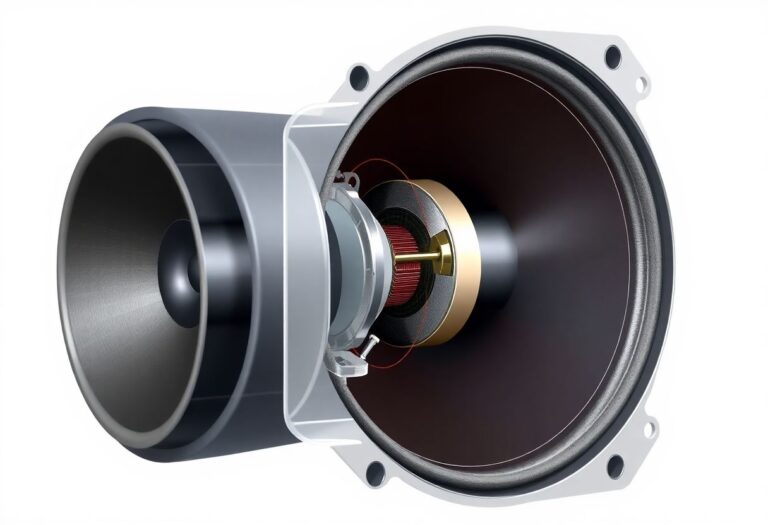
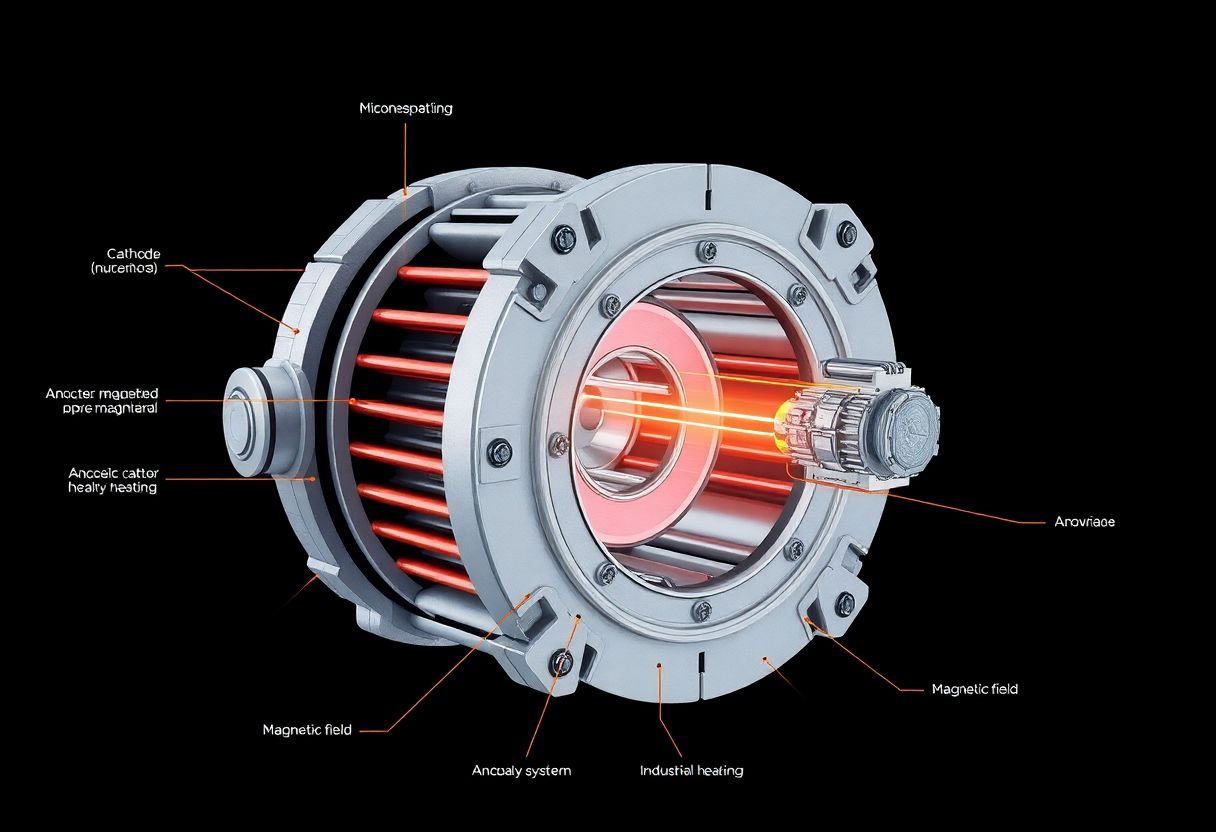
To understand the magnetron's genius, we must first examine its key components:
-
Cathode: At the heart of the magnetron lies a negatively charged electrode, typically made of thoriated tungsten. When heated, this cathode emits a steady stream of electrons.
-
Anode: Surrounding the cathode is a cylindrical anode, usually crafted from copper. This positively charged component attracts the electrons emitted by the cathode.
-
Cavities: The anode is not a simple cylinder but is intricately machined with a series of cavities or vanes. These cavities play a crucial role in the generation of microwaves.
-
Magnets: Powerful permanent magnets or electromagnets are positioned at the ends of the magnetron, creating a strong magnetic field perpendicular to the electric field between the cathode and anode.
-
Waveguide: A specially designed output port channels the generated microwaves out of the magnetron for use in various applications.
The Physics Behind Magnetron Operation: A Symphony of Fields and Particles
The Dance of Electrons
The operation of a magnetron is a testament to the elegant interplay of electromagnetic forces. Here's how it unfolds:
-
Electron Emission: The cathode, heated to high temperatures, begins to emit electrons through a process known as thermionic emission.
-
Electric Field Acceleration: A high voltage applied between the cathode and anode creates a strong electric field. This field accelerates the emitted electrons towards the anode.
-
Magnetic Field Influence: The perpendicular magnetic field exerts a force on the moving electrons, causing them to follow a curved path instead of moving directly to the anode.
-
Cyclotron Motion: The combination of electric and magnetic fields results in a helical electron motion known as cyclotron resonance. The electrons trace out a spiral path as they move from cathode to anode.
-
Cavity Interaction: As the electrons spiral outward, they pass close to the resonant cavities in the anode. These cavities are precisely sized to resonate at microwave frequencies.
-
Energy Transfer: The passing electrons interact with the electromagnetic fields in the cavities, transferring some of their kinetic energy to the oscillating fields.
-
Microwave Generation: The energy transferred to the cavities reinforces the oscillations, leading to the sustained production of microwave radiation.
The Crucial Role of Phase Focusing
A key aspect of efficient magnetron operation is a phenomenon called phase focusing. As electrons orbit within the magnetron, they naturally tend to bunch together. This bunching synchronizes with the oscillating fields in the cavities, creating a powerful feedback loop that enhances microwave generation.
Dr. John Cockcroft, a renowned physicist who worked on early magnetron development, once described this process as "a beautiful example of self-organization in a physical system." This self-reinforcing behavior allows magnetrons to achieve high efficiency in converting electrical energy into microwave radiation.
Types of Magnetrons: Tailored for Different Needs
While the basic principles remain the same, engineers have developed several variations of the magnetron to suit different applications:
Cavity Magnetron
The cavity magnetron is the most common type, found in microwave ovens and many radar systems. It features multiple resonant cavities arranged around a central cathode. This design allows for efficient microwave generation and can produce high power levels, typically in the range of 600 to 1200 watts for household microwave ovens, and up to several megawatts for large radar installations.
Crossed-Field Amplifier (CFA)
A variation on the magnetron theme, the crossed-field amplifier is designed to amplify existing microwave signals rather than generate them from scratch. CFAs have separate input and output ports, allowing a weak microwave signal to be boosted to much higher power levels. These devices find use in high-power radar and communication systems where signal amplification is crucial.
Relativistic Magnetron
Pushing the boundaries of magnetron technology, relativistic magnetrons operate at extremely high voltages where relativistic effects become significant. By accelerating electrons to velocities approaching the speed of light, these devices can achieve staggering power outputs in the gigawatt range. While primarily used in research settings, relativistic magnetrons have potential applications in advanced radar systems and directed energy weapons.
The Magnetron in Action: Diverse Applications
The versatility of the magnetron has led to its adoption in a wide range of fields, each harnessing the power of microwaves in unique ways:
Microwave Ovens: Revolutionizing Home Cooking
Perhaps the most familiar application of magnetrons is in microwave ovens. Here's how they work their culinary magic:
-
The magnetron generates microwaves at a frequency of 2.45 GHz, chosen because it's particularly effective at exciting water molecules.
-
These microwaves penetrate food, causing water molecules to vibrate rapidly.
-
The vibration of water molecules produces friction, which generates heat throughout the food.
-
This process allows for rapid, relatively uniform heating, dramatically reducing cooking times compared to conventional ovens.
Dr. Percy Spencer, the accidental inventor of microwave cooking, reportedly discovered this effect when a chocolate bar melted in his pocket while he was working with an active radar set. This serendipitous event led to the development of the microwave oven, a device that has transformed home cooking.
Radar Systems: Seeing Through Darkness and Distance
Radar, an acronym for Radio Detection and Ranging, relies heavily on magnetron technology. Here's how it works:
-
The magnetron generates short, powerful pulses of microwaves.
-
These pulses are directed into the atmosphere by an antenna.
-
When the microwaves encounter an object, they are reflected back towards the radar station.
-
By measuring the time taken for the pulse to return and its frequency shift (Doppler effect), the radar system can determine the distance, speed, and direction of the object.
Magnetron-based radar systems have become indispensable in various fields:
-
Weather Forecasting: Doppler weather radar uses magnetrons to detect precipitation and wind patterns, allowing meteorologists to predict severe weather events with greater accuracy.
-
Air Traffic Control: Airport radar systems rely on magnetrons to track aircraft positions and prevent collisions.
-
Maritime Navigation: Ships use radar to detect obstacles and navigate safely, especially in conditions of poor visibility.
-
Military Applications: From detecting incoming aircraft to guiding precision munitions, magnetron-based radar plays a crucial role in modern warfare.
Industrial Heating: Precision and Efficiency
The ability of microwaves to heat materials rapidly and uniformly has led to numerous industrial applications:
-
Materials Processing: Magnetrons power industrial microwave systems used for drying, curing, and sintering various materials. For example, in the ceramic industry, microwave heating can achieve more uniform results and significant energy savings compared to traditional kilns.
-
Food Processing: Large-scale microwave systems are used for pasteurization, sterilization, and cooking in food production facilities.
-
Pharmaceutical Manufacturing: Microwave heating assists in the synthesis of certain pharmaceutical compounds and in the drying of temperature-sensitive materials.
Medical Applications: Healing with Microwaves
The medical field has also found innovative uses for magnetron-generated microwaves:
-
Cancer Treatment: Microwave ablation, a technique that uses precisely targeted microwave energy to destroy tumor cells, is gaining traction as a minimally invasive cancer treatment option.
-
Microwave Imaging: Researchers are developing microwave imaging techniques as a potential alternative to X-rays for certain diagnostic procedures, offering the advantage of non-ionizing radiation.
Lighting: Illumination Through Plasma
Some specialized lighting systems harness the power of magnetrons:
- Plasma Lighting: High-intensity discharge lamps powered by magnetrons can produce extremely bright, efficient light sources for applications like film production and large-area illumination.
The Evolution of Magnetron Technology: From Wartime Secret to Household Staple
The story of the magnetron is one of rapid evolution, driven by the pressures of war and the demands of peacetime applications:
Early Beginnings
The concept of the magnetron was first explored in the 1920s by Albert W. Hull at General Electric. However, these early devices were low-power and had limited practical applications.
World War II Breakthrough
The true potential of the magnetron was realized during World War II. In 1940, British physicists John Randall and Harry Boot developed a cavity magnetron capable of producing high-power microwaves at wavelengths of a few centimeters. This breakthrough revolutionized radar technology, giving the Allies a significant advantage in the war.
Sir Bernard Lovell, a key figure in the development of radar, later wrote, "The cavity magnetron was the most valuable cargo ever brought to our shores." This underscores the immense strategic importance of this seemingly simple device.
Post-War Innovations
After the war, research into magnetron technology continued at a rapid pace:
-
In 1945, Percy Spencer of Raytheon accidentally discovered the heating effect of microwaves on food, leading to the development of the microwave oven.
-
Throughout the 1950s and 1960s, magnetrons were refined for various applications, including communications satellites and industrial heating.
Modern Advancements
Recent decades have seen continued innovation in magnetron design:
-
The development of the relativistic magnetron in the 1970s opened up new possibilities for extremely high-power microwave generation.
-
Ongoing research focuses on improving efficiency, reducing size, and exploring new applications for magnetron technology.
Magnetrons vs. Other Microwave Sources: A Comparative Analysis
While magnetrons dominate certain applications, they're not the only game in town when it comes to microwave generation. Let's compare them to some alternatives:
Klystrons
Klystrons use velocity modulation of an electron beam to generate or amplify microwaves.
- Advantages: Higher frequency stability, better suited for amplification of continuous wave signals.
- Disadvantages: Generally larger and more complex than magnetrons, often requiring higher operating voltages.
Traveling Wave Tubes (TWTs)
TWTs amplify microwaves using a helical waveguide to interact with an electron beam.
- Advantages: Wide bandwidth, high gain, suitable for satellite communications.
- Disadvantages: Lower efficiency than magnetrons, more complex construction.
Solid-State Sources
Semiconductor devices like Gunn diodes and IMPATT diodes can generate microwaves.
- Advantages: Compact size, potential for higher reliability, low voltage operation.
- Disadvantages: Lower power output compared to vacuum tube devices, especially at higher frequencies.
Dr. Robert Mallavarpu, an expert in microwave engineering, notes, "While solid-state devices have made significant inroads in low to medium power applications, magnetrons still reign supreme when it comes to generating high-power microwaves efficiently and economically."
The Future of Magnetron Technology: Innovations on the Horizon
As we look to the future, magnetron technology continues to evolve, driven by the ever-increasing demands of modern applications:
Efficiency Improvements
Researchers are constantly working to increase the energy conversion efficiency of magnetrons. This involves:
- Developing advanced materials for cathodes and anodes to improve electron emission and reduce losses.
- Optimizing cavity designs to enhance interaction between electrons and microwave fields.
- Implementing sophisticated cooling systems to manage heat dissipation more effectively.
These improvements could lead to significant energy savings in applications like microwave ovens and industrial heating systems.
Miniaturization
The trend towards smaller, more portable devices is driving efforts to miniaturize magnetrons without sacrificing power output. This research could enable:
- More compact radar systems for autonomous vehicles and drones.
- Portable, high-power microwave sources for field applications.
Higher Frequencies
There's a growing interest in pushing magnetron technology into the millimeter-wave and sub-millimeter-wave regions of the electromagnetic spectrum. This could open up new possibilities for:
- Ultra-high-bandwidth communications systems.
- Advanced sensing and imaging technologies with improved resolution.
Integration with Other Technologies
The future may see magnetrons combined with other technologies in innovative ways:
- Hybrid systems that combine the high-power capabilities of magnetrons with the precision control of solid-state devices.
- Smart, adaptive magnetron systems that can adjust their output in real-time based on feedback from sensors.
Dr. Elena Gaponova, a leading researcher in microwave technology, predicts, "The next generation of magnetrons will likely be 'smart' devices, capable of dynamically adjusting their output to optimize efficiency and performance across a wide range of operating conditions."
Environmental and Safety Considerations
As with any technology, the use of magnetrons comes with certain environmental and safety considerations:
Electromagnetic Radiation Safety
Proper shielding is crucial to prevent microwave leakage from devices using magnetrons. This is particularly important in consumer appliances like microwave ovens. Stringent international safety standards govern the design and testing of such devices to ensure public safety.
Energy Efficiency
Improving the energy efficiency of magnetron-based devices is not just an engineering challenge but also an environmental imperative. More efficient magnetrons can significantly reduce energy consumption in applications ranging from home cooking to industrial processes.
Manufacturing and Disposal
The production and disposal of magnetrons involve some hazardous materials, including beryllium oxide ceramics used in some designs. Proper manufacturing processes and recycling programs are essential to minimize environmental impact.
Conclusion: The Enduring Legacy of the Magnetron
From its crucial role in World War II to its ubiquitous presence in modern kitchens, the magnetron has proven to be one of the most impactful inventions of the 20th century. This seemingly simple device has enabled technologies that have transformed warfare, communications, cooking, and countless industrial processes.
As we've explored, the principles behind magnetron operation are a beautiful example of applied physics, harnessing the interplay of electric and magnetic fields to generate powerful microwave radiation. The ongoing evolution of magnetron technology promises even more exciting applications in the future, from advanced medical treatments to next-generation communication systems.
The story of the magnetron is a testament to the power of scientific discovery and engineering ingenuity. It reminds us that even in our age of semiconductors and quantum computing, there's still a place for elegant, robust vacuum tube technology.
The next time you heat up a meal in your microwave oven or hear about a plane landing safely through thick fog, take a moment to appreciate the hidden work of the magnetron – a true unsung hero of our technological age. Its invisible waves continue to shape our world in ways both seen and unseen, a silent revolution that shows no signs of slowing down.