The Marvels of Modern Harvesting: How Combine Harvesters Revolutionized Agriculture
Imagine standing at the edge of a vast wheat field, golden stalks swaying gently in the breeze. In the distance, a massive machine approaches, its powerful engine humming as it effortlessly cuts a wide swath through the crop. This impressive piece of machinery is a combine harvester, a testament to human ingenuity and the cornerstone of modern agriculture. In this article, we'll delve deep into the fascinating world of combine harvesters, exploring their inner workings, evolution, and the profound impact they've had on farming and society as a whole.
The Evolution of Harvesting: From Scythes to Combines
To truly appreciate the marvel that is the combine harvester, we must first look back at the history of harvesting. For millennia, harvesting was a labor-intensive process that required significant manpower and time. In the early 19th century, about 90% of the United States population worked in agriculture, with much of their time devoted to the arduous tasks of reaping, threshing, and winnowing crops by hand.
The introduction of mechanical reapers in the 1830s marked the beginning of a agricultural revolution. Invented by Cyrus McCormick, these horse-drawn machines could cut wheat much faster than a person with a scythe. However, the grain still needed to be manually bound, shocked, and threshed.
The next major breakthrough came in 1934 with the introduction of the self-propelled combine harvester by the Massey-Harris company. This machine combined the functions of reaping, threshing, and winnowing into a single operation, dramatically increasing efficiency and reducing labor requirements.
Today, thanks in large part to innovations like the combine harvester, only about 2% of the U.S. population works in farming, yet they produce more than enough food to feed the nation and export globally. This shift has had profound implications for society, economy, and the very nature of rural life.
The Anatomy of a Modern Combine Harvester
Modern combine harvesters are complex machines with numerous interconnected systems working in harmony. Let's break down the main components and their functions:
The Header: The First Point of Contact
The header is the front section of the combine that first encounters the standing crop. It can be up to 45 feet wide, allowing the machine to harvest massive swaths of crops in a single pass. The header is designed to be interchangeable, allowing farmers to use the same combine for different crops by simply switching out this component.
A slowly rotating reel gently pushes the crop towards the cutting mechanism, which consists of sharp blades at the bottom of the header called the cutter bar. These blades slice through the crop stalks, initiating the harvesting process.
The Feeder House: Transporting the Cut Crop
Once cut, the crop is moved into the body of the combine via the feeder house. This component acts as a conveyor belt, transporting the cut crop from the header to the threshing mechanism. It also helps to align the crop for optimal threshing, ensuring a smooth and efficient process.
The Threshing Mechanism: The Heart of the Combine
The threshing mechanism is where the real magic happens. Its primary function is to separate the valuable grain from the rest of the plant material. In conventional combines, this is achieved through a large, toothed cylinder called the threshing drum, which rotates at high speed (typically between 400 and 1,000 RPM, depending on the crop).
The crop passes between the drum and a stationary plate called the concave. The gap between these components can be adjusted based on the type and condition of the crop being harvested. As the crop passes through, the grain is stripped from the plant and begins to separate from the chaff.
The Separating System: Ensuring Maximum Yield
After threshing, the separating system works to capture any remaining grain. In conventional combines, this is done using straw walkers – a series of oscillating steps that shake loose any grain still attached to the straw. In rotary combines, a large rotor continues the threshing process while moving the crop rearward, separating grain through centrifugal force.
The separated grain falls through to the cleaning shoe below, while the straw is moved towards the back of the combine for dispersal.
The Cleaning Shoe: Refining the Harvest
The cleaning shoe is responsible for ensuring the purity of the harvested grain. It consists of a series of sieves and a powerful fan. The fan blows air up through the sieves, lifting lighter chaff and debris. The heavier grain falls through the sieves, while any material other than clean grain is either recirculated for further threshing or expelled from the back of the combine.
Modern combines often employ advanced sensors and automated systems to continuously adjust the cleaning process for optimal efficiency based on crop conditions and yield.
The Grain Tank: Mobile Storage
The clean grain is stored in the grain tank, which can hold several thousand pounds of grain. When full, the grain is transferred to a waiting truck or grain cart via an unloading auger. This system allows for continuous harvesting without the need for frequent stops to unload.
The Engine and Drive System: Powering the Process
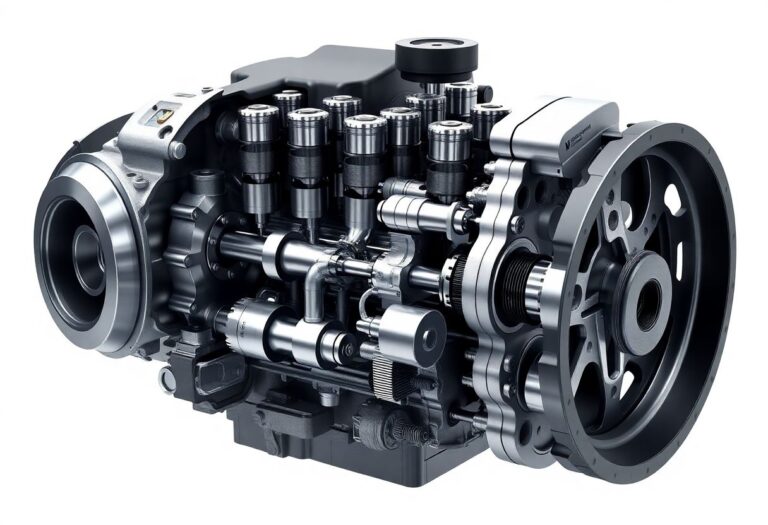
All of these complex operations require significant power. Modern combines are equipped with robust diesel engines, typically ranging from 200 to over 500 horsepower. These engines not only propel the massive machine but also power all the internal mechanisms.
Hydrostatic transmissions allow for smooth, variable speed control, crucial for maintaining optimal harvesting speed in varying crop conditions. Large wheels or tracks provide traction and help minimize soil compaction, a significant concern in modern agriculture.
The Technology Behind Modern Combines
Today's combine harvesters are not just mechanical marvels; they're also showcases of cutting-edge technology. Many modern combines incorporate features that would have seemed like science fiction just a few decades ago:
-
GPS Guidance Systems: These allow for precise field coverage, reducing overlap and ensuring no areas are missed. Some systems can even steer the combine automatically, allowing the operator to focus on optimizing the harvesting process.
-
Yield Monitors: These systems use sensors to measure and map crop yield in real-time as the combine moves through the field. This data is invaluable for precision agriculture practices, allowing farmers to make data-driven decisions about crop management.
-
Automated Adjustments: Many modern combines can automatically adjust their settings based on crop conditions, optimizing performance without constant operator intervention.
-
Telematics: These systems allow for remote monitoring and diagnostics. Farmers and technicians can track the combine's performance, fuel usage, and maintenance needs from afar, improving efficiency and reducing downtime.
-
Computer Vision and AI: Some of the latest combines use cameras and artificial intelligence to identify and separate crops from weeds, improving harvest quality.
Types of Combine Harvesters
While the basic principles remain the same, there are different types of combine harvesters designed for specific crops or conditions:
-
Conventional Combines: These use the traditional cylinder and concave threshing system followed by straw walkers for separation. They're versatile and well-suited for a variety of crops.
-
Rotary Combines: Instead of straw walkers, these use a large rotor for both threshing and separation. They're known for their high capacity and are particularly effective for corn and soybeans.
-
Hillside Combines: Specially designed to operate on slopes, these machines use a self-leveling system to keep the threshing and cleaning systems level even on inclines up to 50%.
-
Rice Combines: These are modified to handle the wet conditions often found in rice fields. They typically have tracks instead of wheels and specialized components to handle the tough rice stalks.
-
Corn Combines: While many combines can be adapted for corn with a special header, some are specifically designed for corn harvesting, with features optimized for this crop.
The Impact of Combine Harvesters on Agriculture and Society
The development and widespread adoption of combine harvesters have had far-reaching effects beyond just increasing harvesting efficiency:
-
Agricultural Productivity: Combines have enabled a massive increase in the amount of land a single farmer can manage. In the early 20th century, a farmer might harvest 100 acres in a season. Today, with a modern combine, that same farmer can harvest thousands of acres.
-
Food Security: The efficiency of combines has contributed significantly to global food security. By reducing harvest losses and enabling large-scale grain production, combines have helped ensure a stable food supply for a growing world population.
-
Rural Demographics: As fewer people were needed for farming, many rural residents moved to urban areas in search of other opportunities. This shift has dramatically changed the demographic makeup of rural communities.
-
Economic Impact: The increased efficiency in farming has contributed to lower food prices relative to income in developed countries. However, it has also led to significant capital investments for farmers, changing the economic structure of agriculture.
-
Environmental Considerations: While combines have increased efficiency, their size and weight can lead to soil compaction issues. However, they've also enabled practices like no-till farming, which can have positive environmental impacts.
Challenges and Future Developments
Despite their many advantages, combine harvesters also present some challenges:
-
Cost: Modern combines can cost upwards of $500,000, representing a significant investment for farmers.
-
Complexity: The sophisticated systems in modern combines require specialized knowledge for operation and maintenance.
-
Soil Compaction: The weight of these large machines can compact soil, potentially reducing future crop yields.
-
Adaptability: While combines are highly efficient for large-scale monoculture, they're less suited to diverse, small-scale farming systems.
Looking to the future, we can expect to see developments addressing these challenges and further improving combine technology:
-
Lighter Materials: The use of advanced materials could reduce the weight of combines, minimizing soil compaction issues.
-
Alternative Power Sources: As the world moves towards sustainable energy, we may see combines powered by electricity or hydrogen fuel cells.
-
Increased Automation: Building on existing auto-steer technology, fully autonomous combines may become a reality, operating 24/7 during harvest season.
-
Modular Designs: To address the needs of smaller farms, we might see the development of modular combines that can be easily transported and adapted to different crops and field sizes.
-
Advanced Sensors and AI: Future combines may incorporate even more sophisticated sensing and AI capabilities, further optimizing the harvesting process and reducing waste.
Conclusion: The Ongoing Revolution in Harvesting Technology
From the earliest days of agriculture to the present, the story of harvesting has been one of constant innovation. The combine harvester represents a pinnacle of this innovation, embodying centuries of agricultural progress in a single machine.
As we've explored, these impressive machines have transformed not just farming, but society as a whole. They've enabled a small percentage of the population to feed billions, freeing up human capital for advancements in other fields. The combine harvester stands as a testament to human ingenuity and our ability to solve complex problems through technology.
Yet, the story is far from over. As we face new challenges in feeding a growing global population while minimizing environmental impact, the evolution of combine harvesters and other agricultural technologies will play a crucial role. From increased automation to more sustainable designs, the combines of the future will continue to push the boundaries of what's possible in agriculture.
The next time you see a combine harvester working its way through a field, take a moment to appreciate the complex symphony of mechanisms at work inside. It's not just a machine; it's a culmination of human innovation, engineering prowess, and our enduring connection to the land that feeds us. As we look to the future, we can be certain that the humble combine harvester will continue to play a vital role in shaping our world, one field at a time.