Geoengineering: Shaping Earth’s Climate in the Face of Global Warming
In an era where climate change looms as an existential threat, scientists are exploring radical solutions that once seemed confined to the realm of science fiction. Welcome to the world of geoengineering – a bold and controversial approach to combating global warming by deliberately manipulating Earth's climate system on a massive scale. As we delve into this fascinating yet contentious field, we'll explore what geoengineering entails, how it might work, and whether it represents a viable path forward in our fight against climate change.
Understanding Geoengineering: Engineering on a Planetary Scale
Geoengineering, at its core, is the application of engineering principles to our entire planet. It's based on the premise that if human activities have inadvertently altered Earth's climate through greenhouse gas emissions, perhaps we can intentionally intervene to reverse or mitigate these effects. This concept represents a significant shift in how we approach climate change – moving from mitigation and adaptation to active intervention.
The Two Pillars of Geoengineering
Geoengineering strategies generally fall into two main categories:
-
Solar Radiation Management (SRM): These techniques aim to reflect a portion of incoming sunlight back into space, effectively cooling the planet.
-
Carbon Dioxide Removal (CDR): These methods focus on removing CO2 directly from the atmosphere, addressing the root cause of global warming.
Let's explore each of these approaches in greater detail, examining their potential benefits and drawbacks.
Solar Radiation Management: Turning Down Earth's Thermostat
Solar Radiation Management techniques seek to reduce the amount of solar energy absorbed by Earth, thereby offsetting the warming effects of greenhouse gases. While seemingly straightforward, these approaches come with their own set of complexities and potential risks.
Stratospheric Aerosol Injection: Lessons from Volcanoes
One of the most discussed SRM techniques is stratospheric aerosol injection. This method involves spraying reflective particles, typically sulfur dioxide, into the upper atmosphere. The concept is inspired by the cooling effect observed after large volcanic eruptions, which can temporarily lower global temperatures by increasing Earth's albedo (reflectivity).
Recent research from the National Center for Atmospheric Research (NCAR) has shown that injecting sulfur dioxide into the stratosphere could potentially reduce global average temperatures by about 1°C. However, the same study highlighted significant regional variations in the cooling effect, with some areas experiencing more dramatic changes than others.
Potential issues:
- Disruption of regional weather patterns and rainfall
- Possible damage to the ozone layer
- Doesn't address ocean acidification caused by CO2 emissions
Space-Based Reflectors: A Cosmic Sunshade
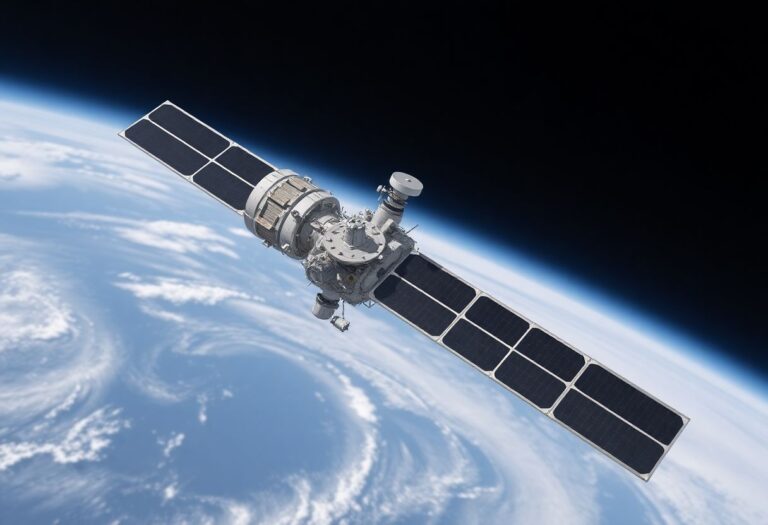
Another intriguing, albeit more technologically challenging, SRM approach involves deploying reflective structures in space to deflect a small percentage of incoming sunlight. This could take the form of a massive sunshade or millions of smaller reflectors in Earth orbit.
A study published in the journal Advances in Space Research suggested that a swarm of around 800 million reflective discs, each about 0.5 meters in diameter, could potentially offset the warming effect of a doubling of atmospheric CO2. However, the logistical and financial challenges of such a project are immense.
Potential issues:
- Extremely high cost and technological complexity
- Unpredictable effects on regional climates
- Potential interference with satellite operations and space exploration
Marine Cloud Brightening: Enhancing Nature's Reflectors
Marine cloud brightening proposes to increase the reflectivity of low-lying clouds over the ocean by spraying seawater into the air. This would create more numerous and smaller water droplets, making the clouds more reflective.
A 2020 study published in Environmental Research Letters estimated that marine cloud brightening could potentially offset between 0.8 and 2.2 °C of global warming. However, the effects would likely be regionalized and require continuous implementation.
Potential issues:
- Localized and potentially short-lived effects
- Possible alteration of precipitation patterns
- Ecological impacts on marine environments
Carbon Dioxide Removal: Cleaning the Atmosphere
While Solar Radiation Management aims to treat the symptoms of climate change, Carbon Dioxide Removal (CDR) targets the root cause by actively removing greenhouse gases from the atmosphere. These approaches align more closely with traditional environmental remediation efforts but at a much larger scale.
Direct Air Capture: Filtering the Sky
Direct Air Capture (DAC) involves using machines to filter CO2 directly out of the ambient air. While conceptually simple, the low concentration of CO2 in the atmosphere (about 0.04%) makes this process energy-intensive and currently expensive.
Companies like Carbon Engineering and Climeworks are pioneering DAC technology. Carbon Engineering claims their technology can remove CO2 at a cost of $94-$232 per ton, with the potential for further reductions as the technology scales up.
Potential issues:
- High energy requirements and current costs
- Need for massive scaling to make a significant impact
- Challenges in permanent CO2 storage
Enhanced Weathering: Accelerating Natural Processes
Enhanced weathering aims to speed up the natural process by which rocks absorb CO2 from the air. This typically involves spreading finely ground silicate rocks over large land areas or in the ocean.
A study published in Nature in 2020 suggested that enhanced weathering on croplands could remove 0.5-2 billion tonnes of CO2 per year globally, representing 2-8% of current annual emissions from fossil fuels. However, this would require significant changes to agricultural practices and large-scale mining operations.
Potential issues:
- Requires mining and transporting enormous quantities of rock
- Potential impacts on soil and water chemistry
- Uncertain long-term environmental effects
Ocean Fertilization: Boosting Nature's Carbon Sink
Ocean fertilization proposes adding nutrients, typically iron, to parts of the ocean to stimulate phytoplankton growth. As these microscopic plants grow, they absorb CO2 through photosynthesis, potentially sequestering carbon when they die and sink to the ocean floor.
Small-scale experiments have shown mixed results. A 2012 study in Nature found that iron fertilization in the Southern Ocean did increase carbon export to the deep sea, but the long-term fate of this carbon remains uncertain.
Potential issues:
- Potential disruption of marine ecosystems
- Uncertainty about the permanence of CO2 removal
- Possible exacerbation of ocean acidification in deeper waters
Bioenergy with Carbon Capture and Storage (BECCS): A Two-Pronged Approach
BECCS combines bioenergy production with carbon capture and storage. It involves growing plants to absorb CO2, then burning them for energy while capturing and storing the resulting emissions underground.
The Intergovernmental Panel on Climate Change (IPCC) has highlighted BECCS as a potentially important technology for achieving negative emissions. However, deploying BECCS at a scale large enough to significantly impact climate change would require vast amounts of land and water.
Potential issues:
- Competition with food production for land and water resources
- Technological challenges in large-scale carbon capture and storage
- Potential negative impacts on biodiversity if deployed at large scales
The Great Geoengineering Debate: Promise and Peril
The concept of geoengineering has sparked intense debate within the scientific community and beyond. Proponents argue that it could provide a crucial tool in our climate change arsenal, while critics warn of potentially catastrophic unintended consequences.
Arguments in Favor of Geoengineering
-
Emergency Response: Geoengineering could serve as a rapid response mechanism in the face of catastrophic warming, potentially averting tipping points in the climate system.
-
Buying Time: These technologies might give humanity additional time to reduce emissions and transition to clean energy sources.
-
Cost-Effectiveness: Some geoengineering methods, particularly certain SRM techniques, could potentially be less expensive than drastic emissions cuts in the short term.
-
Technological Optimism: Advocates argue that human ingenuity has solved seemingly insurmountable problems before, and geoengineering represents a continuation of our ability to shape our environment.
Arguments Against Geoengineering
-
Unintended Consequences: The Earth's climate system is incredibly complex, and large-scale intervention could lead to unexpected and potentially disastrous side effects.
-
Moral Hazard: The promise of a technological fix might reduce motivation to address the root causes of climate change, namely greenhouse gas emissions.
-
Geopolitical Tensions: Decisions about deploying geoengineering technologies could lead to international conflicts, as different regions may experience varying effects.
-
Irreversibility: Some interventions, once started, might be difficult or impossible to stop without causing rapid warming.
-
Incomplete Solution: Many geoengineering approaches, particularly SRM techniques, don't address related issues like ocean acidification.
Ethical and Governance Challenges: Navigating Uncharted Waters
The prospect of intentionally modifying Earth's climate raises profound ethical questions and governance challenges. As we consider geoengineering, we must grapple with issues of global equity, intergenerational justice, and the very nature of humanity's relationship with the planet.
Ethical Considerations
- Right to Intervene: Do we have the moral authority to intentionally alter Earth's climate system on a global scale?
- Risk Assessment: How do we weigh the potential benefits of geoengineering against its risks, especially when those risks might be unevenly distributed?
- Global Decision-Making: Who gets to decide whether to deploy these technologies, and how can we ensure fair representation for all nations and peoples?
- Intergenerational Justice: How do we balance our obligations to current and future generations in making decisions about geoengineering?
Governance Challenges
Developing effective governance frameworks for geoengineering research and potential deployment is a monumental task. Key issues include:
- International Cooperation: How can we foster global collaboration on research and decision-making?
- Regulation and Oversight: What mechanisms are needed to monitor and control geoengineering activities?
- Liability and Compensation: How do we address potential negative impacts and compensate affected parties?
- Equitable Implementation: How can we ensure that the benefits and risks of geoengineering are fairly distributed globally?
The Current State of Geoengineering Research: From Theory to Practice
While most geoengineering technologies remain theoretical or in early research stages, interest and investment in the field are growing. Here's an overview of the current landscape:
Field Trials and Experiments
Small-scale field trials of some geoengineering techniques have been conducted, providing valuable data on potential effects and challenges:
- The SPICE project (Stratospheric Particle Injection for Climate Engineering) in the UK conducted limited tests of equipment for stratospheric aerosol injection.
- Ocean iron fertilization experiments have been carried out in various parts of the world's oceans, with mixed results.
- Pilot projects for direct air capture are operating in several countries, including Switzerland and Canada.
Modeling Studies
Advanced computer simulations are playing a crucial role in understanding the potential impacts of geoengineering:
- The Geoengineering Model Intercomparison Project (GeoMIP) is coordinating efforts to model the effects of various SRM techniques.
- Studies using Earth system models have explored the potential regional impacts of stratospheric aerosol injection and marine cloud brightening.
Increasing Research Focus
Calls for expanded research into geoengineering are growing within the scientific community:
- The U.S. National Academies of Sciences, Engineering, and Medicine have recommended a substantial research program to better understand SRM technologies.
- The UK's Royal Society has called for increased funding for geoengineering research, emphasizing the need for international cooperation.
Geoengineering vs. Emissions Reduction: A False Dichotomy?
It's crucial to understand that most scientists and policymakers view geoengineering not as an alternative to emissions reduction, but as a potential complement to it. The primary focus of climate action remains:
- Drastically cutting greenhouse gas emissions across all sectors
- Accelerating the transition to clean, renewable energy sources
- Improving energy efficiency in buildings, transportation, and industry
- Protecting and restoring natural carbon sinks like forests and wetlands
Geoengineering is generally considered a potential last resort or emergency measure, not a silver bullet solution to climate change. The IPCC's reports consistently emphasize the urgent need for emissions reductions as the primary strategy for addressing climate change.
The Future of Geoengineering: Navigating Uncertainty
As the impacts of climate change intensify, interest in and research on geoengineering are likely to grow. Key developments to watch in the coming years include:
- Advances in climate modeling to better predict the potential impacts of various geoengineering techniques
- Expanded small-scale field trials and technology demonstrations
- Development of international governance frameworks for geoengineering research and potential deployment
- Increased public debate and engagement of policymakers on the role of geoengineering in climate strategy
Conclusion: A Planetary Gamble?
Geoengineering represents one of the most profound dilemmas of our time. It offers the tantalizing possibility of a technological solution to climate change, but carries with it enormous risks and ethical concerns. As we grapple with this challenge, several key questions remain:
- Can we develop geoengineering technologies safely and responsibly, given the complexity of Earth's climate system?
- How do we balance the known risks of unchecked climate change against the unknown risks of large-scale climate intervention?
- Is it possible to create effective global governance mechanisms for such powerful and far-reaching technologies?
Ultimately, the debate over geoengineering forces us to confront the awesome responsibility that comes with our growing power to shape the planet. It challenges us to consider not just what we can do, but what we should do. As we stand at this crossroads, the choices we make about geoengineering – whether to research it, deploy it, or forgo it – will have profound implications for the future of Earth and all its inhabitants.
In the end, while geoengineering may offer potential tools in our fight against climate change, it is no substitute for the urgent need to reduce greenhouse gas emissions and transition to a sustainable, low-carbon global economy. As we explore these technologies, we must do so with caution, wisdom, and a deep sense of responsibility to our planet and future generations.