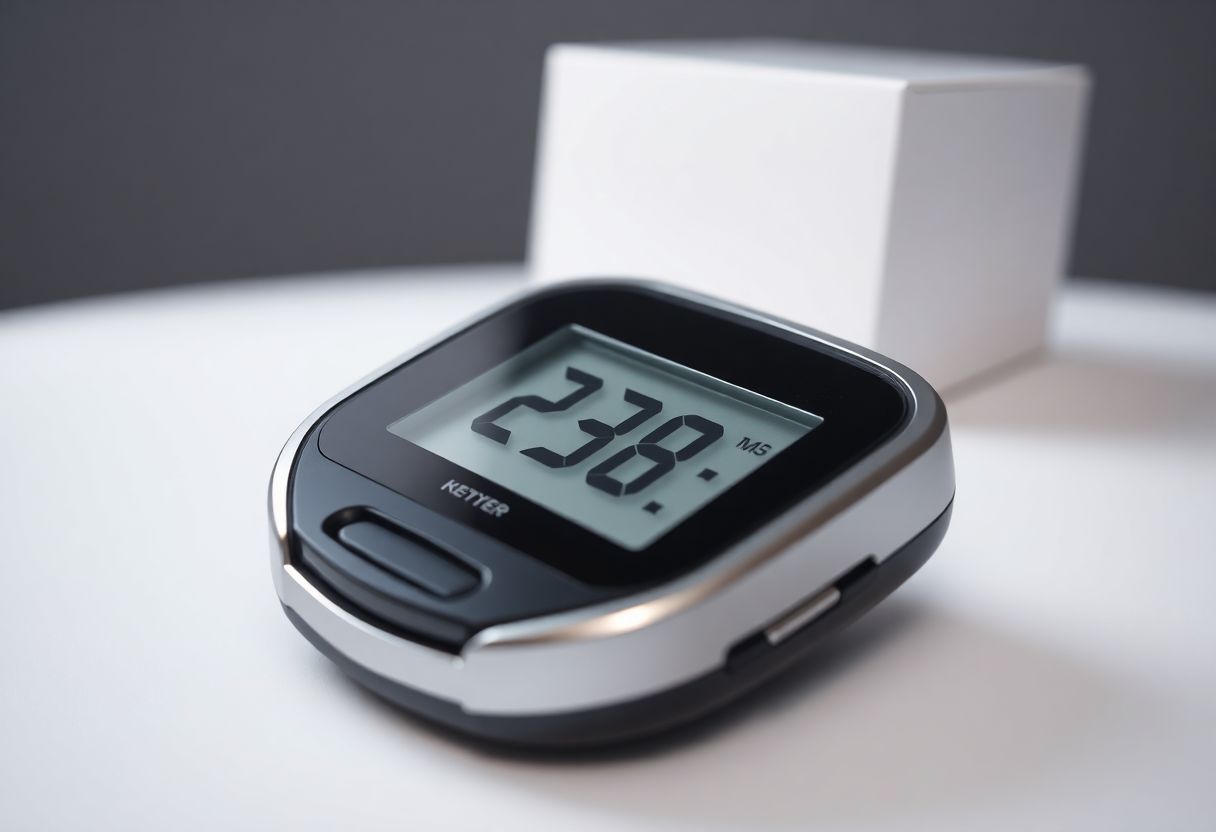
The Science and Technology Behind Pedometers: Unveiling the Step-Counting Magic
In our increasingly health-conscious world, pedometers have become ubiquitous tools for tracking physical activity. These clever devices, whether standalone or integrated into smartphones and smartwatches, have revolutionized how we monitor our daily movements. But have you ever wondered about the intricate technology that allows these small gadgets to count your steps with remarkable accuracy? Let's embark on a fascinating journey into the world of pedometers, exploring the science, technology, and evolution of these step-counting marvels.
The Fundamental Principle: Decoding Human Movement
At its core, a pedometer's function relies on detecting and interpreting the characteristic motions associated with walking or running. The human gait follows a predictable pattern: as we walk, our hips alternately tilt from side to side, accompanied by the forward swing of each leg. This rhythmic motion forms the foundation of step detection in pedometers.
The Gait Cycle: The Building Block of Step Counting
To truly understand how pedometers work, we need to delve into the biomechanics of walking. The gait cycle, which describes a complete sequence of leg movements during walking, consists of several distinct phases:
- Initial Contact: The heel of the leading foot strikes the ground.
- Loading Response: The foot begins to bear weight as it flattens against the ground.
- Mid-Stance: The body's weight is fully supported by one leg.
- Terminal Stance: The heel begins to lift as the body's weight shifts forward.
- Pre-Swing: The toe pushes off the ground, propelling the body forward.
- Initial Swing: The leg begins to move forward.
- Mid-Swing: The swinging leg passes the stance leg.
- Terminal Swing: The leg prepares for the next heel strike.
Each of these phases creates distinctive patterns of acceleration and movement that pedometers are designed to detect and interpret.
The Evolution of Pedometer Technology
The journey of pedometer technology is a fascinating reflection of human ingenuity and technological progress. From simple mechanical devices to sophisticated AI-powered systems, let's trace the evolution of step-counting technology.
Mechanical Pedometers: The Pioneers of Step Counting
The concept of the pedometer dates back to the 15th century, with sketches attributed to Leonardo da Vinci. However, it wasn't until the 18th and 19th centuries that mechanical pedometers gained popularity. These early devices operated on principles similar to pendulum clocks.
A typical mechanical pedometer contained a weighted pendulum that swung with each step. This pendulum was connected to a gear system, which advanced a counter or moved a pointer on a dial. With each swing of the pendulum, the gears would turn, incrementing the step count.
While ingenious for their time, mechanical pedometers had limitations in accuracy. They were sensitive to placement on the body and could be triggered by non-step movements, leading to overcounting. Despite these drawbacks, mechanical pedometers laid the groundwork for future innovations in step-counting technology.
Electronic Pedometers: Bridging Analog and Digital
The advent of electronics in the late 20th century brought significant improvements to pedometer technology. Electronic pedometers combined mechanical sensing with digital counting, offering improved accuracy and additional features.
These devices typically used a pendulum-switch mechanism. A small metal pendulum or "hammer" was suspended inside the device, connected to an electronic circuit. When the wearer took a step, the motion would cause the pendulum to swing, completing an electrical circuit. Each circuit completion was registered as a step by the pedometer's microchip, with the count displayed on an LCD screen.
The transition to electronic pedometers marked a significant leap in accuracy and usability. These devices could store data over time, calculate distance based on stride length, and even estimate calories burned. However, they still relied on mechanical components, which could wear out over time or be affected by device orientation.
Accelerometer-Based Pedometers: The Digital Revolution
The true revolution in pedometer technology came with the introduction of accelerometer-based devices in the early 2000s. Accelerometers are tiny chips that measure acceleration forces, including the constant force of gravity. By using multiple accelerometers arranged at right angles, pedometers could detect movement in any direction with high precision.
Accelerometer-based pedometers offered several advantages over their predecessors:
- Improved Accuracy: They could better distinguish between actual steps and other movements, reducing false counts.
- Multi-Directional Sensing: By measuring acceleration in multiple axes, these devices could accurately count steps regardless of their orientation on the body.
- Advanced Data Analysis: The rich data provided by accelerometers allowed for more sophisticated analysis of movement patterns.
- Miniaturization: Accelerometers could be made extremely small, paving the way for integration into other devices.
The shift to accelerometer technology marked a turning point in the accuracy and reliability of step counting. It also laid the foundation for the integration of pedometer functionality into smartphones and wearable devices.
Smartphone Integration: Pedometers for the Masses
The proliferation of smartphones in the late 2000s and early 2010s democratized access to pedometer technology. Modern smartphones come equipped with a suite of sensors, including accelerometers, gyroscopes, and GPS, which can be leveraged for step counting and activity tracking.
Smartphone pedometer apps work by using the device's built-in sensors to detect motion patterns associated with walking or running. The accelerometer measures the characteristic up-and-down, forward-and-backward, and side-to-side movements of walking. The gyroscope provides data on the phone's orientation, which helps in distinguishing between walking movements and other activities.
Sophisticated algorithms process this sensor data to identify steps and filter out non-step movements. Many apps also use machine learning techniques to improve accuracy over time by learning the user's unique walking patterns.
The integration of pedometer functionality into smartphones has had a profound impact on public health and fitness awareness. It has made step counting accessible to millions of people worldwide, encouraging increased physical activity and providing valuable data for health research.
The Science of Step Detection: Unraveling the Algorithms
Regardless of the specific technology used, all pedometers rely on complex algorithms to accurately identify steps. These algorithms must be sophisticated enough to distinguish genuine steps from other movements and versatile enough to work for different walking styles and speeds.
Key Challenges in Step Detection
Accurate step detection faces several challenges:
- Variability in Walking Patterns: Everyone walks differently, with variations in stride length, cadence, and gait.
- Non-Step Movements: Everyday activities like reaching, bending, or fidgeting can create motion patterns that might be mistaken for steps.
- Different Walking Surfaces: Walking on flat ground produces different motion patterns compared to walking uphill, downhill, or on stairs.
- Device Placement: The location of the pedometer on the body (hip, wrist, pocket) affects the motion patterns it detects.
- Speed Variations: The motion patterns for walking slowly are different from those of brisk walking or running.
Algorithmic Approaches to Step Counting
To overcome these challenges, modern pedometers employ a variety of algorithmic techniques:
-
Peak Detection: This method looks for characteristic peaks in the acceleration data that correspond to foot strikes. It typically involves setting threshold values that must be exceeded to count as a step.
-
Zero-Crossing Detection: This approach identifies steps by looking for points where the acceleration signal crosses the zero line, indicating a change in direction of movement.
-
Pattern Recognition: More advanced algorithms look for sequences of accelerations that match known step patterns. This can involve techniques like template matching or dynamic time warping.
-
Frequency Analysis: By analyzing the frequency of movements, algorithms can identify the rhythmic pattern characteristic of walking or running.
-
Machine Learning: Some cutting-edge pedometers use machine learning algorithms that can adapt to individual users' walking patterns over time, improving accuracy.
-
Sensor Fusion: By combining data from multiple sensors (accelerometer, gyroscope, GPS), algorithms can create a more comprehensive picture of the user's movement.
Filtering and Noise Reduction
A critical aspect of step detection algorithms is filtering out "noise" – movements that aren't related to stepping. This often involves:
- Low-Pass Filtering: To remove high-frequency vibrations that aren't related to steps.
- High-Pass Filtering: To remove the constant acceleration due to gravity.
- Moving Average Filters: To smooth out short-term fluctuations and highlight longer-term trends.
Adaptive Thresholding
Many modern algorithms use adaptive thresholding techniques. Instead of using fixed acceleration thresholds to identify steps, these algorithms adjust their thresholds based on the user's current activity level and historical data. This allows for more accurate step counting across a range of walking speeds and styles.
Beyond Step Counting: Advanced Pedometer Features
Modern pedometers, especially those integrated into smartphones and fitness trackers, offer a range of features beyond simple step counting. Let's explore some of these advanced capabilities:
Distance Estimation
Pedometers can estimate the distance traveled based on the number of steps taken. This typically involves:
- Step Length Calculation: The user's step length is either input manually or estimated based on height and gender.
- Stride Length Variation: More advanced devices adjust the estimated stride length based on detected walking or running speed.
- GPS Integration: For outdoor activities, GPS data can be used to calibrate and improve distance estimates.
Calorie Burn Estimation
Many pedometers provide estimates of calories burned during activity. This calculation typically involves:
- User Data: The device uses information like weight, height, age, and gender.
- Metabolic Equations: Standardized equations are used to estimate energy expenditure based on steps taken and user data.
- Activity Intensity: Some devices factor in the intensity of movement, differentiating between walking and running.
It's important to note that these calorie estimates are approximations and can vary in accuracy depending on the sophistication of the device and the accuracy of the user-provided data.
Activity Classification
Advanced pedometers can often distinguish between different types of activities:
- Walking vs. Running: By analyzing the frequency and intensity of steps.
- Stair Climbing: Detected through changes in elevation (using barometric pressure sensors) combined with step patterns.
- Cycling: Recognized through rhythmic movements that differ from walking or running.
Sleep Tracking
Many wearable devices that include pedometer functionality also offer sleep tracking. This typically involves:
- Motion Analysis: Detecting periods of low movement indicative of sleep.
- Heart Rate Monitoring: Using changes in heart rate to identify sleep stages.
- Time-Based Algorithms: Considering the time of day to differentiate between sleep and periods of inactivity.
Heart Rate Monitoring
Some advanced fitness trackers combine step counting with heart rate monitoring, providing a more comprehensive picture of physical activity and overall health.
Accuracy Considerations: Understanding the Limitations
While modern pedometers can be remarkably accurate, it's important to understand their limitations:
-
Placement Sensitivity: Most pedometers are designed to be worn on the hip or wrist, and accuracy can decrease if worn elsewhere.
-
Non-Step Activities: Activities like cycling or swimming may not be accurately captured by step-based pedometers.
-
Slow Walking: Very slow walking or shuffling may not register accurately on some devices.
-
Vibrations and External Movement: Car rides or other activities with external vibrations can sometimes be misinterpreted as steps.
-
Individual Gait Variations: People with unusual gaits or mobility issues may find that standard algorithms don't accurately capture their movements.
-
Device-Specific Limitations: Different brands and models of pedometers may have varying levels of accuracy and features.
Research has shown that even high-quality pedometers typically have a margin of error of at least 5-10%. However, for most users, this level of accuracy is sufficient for tracking general activity levels and motivating increased movement.
The Impact of Pedometers on Health and Fitness
The widespread adoption of pedometers has had a significant impact on public health and fitness awareness:
-
Increased Physical Activity: Studies have shown that pedometer use is associated with increased physical activity, with users often motivated to reach daily step goals.
-
Health Awareness: Regular step counting has made many people more aware of their activity levels and overall health.
-
Goal Setting and Motivation: The ability to set and track step goals has proven to be a powerful motivator for many users.
-
Data for Health Research: The large-scale collection of step data has provided valuable insights for public health research.
-
Integration with Healthcare: Some healthcare providers are now using pedometer data to help manage chronic conditions and promote preventive health measures.
The Future of Step Counting Technology
As technology continues to advance, we can expect to see further innovations in pedometer technology:
-
Improved Accuracy: Machine learning algorithms that adapt to individual walking styles and continuously improve accuracy.
-
Enhanced Contextual Awareness: Devices that can understand the context of movement, automatically distinguishing between different types of activities and environments.
-
Integration with Other Health Data: Combining step counts with other health metrics like heart rate, blood pressure, and sleep patterns for a more comprehensive health picture.
-
Predictive Health Insights: Using long-term step and activity data to predict and potentially prevent health issues.
-
Augmented Reality Integration: Imagine pedometers that can project your step count or walking route onto your field of vision using AR glasses.
-
Biomechanical Analysis: Advanced sensors and algorithms that can provide detailed analysis of gait and movement patterns, potentially identifying early signs of mobility issues.
-
Environmental Impact Tracking: Pedometers that not only count steps but also estimate the environmental impact of choosing to walk instead of using motorized transportation.
Conclusion: The Profound Simplicity of Counting Steps
From the early mechanical devices inspired by Leonardo da Vinci to today's AI-powered smartphone apps, pedometers have come a long way. They've transformed from simple curiosities to powerful tools for promoting health, understanding human movement, and motivating millions to lead more active lives.
The science and technology behind pedometers represent a fascinating intersection of physics, electronics, computer science, and health research. With each step we take, these devices capture a wealth of data, translating our movements into meaningful insights about our health and activity levels.
As we look to the future, the humble step counter is poised to play an even more significant role in personal health management and public health initiatives. The continued evolution of pedometer technology promises to bring us ever more accurate, insightful, and motivating ways to track our physical activity.
So the next time you clip on a pedometer, strap on a fitness tracker, or check your step count on your smartphone, take a moment to appreciate the incredible technology working behind the scenes. In the deceptively simple act of counting steps, we find a powerful tool for improving health, one step at a time. Keep stepping forward, and let your pedometer be your faithful companion on the journey to better health and fitness!