Unlocking the Mind: A Comprehensive Journey into the World of Psychology
Psychology, the scientific study of the human mind and behavior, offers a fascinating window into what makes us who we are. From the intricate workings of our neurons to the complex dynamics of social interactions, this field explores the very essence of human experience. In this comprehensive introduction, we'll embark on an enlightening journey through the multifaceted landscape of psychological study, examining how researchers work to unravel the mysteries of human nature and consciousness.
The Foundations of Psychology: A Brief Historical Overview
The roots of psychology stretch back to ancient civilizations, but its emergence as a formal scientific discipline occurred in the late 19th century. Wilhelm Wundt's establishment of the first psychology laboratory in Leipzig, Germany in 1879 marked a pivotal moment, signaling the birth of psychology as an experimental science. This was quickly followed by William James's seminal work, "Principles of Psychology," published in 1890, which laid the groundwork for many key concepts still studied today.
The early 20th century saw the rise of various schools of thought, each offering unique perspectives on the human mind. Sigmund Freud's psychoanalytic theory emphasized the role of the unconscious mind, while behaviorists like John B. Watson and B.F. Skinner focused on observable behaviors. The mid-20th century brought about the "cognitive revolution," shifting focus to mental processes and information processing models of the mind.
In recent decades, advances in neuroscience and brain imaging technologies have revolutionized our understanding of the biological basis of psychology. The emergence of fields like cognitive neuroscience has allowed researchers to observe brain activity in real-time, providing unprecedented insights into the neural correlates of thoughts, emotions, and behaviors.
The Biological Underpinnings of Mind and Behavior
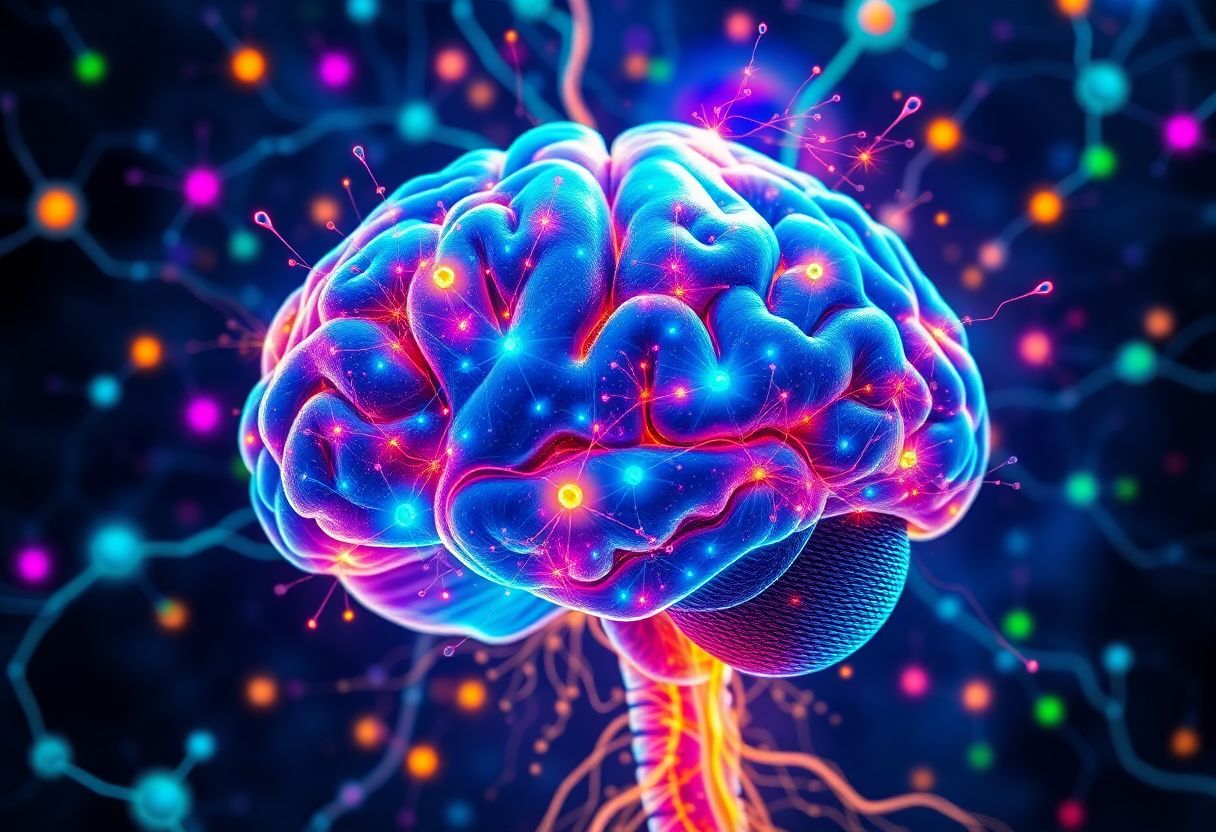
At the core of psychological phenomena lies the intricate machinery of the human brain. Composed of approximately 86 billion neurons forming trillions of connections, this complex organ gives rise to our consciousness, cognition, and behavior.
The cerebral cortex, the wrinkled outer layer of the brain, is responsible for higher-order thinking and complex cognitive functions. It's divided into lobes, each associated with specific functions:
- The frontal lobe, crucial for executive functions, planning, and personality
- The parietal lobe, involved in sensory processing and spatial awareness
- The temporal lobe, essential for memory, hearing, and language comprehension
- The occipital lobe, primarily dedicated to visual processing
Beneath the cortex, structures like the limbic system play vital roles in emotion, motivation, and memory formation. The hippocampus, amygdala, and hypothalamus are key components of this system, influencing everything from our emotional responses to our ability to form new memories.
Communication within this vast neural network is facilitated by neurotransmitters – chemical messengers that allow neurons to transmit signals across synapses. Dopamine, serotonin, norepinephrine, and many others play crucial roles in regulating mood, attention, reward, and various cognitive functions. Imbalances in these neurotransmitter systems are implicated in many mental health disorders, forming the basis for pharmacological treatments.
Recent advances in neuroimaging techniques have revolutionized our ability to study the living brain. Functional Magnetic Resonance Imaging (fMRI) allows researchers to observe changes in blood flow associated with neural activity, while Electroencephalography (EEG) measures electrical activity at the scalp. These tools, among others, have provided unprecedented insights into how different brain regions contribute to various psychological processes.
Sensation and Perception: The Gateway to Reality
Our sensory systems serve as the interface between our inner mental world and the external environment. Through vision, hearing, touch, smell, and taste, we gather raw sensory data that our brains then interpret to construct our perception of reality.
Recent research has revealed the remarkable plasticity of our sensory systems. For instance, studies on blind individuals who have learned to use echolocation demonstrate the brain's ability to repurpose the visual cortex for auditory processing. This neuroplasticity highlights the brain's adaptability in response to environmental demands and experiences.
In the realm of visual perception, researchers have made significant strides in understanding how the brain processes complex scenes. The two-streams hypothesis, proposed by Milner and Goodale, suggests that visual information is processed along two main pathways: the "what" pathway for object recognition and the "where" pathway for spatial localization. This model has been supported by neuroimaging studies and has important implications for understanding visual disorders and developing artificial vision systems.
Multisensory integration – how the brain combines information from different senses – is another area of active research. Studies have shown that our perception is often a result of complex interactions between sensory modalities. For example, the McGurk effect demonstrates how visual information can alter our perception of speech sounds, illustrating the intricate interplay between vision and audition in speech perception.
Learning and Memory: The Pillars of Adaptation
Learning and memory are fundamental processes that allow organisms to adapt to their environments and navigate complex social worlds. Recent advances in neuroscience have deepened our understanding of the cellular and molecular mechanisms underlying these crucial functions.
Long-term potentiation (LTP), a persistent strengthening of synapses based on recent patterns of activity, is widely considered to be one of the major cellular mechanisms underlying learning and memory. Research by Eric Kandel and others has elucidated the molecular cascades involved in LTP, showing how gene expression and protein synthesis contribute to the formation of lasting memories.
The consolidation of memories from short-term to long-term storage involves complex processes of neural reorganization. The standard model of memory consolidation proposes that memories are initially dependent on the hippocampus but gradually become independent of it as they are integrated into cortical networks. This process can take weeks, months, or even years for some types of memories.
Recent research has also highlighted the dynamic nature of memory. The process of reconsolidation, where memories become labile upon retrieval and require re-stabilization, has important implications for understanding and potentially treating conditions like post-traumatic stress disorder (PTSD).
In the field of educational psychology, the concept of spaced repetition has gained prominence as an effective learning strategy. Based on the spacing effect first described by Hermann Ebbinghaus in the late 19th century, this technique involves reviewing information at increasingly longer intervals to optimize long-term retention. Modern applications of spaced repetition in digital learning platforms have shown promising results in enhancing learning outcomes across various domains.
Cognition and Intelligence: The Architecture of Thought
Cognitive psychology explores the mental processes involved in acquiring, processing, and using information. This includes attention, language, reasoning, problem-solving, and decision-making. Recent research in this field has been greatly influenced by advancements in artificial intelligence and computational modeling.
The study of attention has revealed its limited capacity and the brain's remarkable ability to filter relevant information from the constant stream of sensory input. The attentional blink phenomenon, where the second of two targets presented in rapid succession is often missed, has provided insights into the temporal dynamics of attention allocation.
Language, a uniquely human cognitive ability, continues to be a subject of intense research. The field of psycholinguistics investigates how we acquire, produce, and comprehend language. Recent neuroimaging studies have provided support for the dual-stream model of language processing, which proposes separate ventral and dorsal pathways for semantic and phonological processing, respectively.
In the realm of decision-making, the work of Daniel Kahneman and Amos Tversky on cognitive biases and heuristics has had a profound impact. Their prospect theory, which describes how people make decisions under uncertainty, has applications in fields ranging from economics to public health.
Intelligence, long a controversial topic in psychology, has seen new developments with the advent of advanced brain imaging techniques. While traditional IQ tests remain widely used, there's growing recognition of the multifaceted nature of intelligence. Howard Gardner's theory of multiple intelligences and Robert Sternberg's triarchic theory have broadened our understanding beyond a single general factor of intelligence.
Recent research has also focused on the malleability of intelligence and cognitive abilities. Carol Dweck's work on growth mindset has shown how beliefs about the nature of intelligence can influence academic achievement and cognitive performance. This has important implications for education and personal development strategies.
Emotion and Motivation: The Drivers of Behavior
Emotions and motivation are integral to human experience, influencing our thoughts, decisions, and actions. Recent research has shed new light on the neural basis of emotions and the complex interplay between cognition and affect.
The work of neuroscientist Joseph LeDoux has been instrumental in understanding the brain circuits involved in emotional processing, particularly fear and anxiety. His research on the amygdala has shown its crucial role in the rapid, unconscious processing of emotional stimuli, particularly those related to threat.
In the field of positive psychology, pioneered by Martin Seligman, there's growing interest in understanding and promoting positive emotions and well-being. Research has shown that positive emotions not only feel good in the moment but also have long-term benefits for health, resilience, and social relationships.
Motivation research has seen a shift towards understanding intrinsic motivation and its relationship to performance and well-being. Self-determination theory, developed by Edward Deci and Richard Ryan, proposes that intrinsic motivation is driven by the fulfillment of basic psychological needs for autonomy, competence, and relatedness. This theory has found applications in education, workplace management, and health behavior change.
The emerging field of affective neuroscience, championed by Jaak Panksepp, explores the neural mechanisms of emotions and has identified several basic emotional systems shared across mammalian species. This research provides a biological foundation for understanding emotional experiences and disorders.
Social Psychology: The Power of Context
Social psychology examines how our thoughts, feelings, and behaviors are influenced by the presence of others, whether real or imagined. This field has produced some of psychology's most famous and sometimes controversial experiments, shedding light on human nature in social contexts.
Recent research in social neuroscience has begun to unravel the neural basis of social cognition. Studies using fMRI have identified brain regions involved in theory of mind – our ability to attribute mental states to others. The discovery of mirror neurons, first in monkeys and later suggested in humans, has provided a potential neural mechanism for empathy and social learning.
The study of implicit bias has gained prominence in recent years, with tools like the Implicit Association Test revealing unconscious attitudes and stereotypes. This research has important implications for understanding and addressing issues of prejudice and discrimination in various social domains.
Social media and digital technologies have opened up new avenues for research in social psychology. Studies on online behavior, social influence in digital environments, and the impact of social media on mental health and well-being are providing insights into how technology is shaping social interactions in the 21st century.
Developmental Psychology: The Journey of Growth
Developmental psychology explores how people change over the lifespan, from conception to old age. This field integrates insights from biology, cognitive science, and social psychology to understand the complex processes of human development.
Recent research has highlighted the importance of early experiences in shaping brain development. The concept of sensitive periods, during which the brain is particularly responsive to certain types of environmental input, has important implications for education and early intervention programs.
Advances in genetics and epigenetics have provided new insights into the interplay between nature and nurture in development. Studies on gene-environment interactions have shown how genetic predispositions can be modulated by environmental factors, challenging simplistic notions of genetic determinism.
The emerging field of developmental cognitive neuroscience uses brain imaging techniques to study how neural systems change over time and how these changes relate to cognitive and behavioral development. This research is providing a more nuanced understanding of developmental disorders and potential interventions.
Lifespan developmental psychology has gained prominence, recognizing that development continues throughout adulthood and into old age. Research on cognitive aging, for instance, has revealed that while some cognitive abilities decline with age, others, like crystallized intelligence, may continue to improve.
Clinical Psychology and Mental Health: Healing the Mind
Clinical psychology focuses on the assessment, diagnosis, and treatment of mental health disorders. This field has seen significant advances in recent years, both in understanding the etiology of disorders and in developing effective treatments.
The shift towards a biopsychosocial model of mental health recognizes the complex interplay of biological, psychological, and social factors in mental disorders. This integrated approach has led to more holistic treatment strategies that address multiple aspects of an individual's life.
Cognitive-behavioral therapy (CBT) has emerged as one of the most empirically supported treatments for a wide range of mental health conditions. Recent innovations like mindfulness-based cognitive therapy (MBCT) integrate traditional CBT techniques with mindfulness practices, showing promise in preventing relapse in depression.
Advances in neuroscience have led to new treatment approaches targeting specific neural circuits. For example, deep brain stimulation has shown potential in treating severe depression and obsessive-compulsive disorder resistant to other forms of treatment.
The field of positive psychology, while not focused solely on mental illness, has contributed valuable insights into promoting mental well-being and resilience. Interventions based on cultivating positive emotions, engagement, relationships, meaning, and accomplishment (the PERMA model) have shown benefits for both clinical and non-clinical populations.
The Future of Psychology: Emerging Trends and Challenges
As psychology continues to evolve, several exciting trends and challenges are shaping the field:
-
Integration of neuroscience and psychology: The ongoing dialogue between these fields is leading to a more comprehensive understanding of mind-brain relationships.
-
Big data and machine learning: Large-scale data analysis and AI technologies are opening up new possibilities for identifying patterns in human behavior and cognition.
-
Cultural neuroscience: This emerging field explores how cultural experiences shape brain function and behavior, promoting a more inclusive and globally relevant psychological science.
-
Reproducibility and open science: Efforts to improve research practices and transparency are crucial for building a more robust and reliable psychological science.
-
Applied psychology in technology: As AI and virtual reality technologies advance, psychologists are playing crucial roles in designing human-centered technologies and understanding their impacts.
-
Precision mental health: Tailoring interventions based on individual genetic, neurobiological, and environmental factors holds promise for more effective treatments.
-
Environmental psychology: With growing awareness of climate change, understanding human behavior in relation to the environment is becoming increasingly important.
In conclusion, psychology as a field continues to expand our understanding of the human mind and behavior, offering valuable insights that can improve individual lives and society as a whole. As we face the complex challenges of the 21st century, the insights gleaned from psychological research will undoubtedly play a crucial role in shaping our collective future.