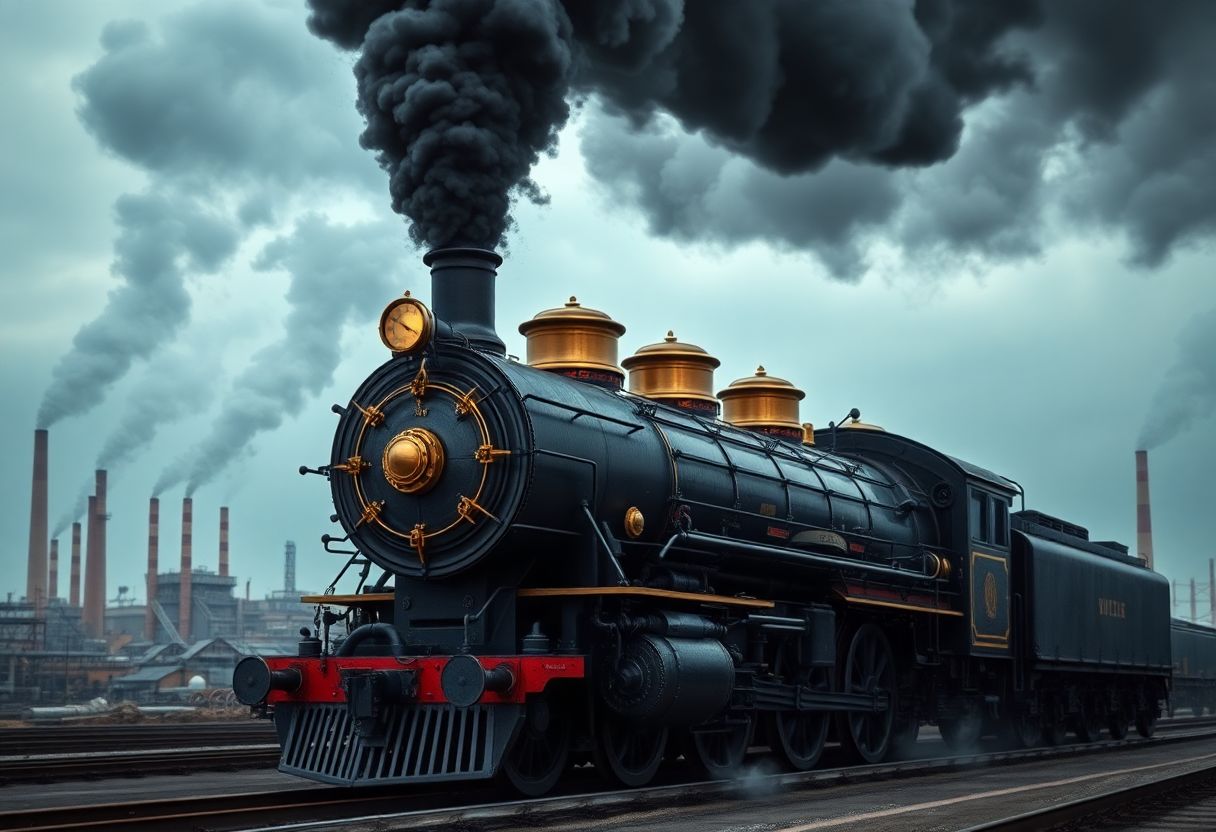
The Steam Engine: Powering the Industrial Revolution and Beyond
Steam engines have long captivated the imagination of engineers, historians, and enthusiasts alike. These powerful machines, which convert the energy of steam into mechanical work, were the driving force behind the Industrial Revolution and continue to influence modern technology. In this comprehensive exploration, we'll delve into the intricate workings of steam engines, trace their fascinating history, and examine their lasting impact on our world.
The Fundamentals of Steam Power
At its core, a steam engine is an ingenious heat engine that harnesses the expansive force of steam under pressure to generate mechanical energy. The basic principle involves heating water to produce steam, which is then used to move a piston back and forth within a cylinder. This reciprocating motion is subsequently converted into rotary motion, powering everything from locomotives to factory machinery.
Key Components of a Steam Engine
To understand how a steam engine functions, it's crucial to familiarize ourselves with its primary components:
- Firebox: This is where fuel, typically coal, is burned to generate the necessary heat.
- Boiler: A large tank where water is heated to produce steam.
- Cylinder: The chamber where steam expands to move the piston.
- Piston: The moving component pushed by the steam's force.
- Valve system: Controls the flow of steam into and out of the cylinder.
- Connecting rod and crankshaft: Convert the piston's linear motion into rotary motion.
The Steam Cycle: A Step-by-Step Process
The operation of a steam engine follows a cyclical process that can be broken down into several steps:
- Fuel combustion: Coal is ignited in the firebox, producing intense heat.
- Steam generation: The heat from the firebox boils water in the boiler, creating high-pressure steam.
- Steam admission: Valves direct the steam into the cylinder.
- Piston movement: The high-pressure steam pushes the piston along the cylinder.
- Power transmission: The piston's motion is transferred to the wheels or other machinery via the connecting rod and crankshaft.
- Steam exhaust: As the piston reaches the end of its stroke, another valve opens to release the spent steam.
- Cycle repetition: The process repeats, with steam entering from the opposite side of the piston to drive it back.
This continuous cycle of steam admission, expansion, and exhaust produces the characteristic "chuff-chuff" sound and puffing smoke associated with steam engines.
The Evolution of Steam Power
The development of the steam engine was a gradual process, marked by incremental improvements and revolutionary breakthroughs. Let's trace its evolution through history:
Ancient Beginnings
The concept of harnessing steam power dates back to antiquity. In the 1st century CE, Hero of Alexandria created the aeolipile, a rudimentary steam-powered device consisting of a hollow sphere that spun when heated. While more of a curiosity than a practical machine, it demonstrated the potential of steam as a source of mechanical energy.
Early Modern Experiments
The 17th century saw renewed interest in steam power. In 1698, Thomas Savery patented a steam pump for removing water from mines. Although inefficient, it represented a significant step forward. Denis Papin's "digester" (a precursor to the pressure cooker) and his piston steam engine design in the early 1700s laid important groundwork for future developments.
Newcomen's Atmospheric Engine
In 1712, Thomas Newcomen created the first practical steam engine, known as the atmospheric engine. Primarily used for pumping water out of mines, it marked a turning point in the application of steam power. Newcomen's engine used atmospheric pressure to do much of the work, with steam used to create a vacuum that allowed atmospheric pressure to move the piston.
Watt's Improvements
James Watt's improvements to the Newcomen engine in the late 18th century dramatically increased its efficiency and versatility. Watt's key innovation was the separate condenser, which allowed the cylinder to remain hot while condensing the steam separately. This significantly reduced fuel consumption and increased power output. Watt also developed the double-acting engine, where steam was used on both sides of the piston, and the centrifugal governor for automatically regulating engine speed.
High-Pressure Steam
In the early 19th century, Richard Trevithick pioneered the use of high-pressure steam engines. These engines were more powerful and compact than their low-pressure predecessors, making them suitable for transportation applications. Trevithick's work led to the development of the first steam-powered locomotive in 1804.
The Golden Age of Steam
Throughout the 19th century, steam engines powered the Industrial Revolution. They drove factories, locomotives, and ships, transforming manufacturing, transportation, and trade. This period saw continuous refinements in steam technology, including the development of compound engines, which used steam at multiple pressures for increased efficiency.
Types of Steam Engines
As steam technology evolved, various types of engines were developed to suit different applications:
- Single-acting engines: Steam acts on only one side of the piston.
- Double-acting engines: Steam acts alternately on both sides of the piston, increasing efficiency.
- Compound engines: Use steam multiple times at different pressures for improved efficiency.
- Uniflow engines: Steam always flows in the same direction through the cylinder.
- Steam turbines: Use the kinetic energy of steam to spin turbine blades rather than push a piston.
The Physics Behind Steam Power
To fully appreciate the workings of steam engines, it's essential to understand the underlying physical principles:
Boyle's Law
This fundamental gas law states that the pressure and volume of a gas are inversely proportional at constant temperature. In a steam engine, as steam expands in the cylinder, its pressure decreases, pushing the piston.
Charles's Law
Charles's Law describes how the volume of a gas increases with temperature at constant pressure. This principle is crucial in the boiler, where water is heated to produce high-pressure steam.
Thermodynamics
Steam engines operate on thermodynamic principles, converting thermal energy to mechanical energy. The efficiency of this conversion is limited by the laws of thermodynamics, particularly the second law, which states that no heat engine can be 100% efficient.
The Rankine Cycle
Modern steam power plants operate on the Rankine cycle, a more efficient version of the basic steam engine cycle. It includes superheating the steam and using multiple stages of expansion and reheating to maximize energy extraction.
Real-World Applications of Steam Engines
Steam engines found a wide range of applications that transformed industry and society:
Rail Transport
Steam locomotives revolutionized land transportation, enabling faster and more efficient movement of goods and people. The famous "Iron Horse" opened up vast territories and played a crucial role in the economic development of many countries.
Maritime Travel
Steamships made ocean travel faster, more reliable, and less dependent on wind patterns. This facilitated global trade and migration on an unprecedented scale.
Industrial Power
Factories used steam engines to drive a wide array of machinery, from textile looms to metal presses. This led to massive increases in manufacturing productivity and output.
Agriculture
Steam-powered tractors and threshers increased farm productivity, reducing the manual labor required for agricultural tasks.
Electricity Generation
Early power plants used steam engines to drive electrical generators, laying the foundation for the widespread electrification of society.
Understanding Steam Engine Efficiency
The efficiency of a steam engine is a critical factor in its performance and is determined by several aspects:
Thermal Efficiency
This measures how much of the heat energy from the fuel is converted into mechanical work. Early steam engines were notoriously inefficient, with only about 1-2% of the fuel's energy being converted into useful work. Later designs improved this to around 10-20%, still far below modern internal combustion engines.
Mechanical Efficiency
This refers to how much of the piston's movement is translated into useful work, accounting for friction and other mechanical losses.
Volumetric Efficiency
This measures how effectively the cylinder is filled with steam, impacting the engine's power output.
Improvements in these areas led to more powerful and fuel-efficient engines over time. For instance, compound engines, which use steam at multiple pressures, significantly increased overall efficiency.
Environmental Impact of Steam Engines
While steam engines played a crucial role in technological progress, they also had significant environmental drawbacks:
Air Pollution
Coal-burning steam engines released large amounts of smoke, soot, and other particulates into the atmosphere. This contributed to severe air pollution in industrial cities, leading to health problems and environmental degradation.
Deforestation
Before coal became the primary fuel, many steam engines relied on wood. This led to widespread deforestation in some areas, particularly along railway lines and near industrial centers.
Water Pollution
Ash and other waste products from steam engines often contaminated water sources, affecting aquatic ecosystems and water quality for human use.
Climate Impact
Although not fully understood at the time, the large-scale burning of fossil fuels to power steam engines marked the beginning of human-induced climate change, releasing significant amounts of carbon dioxide into the atmosphere.
The Legacy of Steam in Modern Technology
While traditional steam engines are no longer common, the principles of steam power continue to play a crucial role in modern technology:
Power Generation
Most electricity today is generated using steam turbines, whether powered by fossil fuels, nuclear energy, or some renewable sources like concentrated solar power and geothermal energy.
Industrial Processes
Many industries still use steam for heating, sterilization, and powering certain types of equipment.
Advanced Steam Engine Research
There is ongoing research into more efficient steam engine designs, including developments in supercritical steam technology for power generation.
Waste Heat Recovery
Steam systems are used to recover and utilize waste heat from industrial processes, improving overall energy efficiency.
The Future of Steam Technology
As we face the challenges of climate change and the need for sustainable energy sources, steam technology is finding new applications:
Solar Steam
Concentrated solar power plants use sunlight to generate steam for electricity production, offering a renewable alternative to fossil fuels.
Geothermal Energy
Geothermal power plants harness underground steam to generate electricity, tapping into the Earth's internal heat.
Advanced Materials
Research into new materials could lead to more efficient and durable components for steam systems, improving their performance and longevity.
Micro Steam Engines
There is interest in developing small-scale steam engines for specialized applications, leveraging advanced manufacturing techniques and materials.
Conclusion: The Enduring Impact of Steam Power
The steam engine, a marvel of engineering that powered the Industrial Revolution, has left an indelible mark on our world. From the thundering locomotives that connected continents to the silent turbines that light our cities, the principles first harnessed by steam engine pioneers continue to shape our technological landscape.
As we confront the energy challenges of the 21st century, the ingenuity and innovation that drove the development of steam power serve as an inspiration. The story of the steam engine is a testament to human creativity and our ability to harness the forces of nature for our benefit. While we have moved beyond the age of steam in many areas, its legacy continues to drive us forward, reminding us of the transformative power of technological innovation.
The steam engine not only revolutionized industry and transportation but also fundamentally altered the course of human civilization. It accelerated urbanization, facilitated global trade, and set the stage for the modern era of rapid technological advancement. As we look to the future, the principles of thermodynamics and energy conversion pioneered by steam technology continue to inform our quest for more efficient and sustainable power sources.
In reflecting on the history and impact of steam engines, we are reminded of the profound ways in which technology can reshape society. The challenges we face today – from climate change to energy security – call for the same spirit of innovation and determination that characterized the steam age. As we strive to develop cleaner, more efficient energy technologies, the legacy of the steam engine serves as both a lesson and an inspiration, urging us to harness our ingenuity in service of a more sustainable future.