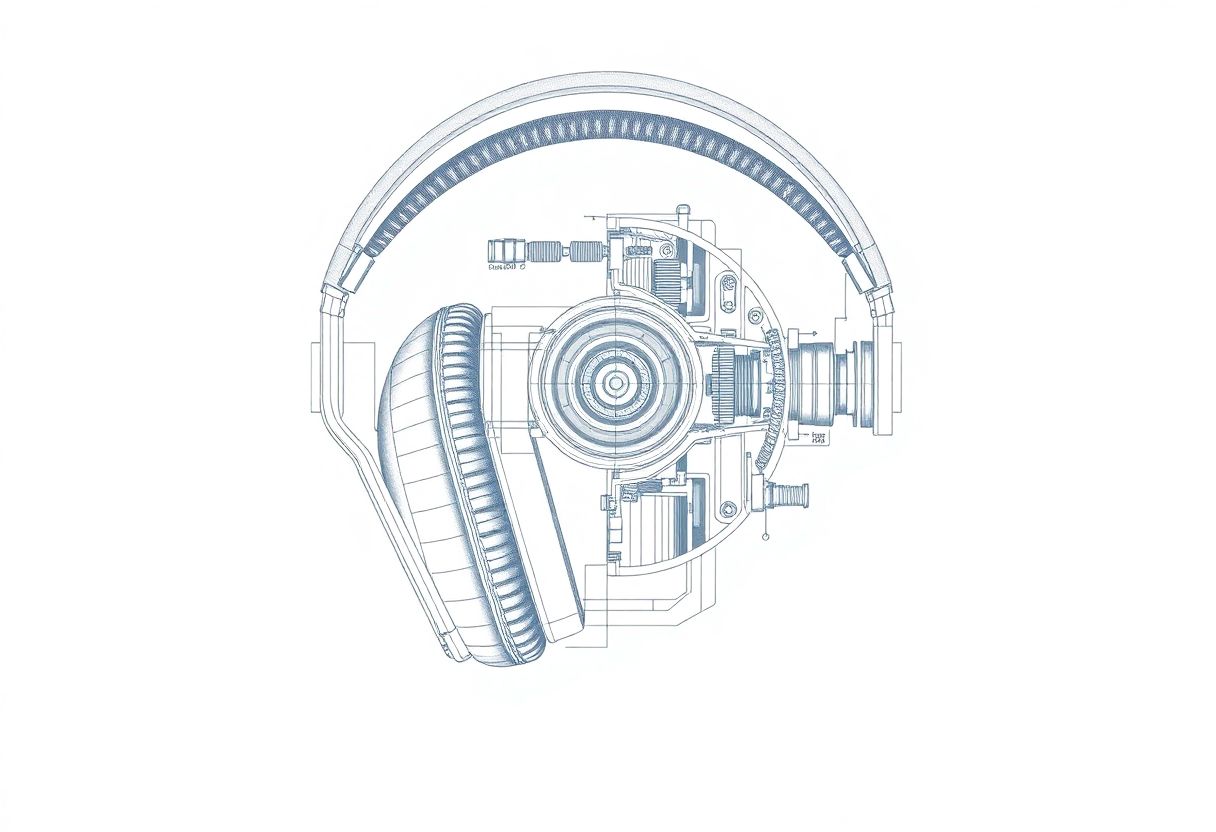
The Two Parts That Make Up a Headset: Unveiling the Magic of Headphones
Headsets have become an integral part of our daily lives, allowing us to immerse ourselves in music, participate in virtual meetings, and enjoy gaming experiences like never before. While we often think of headsets as a single unit, they are actually composed of two main parts: the headphones and the microphone. In this comprehensive exploration, we'll delve deep into the fascinating world of headphones, uncovering the intricate technology and science that makes them work.
The Fundamental Principle: Miniature Loudspeakers for Your Ears
At their core, headphones are essentially scaled-down versions of loudspeakers, designed to fit comfortably on or in your ears. They operate on the same basic principle as their larger counterparts but are optimized for personal, close-range listening. The process of sound reproduction in headphones involves a series of steps that transform electrical signals into the audio we hear.
When you play music or any audio content on your device, it sends electrical signals to your headphones. These signals interact with a magnetic field inside the headphones, causing a diaphragm to vibrate. This vibration moves the air around it, creating sound waves that are channeled directly into your ear canal. It's a marvel of engineering that allows us to experience everything from the subtlest whisper to the most thunderous bass, all within the confines of a small device.
The Diverse World of Headphone Types
Headphones come in a variety of forms, each designed to cater to different needs and preferences. Let's explore the main types:
Over-Ear (Circumaural) Headphones
These are the largest type of headphones, featuring ear cups that completely envelop your ears. They're known for their excellent sound quality and comfort during extended listening sessions. The large size allows for bigger drivers, which can produce a more expansive soundstage and often deliver superior bass response. However, their bulkiness makes them less ideal for portable use.
On-Ear (Supra-aural) Headphones
Striking a balance between size and portability, on-ear headphones sit on your ears without fully enclosing them. They're more compact than over-ear models, making them a popular choice for commuters. While they may not provide the same level of noise isolation as over-ear headphones, they allow some ambient sound to pass through, which can be beneficial in certain situations.
In-Ear Headphones (Earbuds)
These small, lightweight headphones fit directly into the ear canal. Their portability and ability to provide good noise isolation (when properly fitted) make them incredibly popular. Advances in driver technology have allowed even small earbuds to produce impressive sound quality, rivaling larger headphones in some cases.
Bone Conduction Headphones
A more niche but fascinating category, bone conduction headphones sit on the cheekbones and transmit sound through vibrations in the skull. While they may not match traditional headphones in terms of audio fidelity, they're excellent for situations where awareness of surroundings is crucial, such as outdoor running.
The Intricate Anatomy of Headphones
To truly appreciate the engineering marvel that headphones represent, it's essential to understand their internal components:
Drivers: The Heart of the Headphones
Drivers are the most crucial component of any headphone, responsible for converting electrical signals into sound waves. There are several types of drivers, each with its own characteristics:
-
Dynamic Drivers: The most common type, using a voice coil and magnet to move a diaphragm. They're known for their ability to produce strong bass and can be manufactured cost-effectively.
-
Planar Magnetic Drivers: These use a flat diaphragm with embedded conductors placed between magnets. They're praised for their low distortion and excellent transient response, though they tend to be more expensive.
-
Electrostatic Drivers: Employing an ultra-thin, electrically charged diaphragm suspended between two conductive plates, these drivers are known for their exceptional clarity and detail. However, they require specialized amplifiers and are typically found only in high-end headphones.
The Diaphragm: Where Sound Begins
The diaphragm is a thin membrane that vibrates to produce sound waves. Its material and design significantly impact the sound quality. Common materials include mylar, beryllium, and biocellulose, each offering different acoustic properties.
Voice Coil: The Motion Generator
In dynamic drivers, the voice coil carries the audio signal and moves within a magnetic field, causing the diaphragm to vibrate. The design and material of the voice coil affect the headphone's efficiency and sound characteristics.
Magnets: Creating the Field
Powerful magnets create the magnetic field necessary for driver operation. Neodymium magnets are popular due to their strength and compact size, allowing for smaller, more efficient drivers.
Housing: Shaping the Sound
The housing or ear cup not only protects the internal components but also plays a crucial role in shaping the sound. Its design and materials can significantly affect the headphone's acoustic properties, influencing factors like bass response and soundstage.
The Science of Sound in Headphones
Understanding headphones involves delving into some fascinating aspects of acoustics and electronics:
Frequency Response: The Range of Human Hearing
Headphones are typically designed to reproduce frequencies within the range of human hearing, approximately 20 Hz to 20 kHz. High-end models might extend beyond this range, though the perceptible benefits are debatable. A flat frequency response is often desirable for accurate sound reproduction, but some headphones intentionally emphasize certain frequencies to create a particular sound signature.
Impedance: Matching Power to Performance
Measured in ohms, impedance affects how much power headphones need to operate effectively. Low impedance headphones (around 32 ohms) are suitable for use with portable devices, while high impedance models (300 ohms or more) typically require a dedicated amplifier to perform optimally.
Sensitivity: Efficiency in Sound Production
Sensitivity measures how efficiently headphones convert electrical signals into acoustic energy, usually expressed in decibels (dB) per milliwatt (mW). Higher sensitivity means the headphones can produce louder sound with less power, which is particularly important for portable use.
Open-Back vs. Closed-Back: A Critical Design Choice
The design of the ear cups significantly impacts the listening experience:
Open-Back Headphones
These allow air to pass through the ear cups, creating a more natural, spacious sound. They often provide a wider soundstage and better imaging but at the cost of sound leakage and reduced isolation from external noise.
Closed-Back Headphones
With sealed ear cups, these headphones isolate the listener from external noise and prevent sound from leaking out. They often provide a more intense bass response and are better suited for use in public spaces or recording environments.
The Evolution of Headphone Technology
The history of headphones is a testament to human innovation:
- 1910s: The first headphones were developed primarily for radio communications.
- 1950s: The introduction of stereo headphones revolutionized home audio listening.
- 1970s: Sony's Walkman ushered in the era of portable headphones.
- 2000s: The rise of digital audio players led to the proliferation of in-ear headphones.
- 2010s onwards: Wireless technology and advanced noise-cancelling have transformed the headphone landscape.
Wireless Revolution: Cutting the Cord
The shift to wireless technology has been one of the most significant developments in recent years:
Bluetooth Technology
Bluetooth has become the standard for wireless audio transmission in headphones. The technology has evolved significantly, with the latest versions offering improved range, stability, and audio quality.
True Wireless Earbuds
These completely cordless earbuds have gained immense popularity, offering unprecedented portability and convenience. Advances in battery technology and miniaturization have made this form factor increasingly viable.
Challenges and Solutions
While wireless headphones offer great convenience, they face challenges such as battery life limitations and potential audio lag. Manufacturers are constantly innovating to address these issues, with developments like quick charging, extended battery life, and low-latency codecs.
Noise-Cancelling: Creating a Personal Audio Oasis
Active Noise Cancellation (ANC) has become a highly sought-after feature in modern headphones:
How ANC Works
ANC uses microphones to detect ambient noise, then generates inverse sound waves to cancel out this background noise. This technology has become increasingly sophisticated, with some high-end models offering adaptive noise cancellation that adjusts to your environment in real-time.
The Impact on Listening Experience
While ANC can significantly improve the listening experience in noisy environments, it can also affect sound quality. Many manufacturers are working on balancing effective noise cancellation with minimal impact on audio fidelity.
The Future of Headphone Technology
The world of headphones continues to evolve at a rapid pace. Some exciting developments on the horizon include:
- Adaptive Audio: Headphones that automatically adjust to your environment and listening preferences.
- Augmented Reality Audio: Enhancing real-world sounds with digital information, opening up new possibilities for navigation, education, and entertainment.
- Advanced Health Monitoring: Integration of biometric sensors to track heart rate, body temperature, and even stress levels.
- Improved Battery Technology: Pushing the boundaries of wireless listening time and quick charging capabilities.
- AI-Enhanced Sound Processing: Using artificial intelligence to optimize audio in real-time for the best possible listening experience.
Conclusion: The Ongoing Audio Revolution
Headphones, as one half of a headset, represent a fascinating intersection of acoustics, electronics, and ergonomics. From the basic principles of sound reproduction to cutting-edge noise-cancelling and wireless technologies, they continue to evolve, providing us with increasingly immersive and personalized audio experiences.
As we look to the future, it's clear that headphones will play an even more significant role in our daily lives. They'll not only deliver our favorite music and podcasts but also serve as intelligent assistants, health monitors, and gateways to augmented audio realities. Whether you're a casual listener or an audiophile, the world of headphones offers an exciting journey of discovery, where science and art combine to create magical auditory experiences.
Understanding the intricacies of how headphones work deepens our appreciation for these remarkable devices. They're not just accessories; they're gateways to new worlds of sound, constantly pushing the boundaries of what's possible in personal audio. As technology continues to advance, we can only imagine the incredible innovations that lie ahead in the world of headphones.