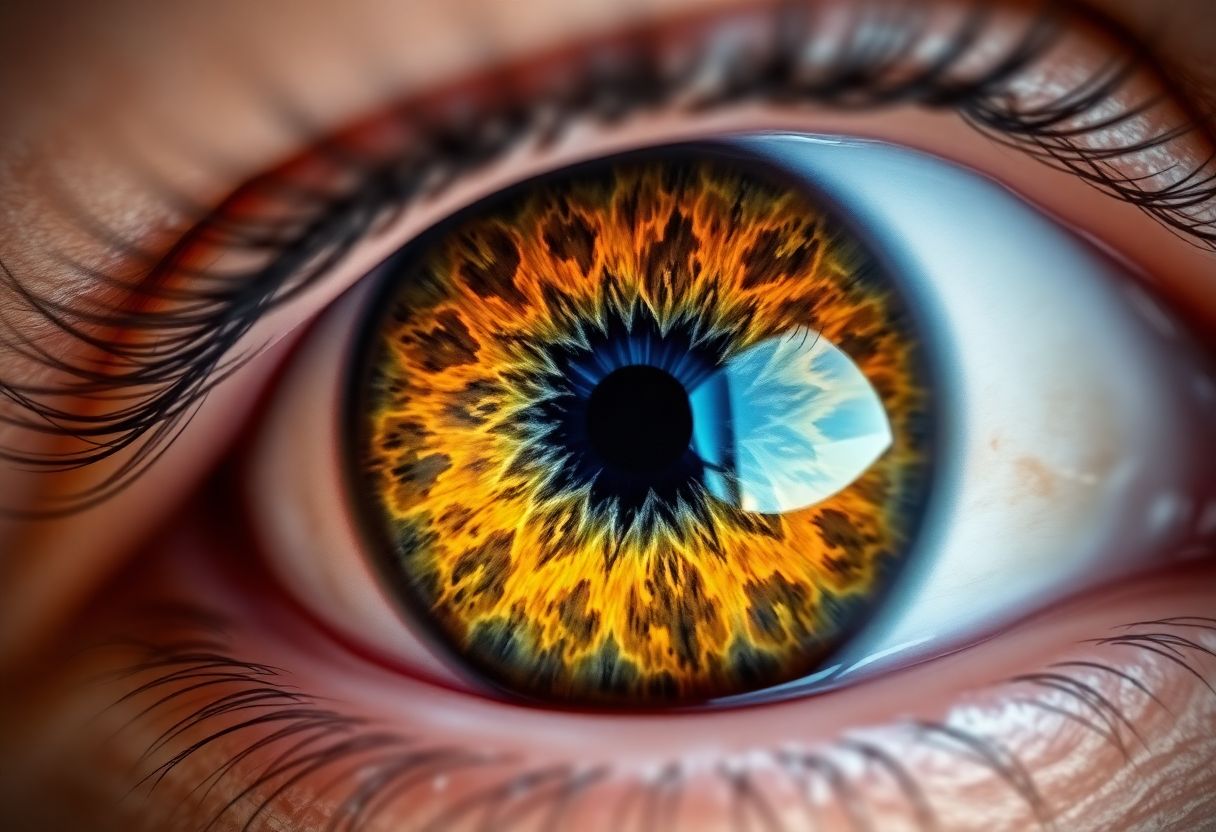
Unlocking the Secrets of Iris Scanners: A Deep Dive into the Science and Technology
The human eye has long been considered a window to the soul, but in the realm of modern technology, it's becoming a key to our digital identities. Iris scanning, a cutting-edge biometric technology, is revolutionizing the way we approach security and identification. This article will take you on a journey through the fascinating world of iris scanners, exploring how they work, their applications, and the impact they're having on our increasingly digital lives.
The Unique Nature of the Iris
At the heart of iris scanning technology lies the iris itself – the colorful, ring-shaped structure surrounding the pupil of the eye. What makes the iris so special for biometric identification? It's all about uniqueness and stability.
The human iris begins forming in the third month of gestation and is fully developed by the eighth month. The intricate patterns of the iris, including its furrows, ridges, and crypts, are determined by the chaotic morphogenesis process, resulting in a structure so complex that even genetically identical individuals (like identical twins) have completely different iris patterns. This uniqueness extends to each eye of an individual – your left and right irises are as different from each other as they are from anyone else's.
Moreover, unlike some other biometric identifiers, the iris remains remarkably stable throughout a person's lifetime. While fingerprints can be altered by wear, tear, or intentional damage, and facial features can change with age or cosmetic procedures, the iris pattern remains constant from about one year of age until death, barring severe trauma or certain rare medical conditions.
The Science Behind Iris Scanning
Iris scanning technology is a marvel of modern science, combining principles from various fields including optics, computer vision, and pattern recognition. Let's break down the process to understand how these scanners work their magic.
Image Capture: The First Step
The process begins with capturing a high-quality image of the iris. This is typically done using a specialized camera that employs near-infrared (NIR) light. NIR light, with wavelengths just beyond the visible spectrum (usually around 700-900 nanometers), is ideal for this purpose for several reasons:
- It penetrates the iris surface, revealing intricate structures that may not be visible under normal light.
- It works well for all eye colors, including dark brown eyes where visible light might not provide enough contrast.
- It's safe for the human eye, even with repeated exposure.
The use of NIR light is crucial because it allows the camera to capture clear, detailed images of the iris regardless of the iris's pigmentation. This is particularly important for individuals with darker eye colors, where visible light might not reveal enough detail.
Iris Localization and Segmentation
Once the image is captured, the next step is to precisely locate and isolate the iris within the image. This process, known as iris localization and segmentation, is critical for accurate recognition.
Advanced algorithms are used to detect the boundaries of the iris – both the inner boundary with the pupil and the outer boundary with the sclera (the white part of the eye). This step also involves detecting and excluding eyelids, eyelashes, and any reflections that might obscure parts of the iris.
The accuracy of this segmentation process is crucial. Even small errors in detecting the iris boundaries can lead to significant changes in the extracted features, potentially resulting in false rejections or, worse, false acceptances.
Normalization: Accounting for Variables
The size of the iris in the image can vary due to factors like the distance of the eye from the camera, the degree of pupil dilation, or even the natural variation in iris size between individuals. To account for these variables, the iris image undergoes a process called normalization.
During normalization, the segmented iris image is mathematically transformed from its original circular shape into a rectangular format of standardized size. This process, often referred to as "unwrapping" the iris, allows for consistent analysis regardless of the original image's scale or the pupil's state of dilation.
Feature Extraction: The Heart of Iris Recognition
With a normalized iris image in hand, the system then proceeds to extract the unique features that will form the basis of identification. This is where the real power of iris recognition comes into play.
The most widely used method for iris feature extraction is based on Gabor wavelets, a mathematical tool developed by Dennis Gabor and later adapted for iris recognition by John Daugman, a pioneer in the field. Gabor wavelets are particularly well-suited for analyzing textural patterns like those found in the iris.
The Gabor wavelet transform is applied to the normalized iris image, essentially decomposing the iris pattern into a series of mathematical values that represent its unique characteristics. These values capture both local and global details of the iris pattern, creating a comprehensive "fingerprint" of the iris.
The result of this process is typically a 256-byte (2048-bit) IrisCode, a compact digital representation of the iris's unique features. This IrisCode is remarkably efficient – it captures the essence of the iris pattern in a form that allows for rapid comparison while being small enough for easy storage and quick transmission.
Template Comparison: The Final Step
When it comes to actually identifying or verifying an individual, the newly created IrisCode is compared against stored templates in a database. This comparison is typically done using the Hamming distance, a mathematical measure of the difference between two binary strings.
The Hamming distance between two IrisCodes represents the fraction of bits that differ between them. A distance of 0 would indicate identical codes, while a distance of 1 would mean the codes are completely different. In practice, due to variations in imaging conditions and the probabilistic nature of the encoding process, even IrisCodes from the same iris will have some degree of difference.
A threshold is set to determine whether two IrisCodes are considered a match. This threshold is carefully chosen to balance the risk of false acceptances (incorrectly matching two different irises) and false rejections (failing to match two images of the same iris). Typically, a Hamming distance of 0.32 or less is considered a match, though this can vary depending on the specific application and desired level of security.
Applications of Iris Scanning Technology
The unique capabilities of iris scanning have led to its adoption in a wide range of applications, from high-security facilities to everyday consumer devices.
Border Control and Immigration
Many countries have implemented iris scanning as part of their border control procedures. For example, the United Arab Emirates has been using iris recognition at border crossings since 2001, scanning millions of irises annually. In the United States, the NEXUS program uses iris recognition for expedited border crossing between the U.S. and Canada.
Law Enforcement and Corrections
Iris scanning is increasingly being used in law enforcement and correctional facilities. It provides a quick and accurate way to verify the identity of suspects, inmates, and visitors. Unlike fingerprints, which can be altered or worn down, iris patterns remain stable, making them ideal for long-term identification in these settings.
Banking and Finance
The finance sector is exploring iris scanning as a secure method for customer authentication. Some banks have begun implementing iris scanners at ATMs, allowing customers to withdraw cash or access their accounts without the need for cards or PINs. Mobile banking apps are also starting to incorporate iris scanning capabilities, leveraging the advanced cameras in modern smartphones.
Healthcare
In healthcare settings, accurate patient identification is crucial. Iris scanning can help prevent medical errors by ensuring that the right patient receives the right treatment. It's particularly useful in situations where patients may be unconscious or unable to communicate, or in areas with high rates of identity fraud.
Consumer Electronics
Perhaps the most visible application for many people is in consumer electronics. Several smartphone manufacturers have incorporated iris scanning technology into their devices as a secure method of unlocking the phone or authenticating payments. This brings the power of iris recognition directly into the hands of millions of consumers.
Advantages and Challenges of Iris Scanning
Like any technology, iris scanning comes with its own set of advantages and challenges.
Advantages
-
Accuracy: Iris recognition is one of the most accurate biometric technologies available. The false accept rate (FAR) for iris recognition can be as low as 1 in 1.2 million, far surpassing most other biometric methods.
-
Speed: Iris scans can be performed very quickly, often in less than a second, making them suitable for high-throughput applications.
-
Non-invasive: Unlike some other biometric methods, iris scanning doesn't require physical contact, improving hygiene and user comfort.
-
Stability: The iris pattern remains stable throughout life, unlike fingerprints which can wear or be altered.
-
Difficulty to Forge: The complexity of iris patterns makes them extremely difficult to replicate or forge.
Challenges
-
Cost: High-quality iris scanning systems can be expensive to implement, especially for large-scale applications.
-
User Acceptance: Some people may feel uncomfortable having their eyes scanned, perceiving it as intrusive.
-
Environmental Factors: Bright lights, reflections, or certain types of contact lenses can sometimes interfere with scanning.
-
Medical Conditions: Certain eye conditions or surgeries might affect iris recognition accuracy.
-
Privacy Concerns: As with all biometric data, there are concerns about data storage, potential misuse, and privacy implications.
The Future of Iris Scanning
As technology continues to advance, we can expect to see significant developments in iris scanning technology:
-
Increased Range: Future scanners may be able to capture iris images from greater distances and in motion, expanding their potential applications.
-
Mobile Integration: As smartphone cameras become more advanced, we're likely to see more widespread integration of iris scanning in mobile devices.
-
Multimodal Systems: Combining iris scans with other biometrics (like facial recognition or fingerprints) could provide even greater accuracy and security.
-
Artificial Intelligence: AI and machine learning algorithms could enhance iris recognition, making it even more accurate and efficient.
-
Miniaturization: As the technology becomes more compact, we might see iris scanners integrated into a wider range of devices and applications.
Ethical and Privacy Considerations
As iris scanning technology becomes more prevalent, it's crucial to address the ethical and privacy implications:
-
Data Protection: Robust measures must be in place to protect stored iris data from unauthorized access or breaches.
-
Consent and Transparency: Users should be fully informed about how their biometric data will be used, stored, and potentially shared.
-
Regulation: As the technology advances, so too must the legal and regulatory frameworks governing its use.
-
Inclusivity: Considerations must be made for individuals who cannot use iris scanning due to medical conditions or disabilities.
-
Potential for Misuse: Like any powerful technology, iris scanning could potentially be misused for surveillance or tracking if not properly regulated.
Conclusion
Iris scanning technology represents a fascinating intersection of biology, optics, and computer science. Its ability to provide highly accurate, fast, and non-invasive identification has the potential to revolutionize how we approach security and identity verification in countless areas of our lives.
As we move forward, it's crucial that we balance the incredible potential of this technology with careful consideration of its implications. The unique patterns in our eyes may well become our most personal and secure form of identification, but it's up to us to ensure that this future respects individual rights and societal values.
From unlocking our smartphones to securing our borders, iris scanning is steadily becoming a part of our daily lives. As we gaze into the future of this technology, we're not just looking at a means of identification – we're looking at a reflection of our own uniqueness, a testament to the incredible complexity of the human body, and a powerful example of how nature's designs can inspire technological innovations that shape our world.