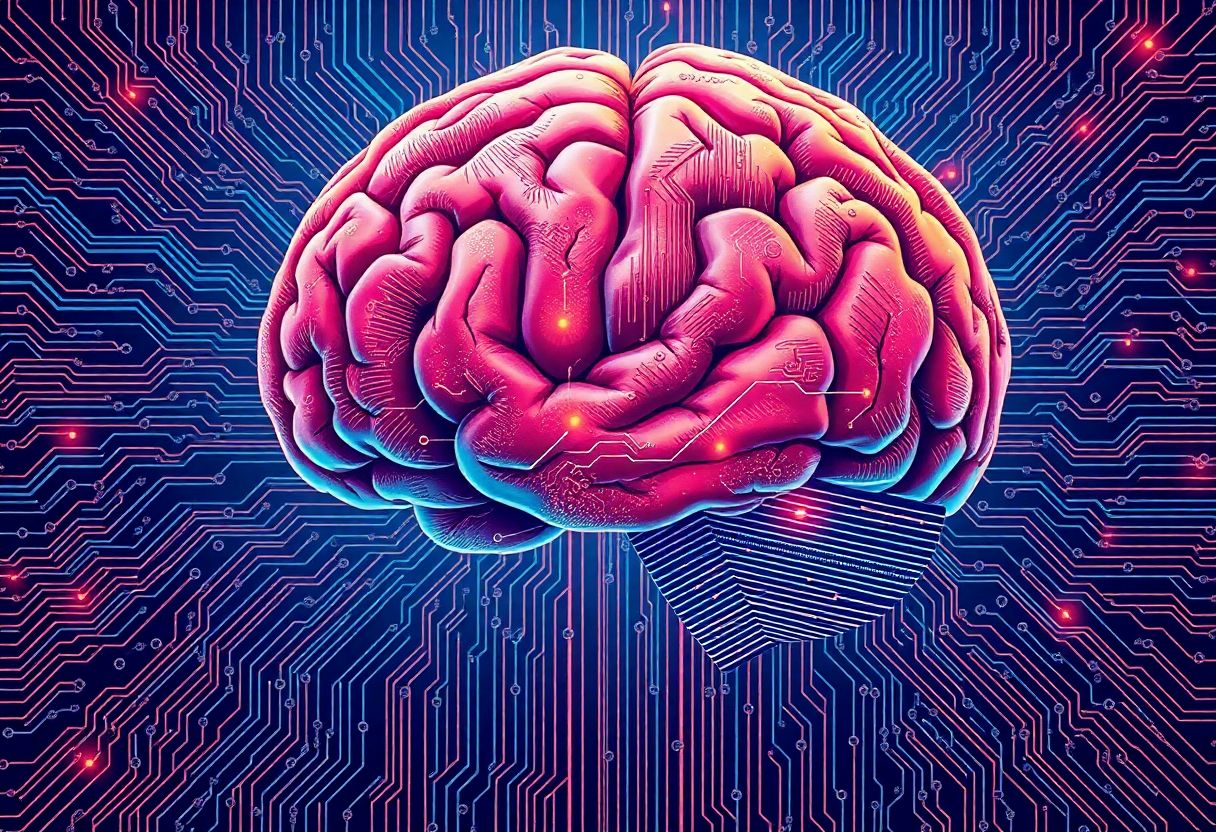
Unraveling the Digital Brain: A Deep Dive into Neural Networks
Neural networks have revolutionized the field of artificial intelligence, bringing us closer than ever to creating machines that can think and learn like humans. This comprehensive guide will take you on a journey through the fascinating world of neural networks, from their basic principles to cutting-edge applications and future prospects.
The Genesis of Neural Networks: Bridging Biology and Technology
The concept of neural networks emerged from our understanding of the human brain's structure and function. Just as our brains consist of billions of interconnected neurons, artificial neural networks are composed of interconnected nodes or "artificial neurons." This biomimetic approach has led to remarkable advancements in machine learning and artificial intelligence.
The Human Brain: Nature's Cognitive Powerhouse
The human brain, with its estimated 86 billion neurons, each connected to thousands of others, is a marvel of biological engineering. It's capable of learning, adapting, and solving complex problems with seemingly effortless ease. The brain's ability to recognize patterns, process sensory information, and make decisions based on incomplete data has long been the envy of computer scientists.
The Computer: A Precision Calculator Evolving
Traditional computers, built on the von Neumann architecture, excel at rapid calculations and data storage. However, they typically follow predetermined instructions and lack the flexibility and adaptability of biological brains. The development of neural networks represents a paradigm shift in computing, moving towards systems that can learn and adapt without explicit programming for every scenario.
Demystifying Neural Networks: Structure and Function
At its core, a neural network is a computational model inspired by the biological neural networks that constitute animal brains. It's designed to recognize patterns and solve problems in a way that mimics human cognition.
The Architecture of a Neural Network
A typical neural network consists of three main components:
-
Input Layer: This is where the network receives raw data. Each input neuron represents a feature of the input data.
-
Hidden Layers: These intermediate layers process the information received from the input layer. Deep neural networks can have multiple hidden layers, each capable of learning increasingly abstract features of the data.
-
Output Layer: This layer provides the network's final output or decision based on the processed information.
The neurons in each layer are connected to neurons in adjacent layers. These connections are assigned weights, which are adjusted during the learning process.
The Learning Process: Training Neural Networks
Neural networks learn through a process called training, which involves exposing the network to a large dataset and adjusting its internal parameters to minimize the difference between its predictions and the actual outcomes.
The most common training method is backpropagation, which works as follows:
- Forward Pass: Input data is fed through the network, generating an output.
- Error Calculation: The difference between the predicted output and the actual target is computed.
- Backward Pass: The error is propagated backward through the network.
- Weight Adjustment: The connection weights are updated to reduce the error.
- Iteration: The process is repeated with new data until the network's performance is satisfactory.
This iterative process allows the network to gradually improve its performance, learning to recognize patterns and make accurate predictions.
Types of Neural Networks: Specialized Architectures for Diverse Tasks
As research in neural networks has advanced, various specialized architectures have been developed to tackle specific types of problems:
Feedforward Neural Networks
The most basic type of neural network, where information flows in one direction from input to output. These networks are used for simple pattern recognition tasks and serve as the foundation for more complex architectures.
Convolutional Neural Networks (CNNs)
CNNs are particularly effective for image recognition tasks. They use convolutional layers to automatically and adaptively learn spatial hierarchies of features. This makes them ideal for applications like facial recognition, object detection, and medical image analysis.
Recurrent Neural Networks (RNNs)
RNNs are designed to work with sequential data by maintaining an internal state or "memory." This makes them well-suited for tasks involving time series data, natural language processing, and speech recognition.
Long Short-Term Memory Networks (LSTMs)
A specialized type of RNN, LSTMs are capable of learning long-term dependencies in data. They've proven particularly effective in tasks like machine translation, speech recognition, and generating descriptive image captions.
Generative Adversarial Networks (GANs)
GANs consist of two neural networks—a generator and a discriminator—that are trained simultaneously through adversarial training. They're used for generating new, synthetic data and have found applications in creating realistic images, videos, and even music.
Real-World Applications: Neural Networks in Action
The versatility of neural networks has led to their adoption across a wide range of industries and applications:
Computer Vision and Image Recognition
Neural networks, particularly CNNs, have revolutionized computer vision tasks. They're used in facial recognition systems, autonomous vehicles for object detection, and in medical imaging for diagnosing diseases from X-rays or MRI scans.
Natural Language Processing
RNNs and Transformer models have significantly improved machine translation, sentiment analysis, and text generation. They power virtual assistants like Siri and Alexa, enabling more natural human-computer interactions.
Financial Forecasting and Fraud Detection
In the financial sector, neural networks are used to predict stock prices, detect fraudulent transactions, and assess credit risk. Their ability to identify complex patterns in large datasets makes them invaluable in these high-stakes applications.
Healthcare and Medical Diagnosis
Neural networks are assisting healthcare professionals in diagnosing diseases, predicting patient outcomes, and personalizing treatment plans. They're particularly useful in analyzing medical imaging data and identifying patterns that might be imperceptible to the human eye.
Autonomous Vehicles
Self-driving cars rely heavily on neural networks for perception, decision-making, and control. These networks process data from various sensors to understand the vehicle's environment and make split-second driving decisions.
Recommendation Systems
Companies like Netflix, Amazon, and Spotify use neural networks to power their recommendation engines, analyzing user behavior to suggest products, movies, or music tailored to individual preferences.
Challenges and Limitations: The Road Ahead for Neural Networks
While neural networks have achieved remarkable success, they still face several challenges:
Data Hunger and Quality
Neural networks often require vast amounts of high-quality, labeled data for training. This can be a significant bottleneck, especially in domains where data is scarce or expensive to acquire.
Interpretability and the "Black Box" Problem
The complex, multi-layered structure of neural networks often makes it difficult to understand how they arrive at their decisions. This lack of interpretability can be problematic in critical applications like healthcare or finance, where understanding the reasoning behind a decision is crucial.
Computational Resources
Training large neural networks, especially deep learning models, requires significant computational power. This can make the development and deployment of advanced models costly and energy-intensive.
Overfitting and Generalization
Neural networks can sometimes become too specialized to their training data, performing poorly on new, unseen data. Techniques like regularization and data augmentation are used to combat this, but achieving good generalization remains a challenge.
Adversarial Attacks
Research has shown that neural networks can be vulnerable to carefully crafted inputs designed to fool them. Developing robust defenses against these adversarial attacks is an active area of research.
The Future of Neural Networks: Pushing the Boundaries of AI
As research in neural networks continues to advance, several exciting trends are emerging:
Neuromorphic Computing
Researchers are developing hardware architectures that more closely mimic the structure and function of biological neural networks. These neuromorphic systems promise to be more energy-efficient and capable of faster, more brain-like processing.
Federated Learning
This approach allows for training neural networks across decentralized devices or servers holding local data samples, without exchanging them. It addresses privacy concerns and enables learning from diverse, distributed datasets.
Few-Shot and Zero-Shot Learning
These techniques aim to reduce the data requirements of neural networks, allowing them to learn from very few examples (few-shot) or even generalize to completely new classes (zero-shot).
Explainable AI
Efforts are underway to develop neural network architectures and techniques that provide more interpretable results, addressing the "black box" problem.
Quantum Neural Networks
Researchers are exploring the potential of quantum computing to enhance neural networks, potentially leading to quantum machine learning algorithms that could solve certain problems exponentially faster than classical computers.
Conclusion: The Digital Brain Revolution Continues
Neural networks represent a fascinating convergence of neuroscience, computer science, and artificial intelligence. By emulating the brain's structure and learning processes, they're pushing the boundaries of machine intelligence and opening up new possibilities across countless domains.
As we continue to refine and expand neural network technologies, we're not just creating smarter machines – we're gaining profound insights into the nature of intelligence and learning itself. The future of neural networks holds immense promise, with potential applications ranging from personalized medicine to space exploration.
Whether you're a technology enthusiast, a student of computer science, or a professional looking to leverage AI in your field, understanding neural networks is key to navigating our increasingly AI-driven world. As these digital brains become more sophisticated, they'll undoubtedly play an ever-growing role in shaping our technological landscape and solving some of humanity's most pressing challenges.
The journey of neural networks is just beginning, and the possibilities are as boundless as human imagination itself. As we stand on the brink of this digital brain revolution, one thing is clear: the fusion of biological inspiration and technological innovation in neural networks will continue to drive us towards a future where machines can truly think, learn, and create alongside their human counterparts.