Unraveling the Magic of Optical Character Recognition: How Computers Learn to Read
In our increasingly digital world, the ability to bridge the gap between physical and digital information has become paramount. At the forefront of this technological revolution stands Optical Character Recognition (OCR), a fascinating field that enables computers to read and interpret text from images, scanned documents, and even handwritten notes. This article delves deep into the inner workings of OCR, exploring its mechanisms, applications, challenges, and future prospects.
The Fundamentals of OCR
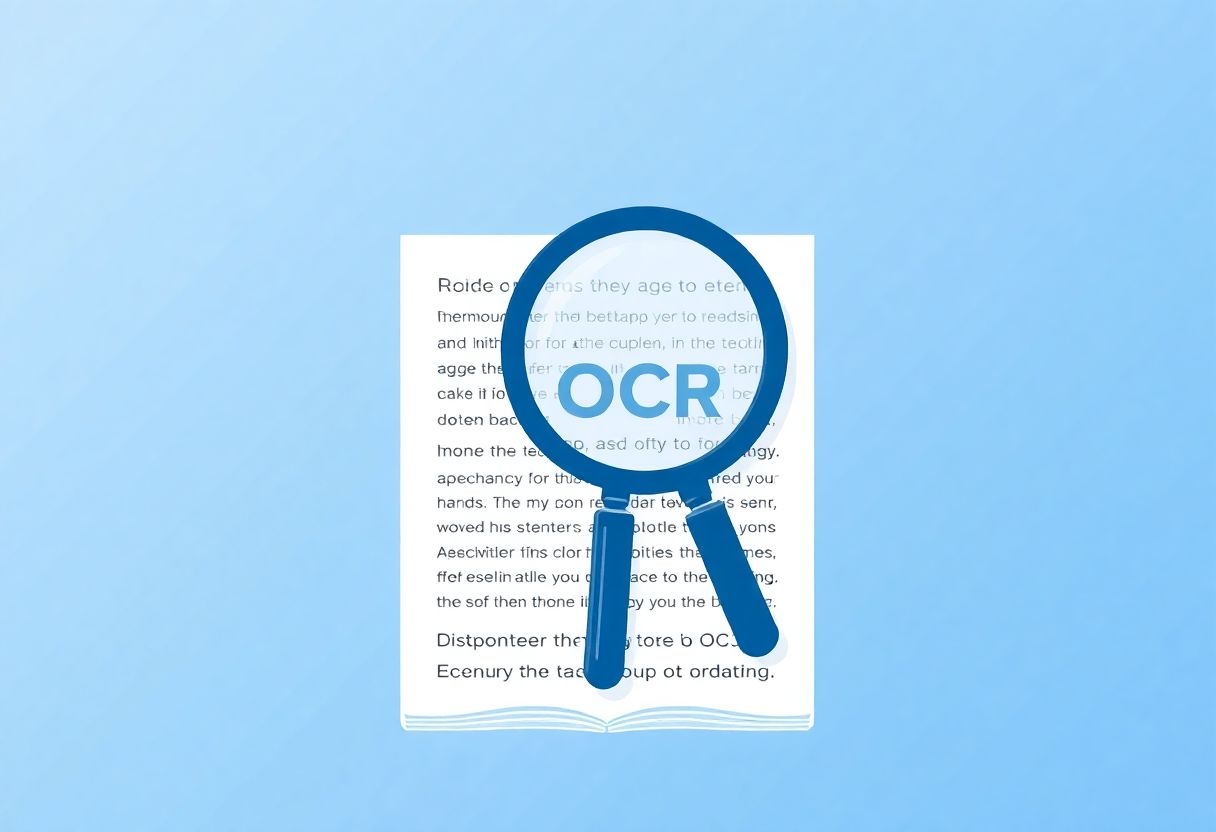
Optical Character Recognition is the technological process that converts various types of documents, such as scanned paper documents, PDF files, or images captured by a digital camera, into editable and searchable data. In essence, OCR teaches computers to read and understand human-readable text.
To appreciate the complexity of OCR, it's crucial to understand the stark difference between human and computer perception of text. Humans effortlessly capture text with their eyes, process this visual information in their brains, recognize patterns forming letters and symbols, combine these into words and sentences, and understand the meaning based on context and knowledge. For computers, this process is far more challenging, as they perceive images as collections of pixels – tiny colored dots that make up the picture.
The OCR Process: A Step-by-Step Journey
Image Acquisition
The OCR process begins with obtaining an image of the text. This can be achieved through various means, including scanning a document, capturing a photo with a digital camera or smartphone, or loading an existing image file. The quality of this initial image is paramount for successful OCR, with factors like resolution, contrast, and clarity significantly impacting recognition accuracy.
Preprocessing
Once acquired, the image undergoes preprocessing to enhance the likelihood of successful recognition. This crucial stage involves several sub-steps:
- Deskewing: Correcting the alignment of the text if the document was scanned at an angle.
- Noise removal: Eliminating specks, dots, or lines that aren't part of the text.
- Binarization: Converting the image to black and white, simplifying the recognition process.
- Line removal: Eliminating non-text elements like lines or boxes that might interfere with character recognition.
- Layout analysis: Identifying blocks of text, images, tables, etc., to understand the document's structure.
Character Recognition
At the heart of OCR lies character recognition, which employs two main approaches:
Pattern Recognition
This method compares the image of each character with stored glyph patterns. The OCR software maintains a database of different fonts and character variations, comparing each character in the image to these stored patterns. The closest match is then selected as the recognized character. While effective for printed text, this method struggles with handwriting or unusual fonts.
Feature Detection
Also known as "Intelligent Character Recognition" (ICR), this method analyzes the components of each character. It breaks down characters into features like lines, closed loops, line direction, and line intersections. These features are then compared to rules about how characters are formed. For instance, a capital "A" might be recognized by two diagonal lines meeting at the top and a horizontal line crossing between them. Feature detection offers more flexibility and can handle variations in handwriting and fonts better than pattern recognition.
Post-Processing
After initial recognition, OCR systems employ various techniques to improve accuracy:
- Lexical analysis: Using dictionaries to check and correct spellings.
- Context analysis: Considering surrounding words to make sense of ambiguous characters.
- Grammar checks: Applying language rules to correct errors.
Output Generation
The final step involves generating the output in various formats, such as plain text files, word processing documents, searchable PDFs, or structured data for form processing.
Advanced OCR Technologies
As OCR technology evolves, new and more sophisticated approaches are being developed to improve accuracy and efficiency.
Neural Networks and Deep Learning
Recent advancements in artificial intelligence, particularly in the field of deep learning, have revolutionized OCR technology. Convolutional Neural Networks (CNNs), a class of deep learning algorithms particularly effective in image recognition tasks, have been successfully applied to OCR.
These neural networks can learn to recognize patterns in images through exposure to large datasets of labeled characters. Unlike traditional OCR methods that rely on predefined rules or templates, CNNs can adapt to various fonts, styles, and even handwriting with remarkable accuracy.
For instance, Google's Cloud Vision API, which utilizes deep learning for OCR, can recognize text in over 50 languages and various scripts, demonstrating the power of these advanced techniques.
Recurrent Neural Networks for Context Understanding
Another significant advancement is the use of Recurrent Neural Networks (RNNs), particularly Long Short-Term Memory (LSTM) networks, in OCR systems. These networks are especially useful for understanding context and sequence in text recognition.
RNNs can process sequences of data, making them ideal for tasks like handwriting recognition where the interpretation of a character might depend on the characters that come before or after it. This contextual understanding significantly improves the accuracy of OCR, especially in challenging scenarios like cursive handwriting or connected script languages.
Attention Mechanisms
Attention mechanisms, a key component of many state-of-the-art natural language processing models, have also found their way into OCR systems. These mechanisms allow the model to focus on specific parts of the input image when decoding each character, mimicking how humans pay attention to certain areas while reading.
This approach has proven particularly effective in handling complex document layouts, where text may be arranged in multiple columns or interspersed with images and graphics.
Challenges in OCR Implementation
Despite significant advancements, OCR technology still faces several challenges:
Handwriting Recognition
Recognizing handwritten text remains one of the most complex challenges in OCR due to the vast variations in individual handwriting styles. While neural network-based approaches have made significant strides in this area, achieving human-level accuracy in handwriting recognition, especially for cursive scripts, remains an ongoing research challenge.
Complex Layouts
Documents with multiple columns, tables, or embedded images can confuse OCR systems. Advanced layout analysis algorithms are being developed to address this, using techniques from computer vision and document understanding to accurately segment and process complex document structures.
Language and Font Variations
Different languages, alphabets, and fonts pose challenges, especially for systems designed primarily for English text. Multilingual OCR systems are being developed to address this, with some advanced systems capable of automatically detecting and processing text in multiple languages within the same document.
Low-Quality Images
Faded text, low contrast, or poor resolution can significantly reduce OCR accuracy. Advanced image processing techniques, including super-resolution algorithms and adaptive thresholding, are being employed to enhance image quality before OCR processing.
Historical Documents
Old documents with archaic fonts or deteriorated quality present unique challenges. Specialized OCR systems are being developed for historical document digitization, incorporating knowledge of historical fonts and document styles to improve accuracy.
Groundbreaking Applications of OCR
OCR technology finds applications in numerous fields, revolutionizing various industries:
Document Digitization and Management
OCR is at the heart of document digitization efforts across industries. For example, the Google Books project has used OCR to digitize millions of books, making vast amounts of literature searchable and accessible online. Similarly, many libraries and archives are using OCR to preserve and make searchable their collections of historical documents and manuscripts.
Automated Data Entry and Form Processing
OCR has transformed data entry processes in many industries. For instance, in healthcare, OCR is used to automatically extract information from patient intake forms and medical records, reducing errors and improving efficiency. Similarly, in finance, OCR is employed to process invoices, receipts, and financial statements, automating much of the accounting process.
Assistive Technology for the Visually Impaired
OCR plays a crucial role in making the world more accessible to visually impaired individuals. Screen reading software often incorporates OCR to read text from images or inaccessible PDF documents. Mobile apps using OCR can help visually impaired users read signs, menus, or product labels by simply pointing their phone's camera at the text.
Real-Time Translation
OCR combined with machine translation is enabling real-time translation of text in images. Google Translate's instant camera translation feature, for example, uses OCR to recognize text in images and then translates it into the user's chosen language, overlaying the translated text on the original image.
License Plate Recognition
OCR is widely used in Automatic License Plate Recognition (ALPR) systems for traffic monitoring, parking management, and law enforcement. These systems can automatically read and record license plate numbers from vehicles in motion, enabling applications like automated toll collection and vehicle tracking.
Passport Control and Identity Verification
OCR technology is crucial in automated passport control systems at airports. These systems use OCR to read passport information quickly and accurately, speeding up the immigration process and enhancing security.
The Future of OCR: Emerging Trends and Possibilities
As technology continues to advance, the future of OCR looks increasingly promising and transformative:
AI and Machine Learning Advancements
Continued advancements in AI and machine learning are expected to further improve OCR's ability to handle complex layouts, diverse fonts, and even the most challenging handwriting. We may see OCR systems that can learn and adapt in real-time, improving their accuracy with each use.
Real-Time OCR in Augmented Reality
As augmented reality (AR) technology becomes more prevalent, we can expect to see OCR integrated into AR systems. This could enable instant translation of text viewed through AR glasses or provide additional information about text seen in the real world.
3D OCR
Emerging technologies are exploring OCR for three-dimensional objects, like reading text on a curved surface. This could have applications in areas like manufacturing, where text printed on products or packaging could be read regardless of their shape or orientation.
Handwriting Recognition Breakthroughs
Advances in neural networks are making significant strides in accurate handwriting recognition. Future systems may be able to read even the most challenging handwritten texts with near-human accuracy, potentially revolutionizing fields like historical document analysis and personal note-taking.
Integration with Natural Language Processing
As OCR systems become more sophisticated, we may see closer integration with natural language processing (NLP) technologies. This could lead to systems that not only recognize text but also understand its meaning and context, enabling more advanced document analysis and information extraction.
Conclusion: The Transformative Power of OCR
Optical Character Recognition has come a long way since its inception, evolving from a niche technology to an integral part of our digital ecosystem. As we've explored in this comprehensive guide, OCR is not just about converting images to text; it's about making information more accessible, searchable, and usable.
From enabling visually impaired individuals to access written content to allowing businesses to digitize vast archives of paper records, OCR is quietly revolutionizing how we interact with text in the world around us. It's breaking down barriers between the physical and digital realms, opening up new possibilities for information access and utilization.
As OCR technology continues to advance, driven by breakthroughs in artificial intelligence and machine learning, we can anticipate even more impressive capabilities. The future may bring OCR systems that can understand and interpret text with human-like comprehension, seamlessly bridging the gap between visual information and digital understanding.
In this era of information, OCR stands as a testament to human ingenuity and the power of technology to enhance our capabilities. It reminds us that in the grand tapestry of technological advancement, sometimes the most profound innovations are those that simply help us read the world around us in new and powerful ways.