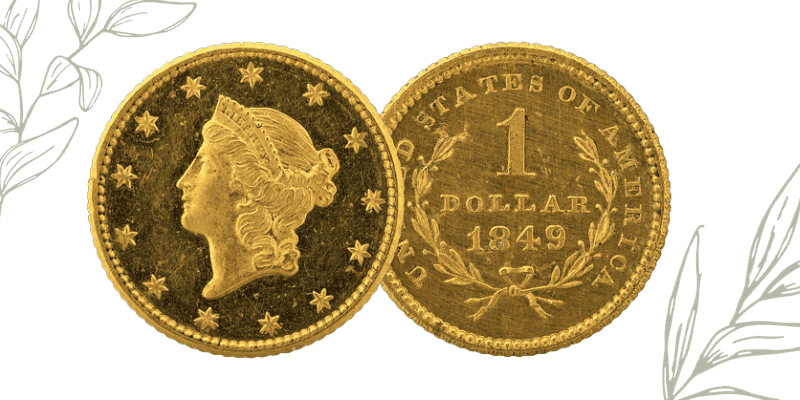
Gold Dollar Coin Value: Inside the World of America‘s Tiniest Gold Treasures
As an antique coin collector and specialist with over two decades of experience, I‘ve handled countless rare specimens, but few pieces capture the imagination quite like the gold dollar coin. When a pristine 1854 specimen sold for an astounding $720,000, it reinforced what many of us in the numismatic community have long known – these tiny gold pieces hold immense historical and monetary value.
The Birth of America‘s Smallest Gold Coins
The story of gold dollar coins begins in the halls of early American government. In 1791, Alexander Hamilton, our first Treasury Secretary, proposed minting gold dollars alongside silver ones. Congress initially rejected the gold proposal, focusing solely on silver coinage. This decision would stand for nearly 60 years until an unexpected event changed everything – the California Gold Rush.
When James Marshall discovered gold at Sutter‘s Mill in 1848, the resulting flood of precious metal transformed American currency. The mint could finally produce gold dollars economically, and in 1849, the first specimens emerged from the Philadelphia Mint‘s presses.
The Three Classic Types: A Collector‘s Guide
Type 1: Liberty Head (1849-1854)
The first gold dollars featured a classical Liberty head design by James B. Longacre. At just 13 millimeters in diameter, these coins proved challenging to handle but beautiful to behold. The obverse shows Liberty wearing a coronet, while the reverse displays a simple wreath surrounding the denomination.
In my years of collecting, I‘ve noticed Type 1 specimens often show weakness in the central details. This stems from their small size and the mint‘s initial learning curve with such tiny pieces. The 1849-C Open Wreath variety stands as one of the most sought-after, with prime specimens reaching half a million dollars at auction.
Type 2: Indian Princess Small Head (1855)
The Type 2 design marked a dramatic shift, replacing Liberty with a Native American princess. This short-lived type lasted just one year, making it particularly valuable to collectors. The design changes aimed to improve striking quality, though results varied significantly between mint facilities.
The 1855-D remains one of the most elusive, with only 1,811 pieces minted at Dahlonega. Well-preserved specimens routinely command six-figure prices, particularly those showing strong details in the headdress feathers.
Type 3: Indian Princess Large Head (1856-1889)
The final design iteration featured an enlarged portrait that better filled the coin‘s small canvas. These pieces circulated until 1889, though many found their way into jewelry and decorative items due to their convenient size.
The 1875 Philadelphia issue stands as a key date, with just 420 pieces struck. In my collection, I treasure an MS-63 example showing remarkable detail retention in Liberty‘s hair and headdress.
Understanding Market Values
Modern gold dollar values depend on multiple factors:
Mint State Grade: The numerical grade assigned by PCGS or NGC dramatically impacts value. An MS-65 specimen might sell for twice what an MS-63 brings, while MS-67 pieces can command astronomical prices.
Strike Quality: Given their small size, many gold dollars show weak strikes. Specimens with full detail definition command significant premiums.
Surface Preservation: Original mint luster and minimal contact marks prove crucial for investment-grade pieces.
Historical Significance: Certain dates carry special importance. The 1849-C Open Wreath, for instance, represents the first Charlotte Mint gold dollar.
Authentication Challenges
As values have risen, counterfeit gold dollars have become increasingly sophisticated. When examining potential purchases, I focus on several key areas:
Weight and Dimensions: Original specimens should weigh exactly 1.672 grams and measure 13mm in diameter.
Strike Characteristics: Each mint facility left distinctive striking signatures that forgers struggle to replicate.
Surface Texture: Genuine pieces show characteristic flow lines in the fields that modern technology cannot perfectly duplicate.
Regional Market Variations
Gold dollar values often show interesting geographic patterns. Specimens from Southern branch mints (Charlotte, Dahlonega) typically command higher prices in that region, where local collectors prize their historical significance.
Western collections often focus on San Francisco mint issues, particularly those connected to the California Gold Rush era. Understanding these regional preferences can help collectors make strategic purchases.
Investment Strategies
For those considering gold dollars as investments, I recommend several approaches:
Quality-Focused Collection: Concentrate on the highest available grades, even if it means fewer pieces.
Type Set Assembly: Acquire prime examples of all three major types.
Date/Mint Collection: Focus on a specific mint or year range.
Error and Variety Pursuit: Seek rare die varieties and striking errors.
Conservation and Preservation
Proper storage proves crucial for maintaining gold dollar value. I recommend:
Environmental Control: Maintain constant temperature and humidity levels.
Proper Housing: Use inert materials and holders designed for long-term storage.
Handling Protocol: Always hold coins by their edges using clean, cotton gloves.
Documentation: Maintain detailed records of acquisition, certification, and condition changes.
Modern Golden Dollars
While not containing precious metal, some modern dollar coins have achieved remarkable values. The 2000-P Sacagawea/Quarter mule error represents one of the most valuable modern mint errors, with specimens selling for over $100,000.
Other notable modern issues include:
- Presidential Dollar Series (2007-2016)
- Native American Dollars (2009-present)
- American Innovation Dollars (2018-present)
Case Study: The $720,000 Specimen
The record-setting 1854 gold dollar deserves special attention. This PR65 Deep Cameo piece combines several crucial factors:
- Proof striking (extremely rare for the era)
- Exceptional surface preservation
- Complete strike definition
- Original mint frost
- Documented provenance
Its sale price reflects both absolute rarity and perfect preservation, demonstrating the potential ceiling for exceptional gold dollars.
Market Outlook and Collecting Opportunities
Current market conditions suggest continued strength in the gold dollar sector. Several factors support this outlook:
Growing Historical Interest: More collectors appreciate these coins‘ connection to American expansion and the Gold Rush era.
Limited Supply: Many specimens were melted during the 1930s, reducing available inventory.
Quality Rarity: High-grade pieces become increasingly scarce as registry set competition intensifies.
Building Your Collection
For collectors entering this fascinating field, I suggest starting with:
Education: Study reference works and auction records extensively.
Relationships: Develop connections with reputable dealers specializing in gold coins.
Patience: Wait for the right pieces rather than settling for inferior specimens.
Authentication: Work only with NGC or PCGS certified coins for significant purchases.
Conclusion
Gold dollar coins represent a perfect intersection of historical significance, artistic beauty, and numismatic value. Whether pursuing them as investments or historical artifacts, these tiny treasures continue fascinating collectors and rewarding careful study.
Their evolution from Hamilton‘s proposal through the Gold Rush era and into modern collecting exemplifies American numismatic history. As market appreciation grows and exceptional specimens become increasingly scarce, gold dollars remain compelling targets for serious collectors and investors alike.