Recognizing the 1921 Silver Dollar Value: The Truth Behind These $4,150 Treasures
Last month, I held a remarkable 1921 Peace Dollar in my hands during an estate evaluation in Boston. The coin‘s high relief design caught the morning light perfectly, revealing the intricate detail that makes these first-year pieces so special. As I explained to the owner, her grandfather‘s foresight in preserving this MS65 example had created a $4,150 legacy. This moment perfectly illustrates why the 1921 silver dollar market draws both passionate collectors and serious investors.
The Historical Significance of 1921 Silver Dollars
The year 1921 stands as a pivotal moment in American numismatic history. The Philadelphia Mint had just restarted silver dollar production after a 17-year hiatus, creating a unique circumstance where two distinct designs would emerge from the same year. The Morgan design returned briefly, while the new Peace Dollar made its debut in the final weeks of December.
The economic landscape of 1921 shaped these coins‘ production significantly. World War I had ended, leaving America‘s silver reserves depleted after millions of dollars were melted under the Pittman Act of 1918. The government needed to replenish its silver dollar supply quickly, leading to massive production numbers at three mints.
Philadelphia struck over 44 million Morgan dollars that year, while San Francisco produced nearly 21.7 million, and Denver contributed just over 20.3 million pieces. The Peace Dollar saw a much more limited release, with only 1,006,473 pieces struck in high relief at Philadelphia before the year‘s end.
Morgan Dollar Production Characteristics
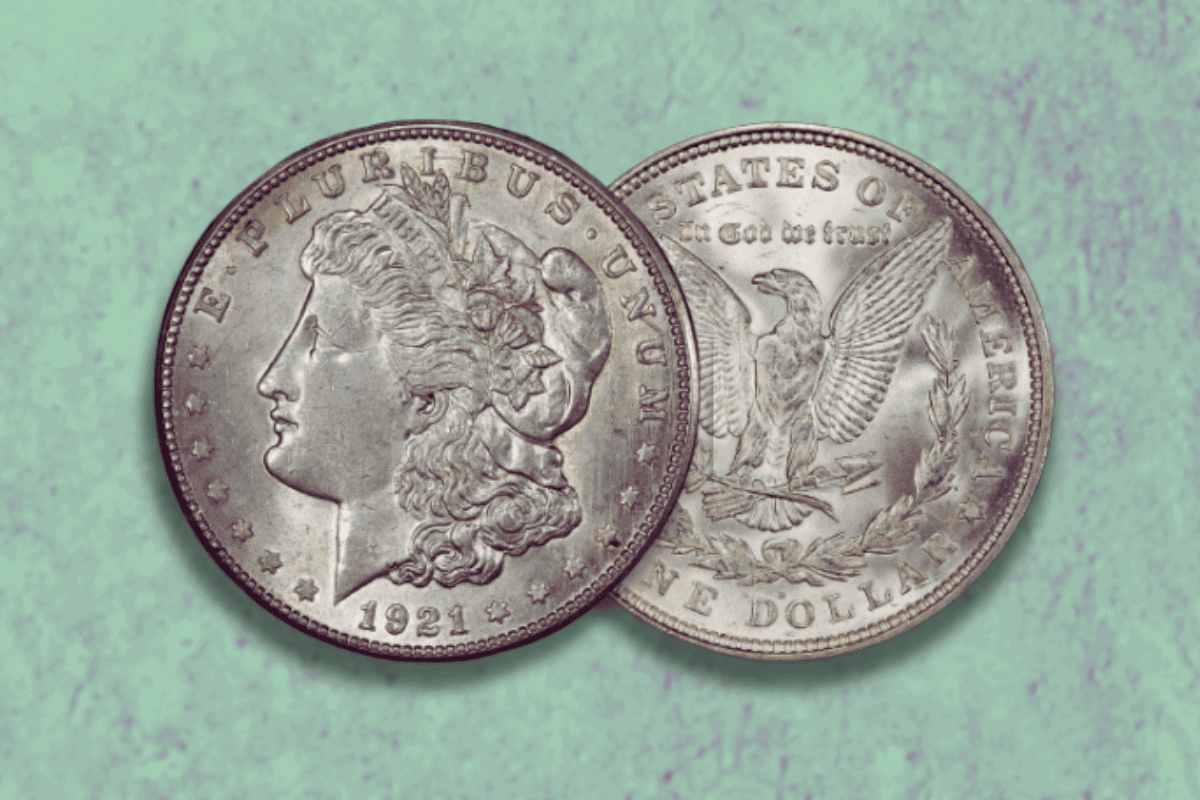
The 1921 Morgan dollars differ noticeably from their earlier counterparts. The mint used shallow-relief dies to speed production, resulting in coins that often appear flatter than pre-1921 issues. This modification creates specific identifying characteristics that every collector should understand.
When examining a 1921 Morgan, pay particular attention to Liberty‘s hair detail. The strands should show less separation than earlier years, especially around the ear area. The eagle‘s breast feathers on the reverse typically display weaker definition, particularly on Philadelphia mint pieces.
The field areas – the flat portions of the coin‘s surface – often show distinctive die polish lines running parallel to each other. These lines resulted from the mint‘s rushed die preparation process and serve as important authentication markers.
Peace Dollar Technical Details
The 1921 Peace Dollar represents a fascinating experiment in coin production. The mint attempted to strike these dollars in full high relief, similar to Saint-Gaudens‘ famous double eagles. This decision created both beautiful coins and significant production challenges.
These high-relief pieces show exceptional detail when properly struck. Liberty‘s hair flows with remarkable definition, and the rays surrounding her head stand out boldly from the field. The eagle on the reverse displays sharp feather detail, particularly on the wing edges and breast.
However, this high relief also led to striking problems. Many pieces show weakness at the center of the design, particularly on Liberty‘s hair and the eagle‘s feathers. This characteristic helps authenticate genuine examples, as counterfeits rarely duplicate these strike inconsistencies accurately.
Current Market Values and Grade Analysis
Today‘s market for 1921 silver dollars shows remarkable stratification based on type, condition, and certification. Let‘s examine current values across different grades:
Morgan Dollars:
Circulated examples in Good to Fine condition typically trade between $18 and $25, reflecting their high survival rate. Extremely Fine pieces command $30 to $45, while Uncirculated coins start around $40 and can reach $90 for nice examples.
The real premium begins at the MS65 grade level, where prices range from $125 for Philadelphia mint coins to $575 for San Francisco pieces. Exceptional MS67 examples have sold for $19,000 to $44,000, depending on the mint mark and eye appeal.
Peace Dollars:
The 1921 Peace Dollar commands significantly higher prices across all grades. Circulated pieces start at $85 to $120, while Extremely Fine examples bring $150 to $200. Uncirculated coins typically sell for $350 to $500.
The most dramatic values appear in Mint State grades. MS65 examples regularly bring $4,000 to $4,500, with exceptional pieces reaching even higher levels at major auctions.
Authentication Guidelines for Collectors
Authenticating 1921 silver dollars requires attention to specific details that differ between Morgan and Peace designs. Here‘s what to examine:
For Morgan Dollars:
- Weight should be precisely 26.73 grams
- Diameter must measure 38.1mm exactly
- Look for appropriate die polish lines in the fields
- Check for proper font characteristics in the legends
- Examine strike weakness patterns typical of the mint
- Verify correct mint mark style and position
For Peace Dollars:
- Confirm high relief design characteristics
- Check strike weakness patterns in central areas
- Verify proper silver composition through testing
- Examine hair detail and ray sharpness
- Look for appropriate die flow lines
- Confirm correct font styles and sizes
Regional Market Variations
The market for 1921 silver dollars shows interesting regional patterns that smart collectors can use to their advantage. Northeast collectors often focus on technical grade and certification, willing to pay premium prices for top-graded pieces. This creates opportunities to sell high-grade coins in major eastern cities like New York and Boston.
Western markets, particularly in San Francisco and Denver, show stronger interest in S-mint and D-mint coins respectively. Collectors in these regions often pay more for pieces from their local historic mints, especially examples with original toning.
Southern markets traditionally focus more on Morgan dollars than Peace dollars, reflecting regional collecting patterns established over many decades. However, this preference has begun to shift in recent years as more collectors recognize the scarcity of high-grade Peace dollars.
Conservation and Storage Methods
Proper conservation starts with appropriate storage conditions. Keep your 1921 silver dollars in a controlled environment with temperature between 65-72°F and humidity between 35-45%. Avoid areas with significant temperature fluctuations or high humidity levels.
For individual coins, use high-quality holders made from inert materials. Never clean your coins – original surfaces, even if toned or tarnished, maintain maximum value. Handle coins only by their edges and wear cotton gloves when necessary.
Document your collection thoroughly with high-resolution photographs and detailed condition reports. Keep all certification papers, purchase receipts, and provenance information in secure storage alongside your coins.
Investment Strategy and Market Outlook
The investment potential of 1921 silver dollars varies significantly between Morgan and Peace issues. Morgan dollars in circulated grades largely track with silver prices, offering modest but stable returns. However, high-grade examples, particularly MS67 pieces, have shown strong appreciation over the past decade.
Peace dollars present a different investment profile. Their limited mintage and high-relief design create sustained collector demand across all grades. MS65 examples have demonstrated particularly strong growth, appreciating an average of 20% annually over the past five years.
Looking ahead to 2025, several factors suggest continued market strength:
- Growing international collector interest, particularly from Asia
- Increasing recognition of condition rarity in high grades
- Strong demand for historically significant U.S. coins
- Limited supply of properly certified examples
Building a Focused Collection
For collectors starting to focus on 1921 silver dollars, I recommend beginning with a Morgan dollar from each mint. This provides an excellent foundation for understanding strike characteristics and grading standards. Add a circulated Peace dollar to study its distinctive high-relief design.
As your knowledge grows, gradually upgrade to higher-grade pieces. Focus on coins with original surfaces and strong eye appeal rather than simply technical grade. Document every purchase carefully, including photographs and certification numbers.
Most importantly, take time to study each coin in detail. Understanding the subtle variations in strike, luster, and toning will help you make better purchasing decisions and build a more valuable collection over time.
Remember that collecting these historic pieces connects you to a fascinating period in American history. Each coin tells a story of economic recovery, artistic achievement, and technical innovation that makes this series particularly rewarding to study and collect.