Value Of 1963 2 Dollar Bill: Are They Really A Star Notes?
As a currency specialist who has spent three decades examining rare bills, I find the 1963 $2 bill particularly fascinating. When most people discover one of these bills in their possession, their first question is often about its value. The truth runs deeper than simple market prices – these bills tell a rich story of American monetary history and represent a unique collecting opportunity.
The Legacy of the 1963 $2 Bill
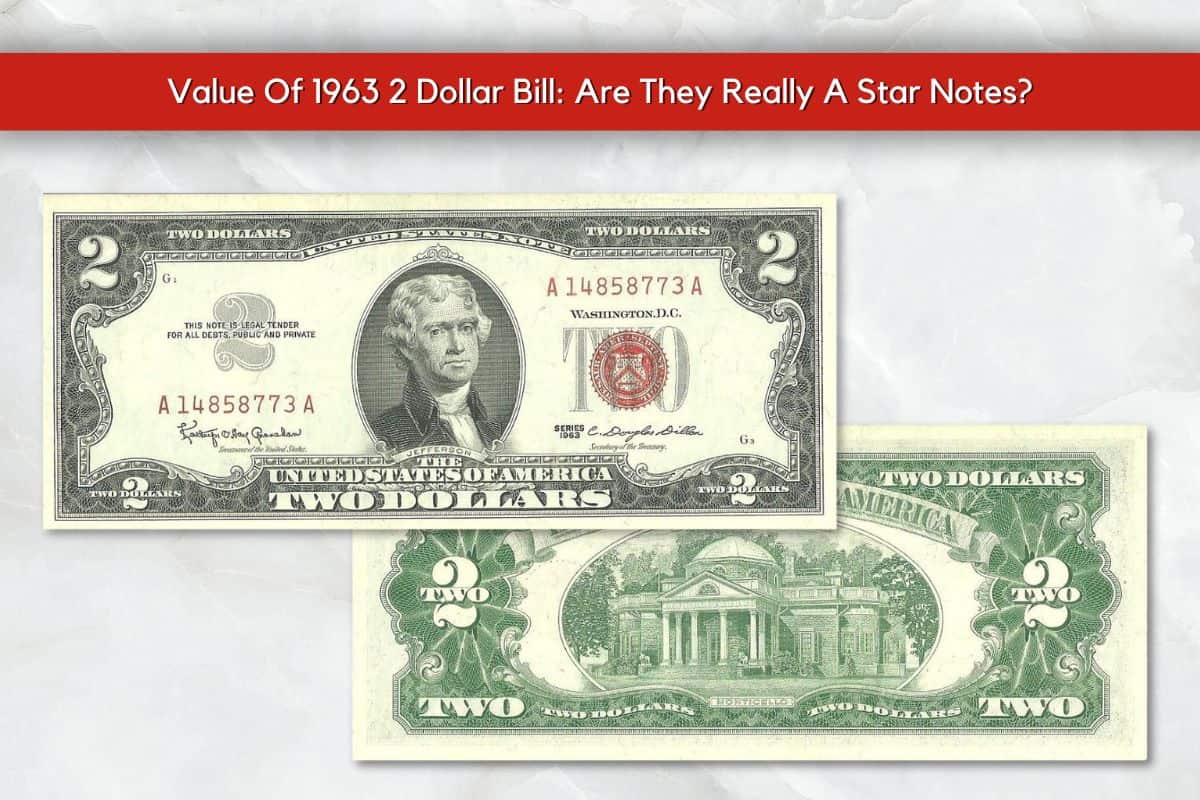
The year 1963 marked a significant milestone in American currency. These bills were the last of the red seal Legal Tender Notes, carrying forward a tradition that began during the Civil War. What makes them particularly significant is their dual status as both practical currency and historical artifacts.
The red seal adorning these bills isn‘t just decorative – it designates them as United States Notes, direct obligations of the federal government. Unlike Federal Reserve Notes, which dominate today‘s circulation, these bills represented a different relationship between currency and government debt.
Walking into my first currency show in 1985, I remember a veteran dealer showing me a pristine 1963 $2 bill. "Notice how the red seal practically glows," he said, holding it under proper lighting. "That‘s one way to spot an original." That lesson stayed with me throughout my career, and I‘ve since taught countless collectors the same technique.
Understanding the Two Series: 1963 and 1963A
The 1963 series actually encompasses two distinct variants: the standard 1963 and the 1963A. While they might look nearly identical to untrained eyes, the differences between them significantly impact their value and collectibility.
The original 1963 series employed intaglio printing, a sophisticated process where designs are engraved into metal plates. This method created deeply embedded ink and intricate detail that you can feel by running your finger across the surface. The 1963A series, introduced later, utilized offset printing – more efficient but lacking the same depth and detail.
When examining these bills, pay particular attention to the portrait of Thomas Jefferson. Under magnification, the 1963 series shows remarkably fine lines in the engraving, while the 1963A appears slightly flatter. This distinction becomes crucial when authenticating valuable specimens.
Star Notes: The Premium Variation
Star notes represent something special in currency collecting. When a printing error occurred during production, replacement notes were issued bearing a star symbol in the serial number. These replacements ensured the correct number of notes existed for each print run.
What many collectors don‘t realize is that star notes weren‘t produced in equal numbers across different Federal Reserve districts. Some regions received significantly fewer star notes, making them particularly valuable today. For example, star notes from the San Francisco district tend to command higher prices due to their relative scarcity.
Current Market Values and Trends
The value of 1963 $2 bills varies dramatically based on several factors. Here‘s what I‘ve observed in recent market transactions:
Standard 1963 Notes in circulated condition typically sell for $5-15, while uncirculated examples can reach $50-100. Star notes command significant premiums, with circulated specimens selling for $20-75 and uncirculated examples fetching $200-600 or more.
However, exceptional specimens can reach remarkable prices. Recently, I evaluated a 1963 star note with perfect centering and original paper wave that sold at auction for $4,600. Such examples demonstrate the potential these bills hold for serious collectors.
Authentication: Beyond the Basics
Authenticating 1963 $2 bills requires attention to multiple details. The paper itself should contain red and blue security fibers visible under magnification. These fibers are embedded within the paper, not printed on the surface – a key detail counterfeiters often miss.
The serial numbers deserve special scrutiny. Genuine bills display crisp, precisely aligned numbers with consistent spacing. The font used is distinctive, and any variation from standard specifications suggests potential manipulation.
One often-overlooked authentication point is the relationship between serial numbers and plate position indicators. These must match according to specific patterns – knowledge that helps identify sophisticated counterfeits.
Regional Market Variations
The market for 1963 $2 bills shows interesting geographic patterns. Northeast collectors typically focus on high-grade examples, driving prices higher for premium specimens. West Coast markets show strong interest from Asian collectors, who particularly value notes with "lucky" serial number combinations.
Midwest markets often see stronger demand for star notes, while Southern collectors frequently seek bills with interesting historical connections. Understanding these regional preferences can help collectors make smarter purchasing decisions.
Investment Strategy and Collection Building
For those considering 1963 $2 bills as investments, I recommend focusing on three key areas:
First, condition is paramount. Bills in pristine uncirculated condition consistently show the strongest appreciation. Even minor handling marks can significantly impact value, so proper storage from acquisition is essential.
Second, focus on star notes when possible. Their inherently limited supply provides natural price support, and demand continues to grow as more collectors understand their significance.
Third, look for special serial numbers. Sequential sets, radar numbers (reading the same forward and backward), and low numbers can command substantial premiums.
Conservation and Preservation
Proper preservation begins with appropriate storage materials. I recommend mylar sleeves designed specifically for currency – never use plastic sheets or lamination, which can damage bills over time.
Temperature and humidity control prove crucial for long-term preservation. The ideal environment maintains 65-70 degrees Fahrenheit with 45-50% relative humidity. Fluctuations in these conditions can cause paper deterioration and ink fading.
Market Outlook and Future Considerations
The market for 1963 $2 bills continues to evolve. Recent trends show increasing interest from international collectors, particularly in Asia and Europe. This expanding collector base suggests continued price appreciation for quality examples.
Digital currency‘s rise hasn‘t diminished interest in vintage paper money. Instead, it seems to have enhanced appreciation for these tangible pieces of financial history. As younger collectors enter the market, demand for well-documented, high-grade examples continues to grow.
Expert Tips for New Collectors
If you‘re beginning to collect 1963 $2 bills, start by learning to grade accurately. Purchase a quality magnifying glass and study reference materials showing various grade examples. Join collector organizations where you can learn from experienced members.
Build relationships with reputable dealers who specialize in currency. Their expertise can prove invaluable, especially when authenticating valuable specimens or making significant purchases.
Documentation and Record Keeping
Maintain detailed records of your acquisitions, including:
- Purchase date and price
- Seller information
- Grade and condition notes
- Serial numbers
- Any special characteristics
Photographs of your bills can prove valuable for insurance purposes and help track condition changes over time.
Authentication Resources
Several organizations provide professional grading services for currency. While fees apply, certification can significantly enhance value and marketability, particularly for high-grade examples.
Learn to use online resources like auction archives and price guides, but remember that actual market transactions often differ from published values. Building a reference library of trusted resources helps inform purchasing decisions.
Final Thoughts
The 1963 $2 bill market offers fascinating opportunities for collectors and investors alike. Whether pursuing star notes, high-grade examples, or interesting serial numbers, success requires knowledge, patience, and attention to detail.
Remember that condition drives value more than any other factor. A carefully assembled collection of high-grade examples will typically outperform random accumulation of lower-grade bills.
As you build your collection, focus on quality over quantity. Each acquisition should meet your standards for condition and authenticity. With careful selection and proper preservation, these historical pieces can provide both pleasure and potential appreciation for years to come.