Fracking: The Controversial Revolution in Energy Extraction
Introduction: Unlocking the Earth's Hidden Treasures
In the ever-evolving landscape of energy production, few techniques have sparked as much debate and transformation as hydraulic fracturing, colloquially known as "fracking." This groundbreaking method has reshaped the global energy market, offering a key to vast reserves of oil and natural gas previously deemed inaccessible. As we delve into the intricacies of fracking, we'll explore its profound impact on energy independence, economic growth, and the environment, unraveling the complex tapestry of benefits and concerns that surround this revolutionary technique.
The Mechanics of Fracking: A Technological Marvel
At its core, fracking is an ingenious solution to a geological puzzle. Deep beneath the Earth's surface lie immense reservoirs of oil and natural gas, trapped within tight rock formations, primarily shale. Traditional drilling methods proved ineffective in accessing these resources, but fracking changed the game entirely.
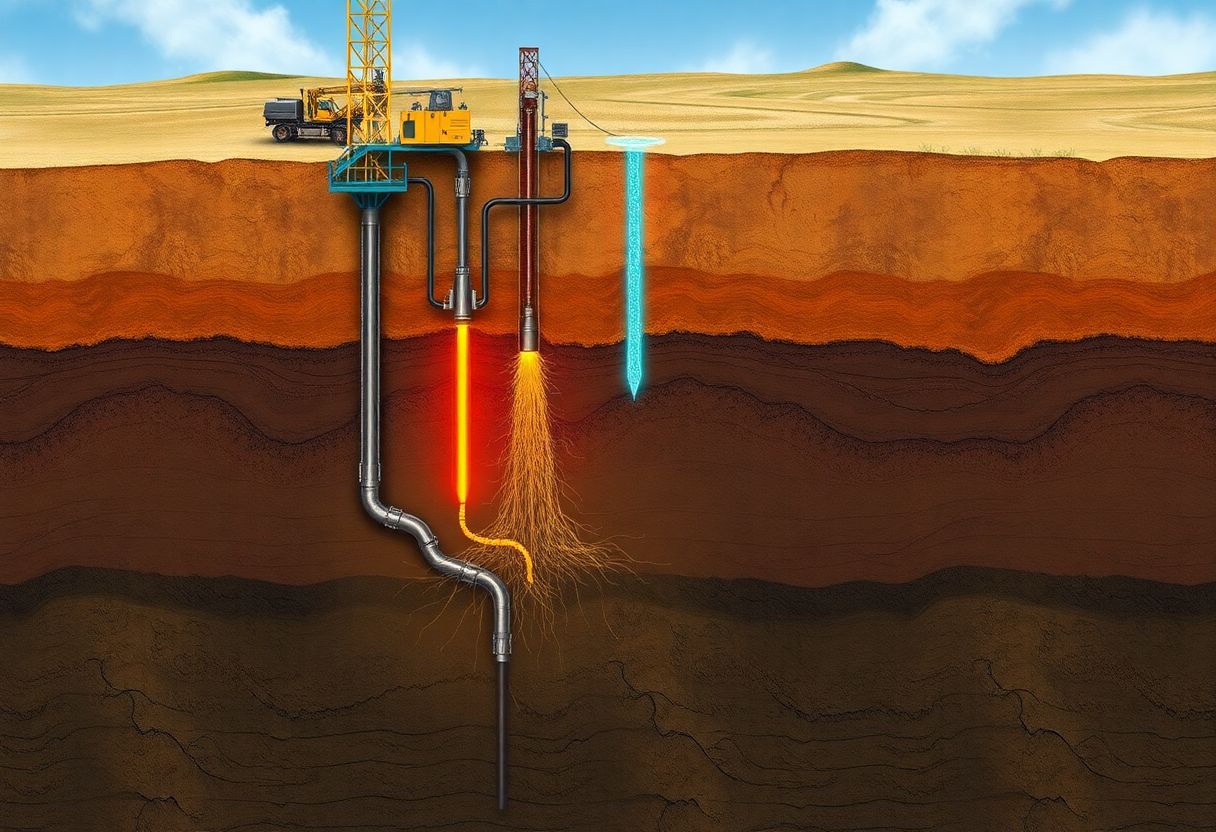
The process begins with vertical drilling, often extending one to two miles beneath the surface. Upon reaching the target rock layer, typically shale, the drill makes a remarkable 90-degree turn, continuing horizontally through the formation. This horizontal section can extend up to two miles, significantly increasing the well's contact with the oil or gas-bearing rock.
Once drilling is complete, a steel pipe called casing is inserted into the wellbore and cemented in place, ensuring structural integrity and protecting groundwater aquifers from contamination. The next step involves creating perforations in the horizontal section of the casing using specialized shaped charges. These perforations serve as conduits for the fracking fluid to access the surrounding rock formation.
The fracking fluid, a carefully engineered mixture, is then pumped into the well at enormous pressures, often exceeding 9,000 pounds per square inch (psi). This immense pressure causes the rock to fracture along natural weak points, creating a network of fissures. The fluid composition typically consists of about 90% water, 9.5% sand or ceramic particles known as proppants, and 0.5% chemical additives.
Each component of the fracking fluid plays a crucial role. The water provides the hydraulic force necessary to create fractures. The proppants, usually sand grains or ceramic beads, wedge themselves into the newly created fissures, propping them open and creating pathways for oil and gas to flow. The chemical additives serve various purposes, from reducing friction and preventing bacterial growth to inhibiting corrosion and adjusting the fluid's viscosity for optimal performance.
As the pressure is released, much of the fracking fluid returns to the surface as "flowback," carrying with it the liberated oil or natural gas. This flowback is typically stored in on-site tanks or pits before being treated, recycled, or disposed of in deep injection wells.
The Shale Revolution: A Game-Changer in Energy Production
The widespread adoption of fracking, particularly in the United States, has led to what's often referred to as the "Shale Revolution." This phenomenon has dramatically altered the global energy landscape, turning the U.S. from a net importer of natural gas to a net exporter in just over a decade.
The numbers are staggering. According to the U.S. Energy Information Administration (EIA), U.S. crude oil production more than doubled from about 5 million barrels per day in 2008 to over 12 million barrels per day in 2019, largely due to fracking. Natural gas production saw a similar boom, increasing from about 21 trillion cubic feet in 2008 to over 34 trillion cubic feet in 2019.
This surge in production has had far-reaching effects. Domestically, it has led to lower energy prices, particularly for natural gas, benefiting both consumers and industries reliant on these resources. On the global stage, it has reshaped geopolitical dynamics, reducing U.S. dependence on foreign oil and allowing the country to become a major exporter of liquefied natural gas (LNG).
Economic Impacts: Jobs, Growth, and Energy Independence
The economic impacts of the fracking boom have been substantial. A 2017 study by the U.S. Chamber of Commerce found that the shale energy revolution supported 4.6 million jobs in 2015 and contributed nearly $550 billion to U.S. GDP. The study projected these numbers could grow to 6.5 million jobs and $904 billion by 2025.
Moreover, fracking has breathed new life into many rural communities. In Pennsylvania's Marcellus Shale region, for instance, counties with high levels of fracking activity saw significant increases in employment and wages. A study published in the American Economic Review found that counties with hydraulic fracturing experience a 4.4-6.9% increase in total employment, with wages increasing by 3.3-5.5%.
The impact on energy independence cannot be overstated. The U.S. has significantly reduced its reliance on foreign oil, with net imports falling from 11 million barrels per day in 2008 to less than 1 million barrels per day in 2019. This shift has implications not just for the economy, but also for national security and foreign policy.
Environmental Concerns: The Other Side of the Coin
Despite its economic benefits, fracking has faced intense scrutiny due to environmental concerns. These issues range from water usage and contamination to air pollution and induced seismicity.
Water usage is a primary concern, particularly in water-stressed regions. A single fracking operation can use between 1.5 million to 16 million gallons of water. While this is a significant amount, it's worth noting that it represents a small fraction of total industrial water use in most regions.
Water contamination fears stem from the potential for fracking fluids or methane to leak into groundwater aquifers. A comprehensive study by the Environmental Protection Agency (EPA) found that while there have been instances of drinking water contamination related to fracking activities, they are not widespread or systemic. However, the study also noted significant data gaps that limited a full understanding of the issue.
Air pollution is another significant concern. Methane, a potent greenhouse gas, can leak during the extraction and transportation of natural gas. A study published in Science estimated that methane emissions from oil and gas operations were about 60% higher than EPA estimates. However, it's important to note that when burned, natural gas produces about half the CO2 emissions of coal, potentially offering a net benefit in terms of greenhouse gas emissions when displacing coal in electricity generation.
Induced seismicity, or human-caused earthquakes, has been linked to fracking activities in some areas. Most of these earthquakes are too small to be felt, but there have been instances of larger quakes. A study published in Science found that while fracking itself rarely causes felt earthquakes, the disposal of wastewater from fracking operations through deep injection wells can increase seismic activity in some geological settings.
Health and Community Impacts: Beyond the Environment
The health impacts of fracking have been a subject of intense study and debate. Some studies have suggested links between proximity to fracking sites and various health issues, including respiratory problems, low birth weights, and certain types of cancer. However, establishing definitive causal relationships has proven challenging due to the complexity of environmental health studies and the presence of other potential confounding factors.
A 2019 review published in the Annual Review of Public Health noted that while there is evidence of health risks associated with living near fracking sites, more research is needed to fully understand these risks and their mechanisms. The review emphasized the need for more comprehensive, long-term studies to better assess the health impacts of fracking.
Community impacts extend beyond health concerns. The rapid development associated with fracking can lead to significant changes in rural communities, including increased traffic, noise, and industrial activity. While these changes can bring economic benefits, they can also alter the character of communities and potentially impact quality of life for residents.
Regulation and Policy: Balancing Act
The regulation of fracking varies widely across different jurisdictions. In the United States, fracking is primarily regulated at the state level, leading to a patchwork of different rules and standards. Some states, like New York, have banned fracking entirely, while others have embraced it.
At the federal level, fracking is exempt from certain provisions of the Safe Drinking Water Act under the "Halliburton loophole," named after the energy services company that championed the exemption. This exemption has been a point of contention, with environmental groups arguing it prevents proper oversight of the industry.
Internationally, approaches to fracking vary greatly. Some countries, like France and Bulgaria, have banned the practice outright. Others, like the United Kingdom, have had shifting policies, at times encouraging development and at others imposing moratoriums.
The challenge for policymakers lies in balancing the economic benefits of fracking with environmental and health concerns. This often involves navigating complex scientific, economic, and political considerations.
The Future of Fracking: Adapting to a Changing Energy Landscape
As we look to the future, several factors will influence the role of fracking in the global energy mix. The growth of renewable energy sources, driven by declining costs and concerns about climate change, could potentially reduce demand for oil and gas. According to the International Energy Agency (IEA), renewable energy capacity is set to expand by 50% between 2019 and 2024, led by solar PV.
Climate change policies will also play a crucial role. As countries work to meet their commitments under the Paris Agreement, stricter emissions regulations could impact the viability of fracking operations. However, natural gas, often produced through fracking, is seen by some as a "bridge fuel" that can help transition away from more carbon-intensive coal while renewable energy capacity is built up.
Technological advancements continue to shape the industry. Innovations in drilling techniques, fracking fluid compositions, and waste management could potentially make fracking more efficient and reduce its environmental impact. For instance, some companies are experimenting with using recycled water or even carbon dioxide for fracking, which could address water usage concerns and potentially sequester greenhouse gases.
Public opinion and social acceptance will remain critical factors. The debate over fracking's costs and benefits is likely to continue, influencing policy decisions and potentially affecting the industry's social license to operate in some areas.
Conclusion: A Complex Legacy and an Uncertain Future
Fracking has undeniably transformed the energy landscape, unlocking vast reserves of oil and gas and reshaping global energy markets. Its economic impacts have been profound, creating jobs, spurring growth, and contributing to energy independence for some nations.
However, these benefits come with significant environmental and health concerns that cannot be ignored. The challenge moving forward will be to address these concerns while balancing the economic and energy security benefits that fracking provides.
As we navigate the complex challenges of meeting global energy demands while addressing climate change, the role of fracking will continue to be debated. Its future will likely be shaped by a combination of technological advancements, policy decisions, economic factors, and public opinion.
What's clear is that the impacts of fracking – both positive and negative – will be felt for years to come. As we move towards a more sustainable energy future, the lessons learned from the fracking revolution will be invaluable. Whether fracking represents a bridge to cleaner energy or a detour from necessary climate action remains a question that will shape our energy policies, environmental regulations, and the very landscapes we live in for generations to come.