The Evolution and Inner Workings of Tractors: Powering Modern Agriculture
Tractors have become the backbone of modern agriculture, transforming farming practices and enabling the cultivation of vast swathes of land with unprecedented efficiency. These powerful machines have come a long way since their inception, evolving from simple mechanical beasts to sophisticated technological marvels. In this comprehensive exploration, we'll delve into the intricate workings of tractors, examining their key components, technological advancements, and the pivotal role they play in feeding the world's growing population.
The Heart of the Beast: Understanding Tractor Engines
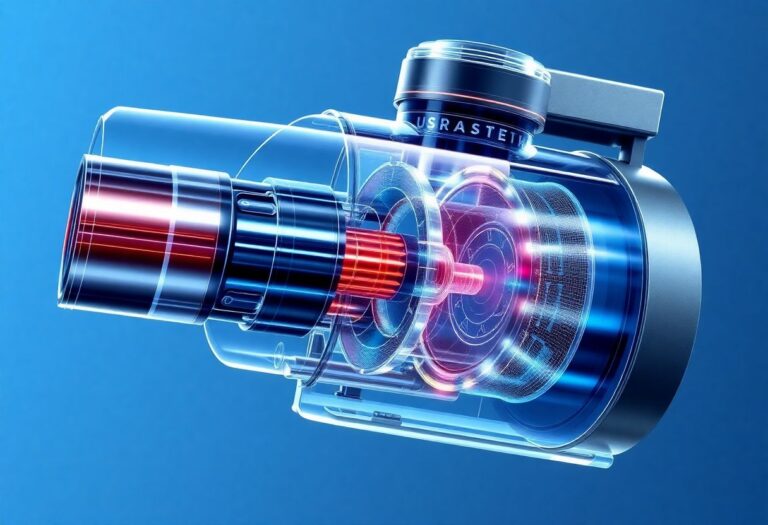
At the core of every tractor lies its engine, the powerhouse that drives its impressive capabilities. Modern tractors predominantly utilize diesel engines, a choice that stems from their superior characteristics for agricultural applications. Diesel engines offer high torque output at low rotational speeds, a crucial feature for tasks such as plowing or hauling heavy loads across fields. This torque advantage is due to the higher compression ratios in diesel engines, typically ranging from 14:1 to 25:1, compared to the 8:1 to 12:1 ratios found in gasoline engines.
The efficiency of diesel engines also plays a significant role in their dominance in the agricultural sector. With thermal efficiencies reaching up to 45% in some models, diesel engines convert a larger portion of fuel energy into mechanical work compared to their gasoline counterparts, which typically achieve efficiencies around 30%. This translates to lower fuel consumption and operating costs for farmers, a critical factor in the economics of large-scale farming operations.
Modern tractor engines are marvels of engineering, incorporating advanced technologies to enhance performance and reduce environmental impact. Common rail direct injection systems, which can operate at pressures exceeding 2,000 bar, ensure precise fuel delivery and atomization, leading to more complete combustion and reduced emissions. Turbocharging and intercooling technologies further boost engine efficiency, allowing smaller engines to produce power outputs that rival much larger naturally aspirated units.
The power range of tractor engines is vast, catering to the diverse needs of the agricultural industry. Compact tractors for small farms might feature engines producing around 20 to 50 horsepower, while the behemoths used in large industrial farming operations can boast power outputs exceeding 600 horsepower. The John Deere 9R/9RT Series, for instance, offers models with up to 628 horsepower, showcasing the immense power available in modern agricultural machinery.
Transmission Systems: Delivering Power to the Ground
The raw power generated by the engine would be useless without an effective means of transmitting it to the wheels. Tractor transmission systems have evolved significantly, offering farmers unprecedented control over their machines' performance.
Traditional manual transmissions have largely given way to more sophisticated systems. Powershift transmissions, which allow gear changes without the need for a clutch pedal, have become common in mid-range and high-end tractors. These transmissions use hydraulically activated clutch packs to engage different gear ratios, enabling smooth shifts even under load.
The pinnacle of tractor transmission technology is the Continuously Variable Transmission (CVT). Unlike traditional geared transmissions, CVTs offer an infinite number of gear ratios within their operating range. This is typically achieved through a system of variable pulleys connected by a belt or chain, or through hydrostatic systems that use fluid power to transmit engine output to the wheels.
CVTs provide several advantages in agricultural applications:
-
Optimal engine speed: The transmission can adjust its ratio to keep the engine operating at its most efficient speed, regardless of the tractor's ground speed.
-
Smooth acceleration: Without discrete gear steps, CVTs offer seamless acceleration, reducing stress on components and improving operator comfort.
-
Precision speed control: Farmers can set exact working speeds for various implements, enhancing the precision of agricultural operations.
-
Improved fuel efficiency: By maintaining optimal engine speeds, CVTs can significantly reduce fuel consumption compared to traditional transmissions.
The Case IH Magnum series tractors, for example, feature a CVT that can deliver power at any speed between 0 and 50 km/h, showcasing the flexibility these advanced transmissions offer.
Traction and Stability: The Role of Tires and Tracks
The point where a tractor's power meets the earth is crucial to its effectiveness. Tractor tires are engineering marvels in their own right, designed to provide optimal traction while minimizing soil compaction. The distinctive tread patterns of agricultural tires, often featuring deep, widely spaced lugs, are the result of extensive research and development.
These tires typically operate at very low inflation pressures, often below 15 psi, which allows them to flex and create a larger contact patch with the ground. This not only improves traction but also helps distribute the tractor's weight over a larger area, reducing soil compaction. Some modern tractors even feature central tire inflation systems, allowing operators to adjust tire pressures on the fly to suit different soil conditions or transition from field to road use.
In recent years, tracked systems have gained popularity, especially for larger tractors. These systems, such as those found on the Case IH Steiger Quadtrac series, use rubber tracks instead of wheels. Tracks offer several advantages:
-
Increased flotation: The larger surface area of tracks significantly reduces ground pressure, minimizing soil compaction.
-
Enhanced traction: Tracks maintain a larger contact area with the ground, providing superior grip in challenging conditions.
-
Improved stability: The longer footprint of tracked systems enhances the tractor's stability on slopes and uneven terrain.
-
Reduced slippage: Tracks are less prone to slipping in wet or loose soil conditions, improving efficiency and reducing fuel consumption.
However, tracked systems are not without drawbacks. They can be more expensive to purchase and maintain, and may have higher rolling resistance on firm surfaces compared to wheeled tractors.
Hydraulics: The Unsung Hero of Tractor Functionality
While the engine and transmission might be considered the heart and arteries of a tractor, the hydraulic system is its muscles and nerves. Modern tractors rely heavily on hydraulic power for a wide range of functions, from steering and braking to powering and controlling implements.
The hydraulic system in a tractor typically consists of:
- A hydraulic pump, usually driven by the engine
- Hydraulic fluid reservoirs
- Control valves
- Hydraulic cylinders and motors
- High-pressure hoses and fittings
The versatility of hydraulic systems lies in their ability to transmit significant force over relatively long distances using incompressible fluid. This allows for the precise control of heavy implements with minimal effort from the operator.
One of the most critical applications of hydraulics in tractors is the three-point hitch system. Invented by Harry Ferguson in the 1920s, this standardized attachment system revolutionized the connection between tractors and implements. The three-point hitch uses hydraulic power to raise and lower attached implements, as well as to maintain consistent working depths for tools like plows or cultivators.
Modern tractors often feature advanced electrohydraulic systems that offer precise, programmable control over implement functions. For instance, the John Deere CommandARM console allows operators to set and adjust hydraulic flow rates and timings for various implement functions, all from the comfort of the cab.
The hydraulic system also powers the Power Take-Off (PTO), a crucial feature that allows the tractor to drive the mechanical components of attached implements. Standard PTO speeds of 540 or 1000 rpm are maintained regardless of the tractor's ground speed, ensuring consistent operation of implements like rotary tillers, balers, or sprayers.
The Brain of the Beast: Electronic Control Systems
The advent of electronic control systems has transformed tractors from mere mechanical workhorses into sophisticated, data-driven machines. Modern tractors are equipped with an array of sensors and electronic control units (ECUs) that monitor and manage every aspect of the machine's operation.
These systems integrate engine management, transmission control, hydraulic systems, and implement functions into a cohesive, efficient package. Advanced displays in the cab, such as the New Holland IntelliView IV, provide operators with real-time information on everything from engine performance and fuel efficiency to GPS-guided steering and implement settings.
The integration of GPS technology has ushered in the era of precision agriculture. Tractors equipped with RTK (Real-Time Kinematic) GPS systems can achieve positioning accuracy of less than an inch, allowing for incredibly precise field operations. This technology enables:
-
Automated steering systems that can guide the tractor along optimal paths, reducing overlap and improving efficiency.
-
Variable rate application of seeds, fertilizers, and pesticides based on detailed soil maps and crop health data.
-
Precise recording of field operations for improved record-keeping and decision-making.
-
Seamless integration with farm management software for comprehensive data analysis and planning.
The Future of Tractor Technology
As we look to the future, the evolution of tractor technology shows no signs of slowing. Several exciting developments are on the horizon:
-
Autonomous tractors: Companies like John Deere and CNH Industrial are developing fully autonomous tractors that can operate without human intervention. These machines use a combination of GPS, computer vision, and artificial intelligence to navigate fields and perform complex tasks.
-
Electric and hybrid powertrains: With growing emphasis on reducing carbon emissions, manufacturers are exploring electric and hybrid tractor designs. The Fendt e100 Vario, for instance, is an all-electric compact tractor that can operate for up to five hours on a single charge.
-
Internet of Things (IoT) integration: Future tractors will likely be even more connected, sharing real-time data with farm management systems, other machines, and even satellites to optimize farm operations on a grand scale.
-
Advanced materials: The use of high-strength, lightweight materials could lead to tractors that are more fuel-efficient and cause less soil compaction.
-
Alternative fuels: Research into biofuels and hydrogen fuel cells could provide new, more sustainable power sources for future tractors.
Conclusion: The Indispensable Role of Tractors in Modern Agriculture
From their humble beginnings as replacements for draft animals to the high-tech marvels of today, tractors have fundamentally transformed agriculture. They have enabled the cultivation of vast areas of land, increased productivity, and played a crucial role in feeding the world's growing population.
The modern tractor is a testament to human ingenuity, combining mechanical power, hydraulic force, and cutting-edge electronics into a versatile, efficient machine. As we face the challenges of feeding a projected global population of 9.7 billion by 2050, the continued evolution of tractor technology will undoubtedly play a pivotal role in meeting this demand sustainably.
Understanding the intricate workings of these machines not only gives us appreciation for the engineering marvels they represent but also provides insight into the complex world of modern agriculture. As tractors continue to evolve, incorporating new technologies and adapting to changing agricultural practices, they will remain at the forefront of our efforts to sustainably feed and support our growing world.