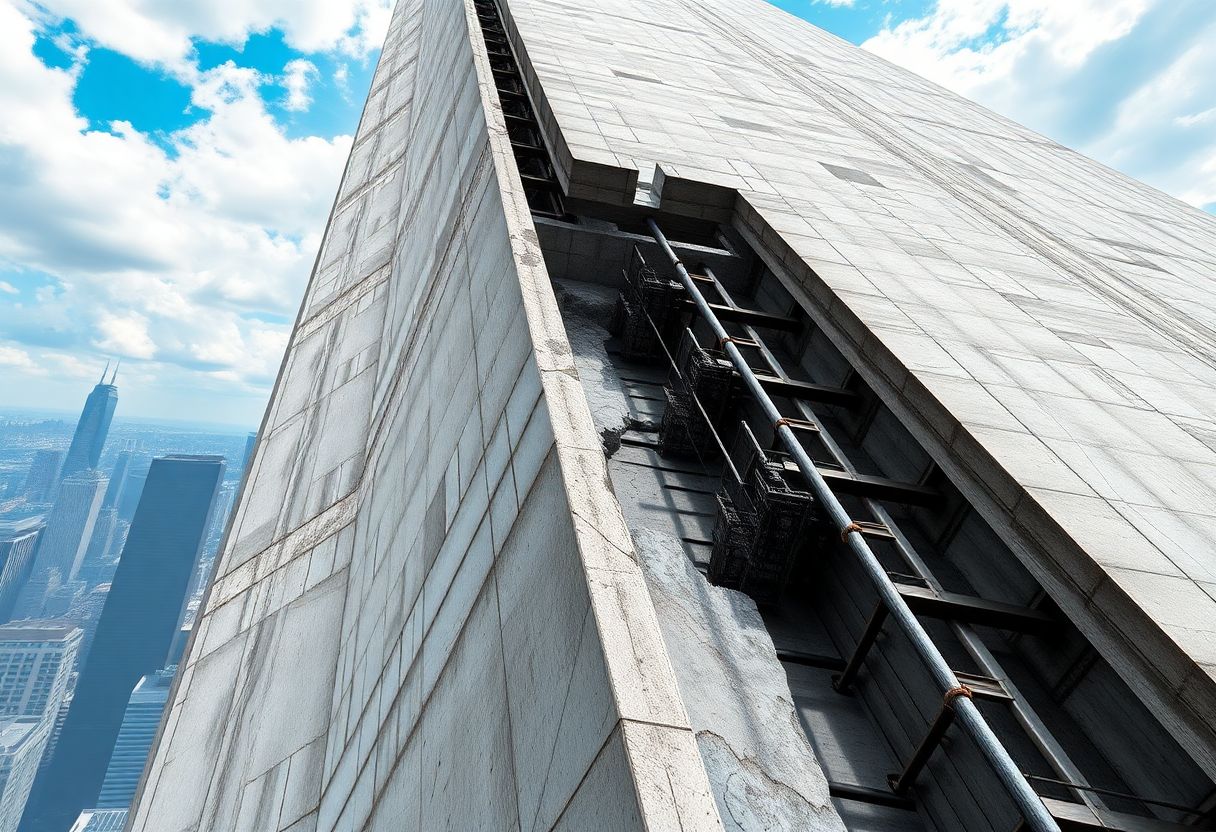
The Revolutionary Impact of Reinforced Concrete: Building Stronger, Taller, and More Sustainable Structures
Concrete has been a fundamental building material for thousands of years, dating back to ancient Roman times. However, it was the groundbreaking development of reinforced concrete in the 19th century that truly transformed our ability to construct larger, stronger, and more durable structures. This innovative material has since become the backbone of modern architecture and civil engineering, enabling us to reach new heights – both literally and figuratively. In this comprehensive exploration, we'll delve into the fascinating world of reinforced concrete, examining its composition, properties, applications, and future potential.
The Science Behind Concrete: More Than Just Artificial Stone
At its core, concrete is a composite material created by mixing three primary ingredients: aggregates, cement, and water. While this may seem simple, the chemistry and physics involved in concrete formation are quite complex.
Aggregates, typically consisting of sand, gravel, and crushed rock, make up 60-75% of the concrete mix. These materials provide the bulk and strength of the final product. Cement, usually Portland cement, comprises 10-15% of the mixture and acts as the crucial binding agent. When water is added (15-20% of the mix), it initiates a chemical reaction called hydration.
During hydration, the cement forms calcium silicate hydrate (C-S-H) crystals, often referred to as "cement gel." These microscopic crystals interlock with the aggregates, creating a solid, stone-like material. The hydration process continues for years after the concrete is poured, gradually increasing its strength over time.
The Achilles' Heel of Plain Concrete
Despite its impressive compressive strength, which can exceed 50 MPa (7,250 psi) for standard mixes and reach up to 100 MPa (14,500 psi) for high-strength formulations, plain concrete has a significant weakness: its low tensile strength. Concrete's tensile strength is typically only about 10% of its compressive strength, making it prone to cracking when subjected to bending or stretching forces.
This limitation severely restricted concrete's use in many construction applications, particularly in structures that needed to span long distances or resist lateral loads. Engineers and architects needed a solution to harness concrete's compressive strength while compensating for its poor tensile performance.
Reinforced Concrete: A Synergistic Solution
The concept of reinforced concrete, pioneered by French gardener Joseph Monier in the 1840s, addresses this weakness by combining concrete with steel reinforcement. The basic principle is elegant in its simplicity:
- A framework of steel bars (rebar) is created and positioned within the area where the concrete will experience tensile stress.
- Concrete is poured around the rebar, completely encasing it.
- As the concrete cures, it forms a strong bond with the steel reinforcement.
This combination creates a composite material that capitalizes on the strengths of both components: concrete resists compression, while steel resists tension. The result is a versatile building material capable of withstanding a wide range of forces and spanning great distances.
The Science of Steel-Concrete Bonding
The effectiveness of reinforced concrete relies heavily on the strong bond between concrete and steel. This bond is achieved through several mechanisms:
-
Mechanical interlocking: The ridges or deformations on the surface of reinforcing bars provide a mechanical grip within the concrete.
-
Chemical adhesion: A thin layer of calcium silicate hydrate forms around the steel, creating a chemical bond.
-
Friction: As the concrete shrinks slightly during curing, it grips the steel tightly.
-
Thermal compatibility: Concrete and steel have similar coefficients of thermal expansion (concrete: 10-13 x 10^-6/°C, steel: 11-13 x 10^-6/°C), meaning they expand and contract at similar rates with temperature changes. This prevents internal stresses that could weaken the bond.
The alkaline environment of concrete (pH typically between 12 and 13) also helps protect the steel from corrosion by forming a passive oxide layer on its surface.
Advanced Reinforcement Techniques
While traditional steel rebar remains the most common form of reinforcement, engineers have developed several advanced techniques to enhance concrete's performance:
-
Fiber-reinforced concrete (FRC): This involves adding small fibers (steel, glass, or synthetic) directly into the concrete mix. These fibers help control cracking at the microscopic level, increasing the material's toughness and impact resistance. Some high-performance FRCs can achieve tensile strengths of up to 15 MPa (2,175 psi).
-
Prestressed concrete: In this method, high-strength steel cables are tensioned before the concrete is poured. Once the concrete has cured, the cables are released, compressing the concrete. This pre-compression counteracts the tension that would normally cause cracking, allowing for longer spans and thinner sections. Prestressed concrete bridges can span distances of over 300 meters (984 feet).
-
Carbon fiber reinforced polymer (CFRP): These advanced materials offer extremely high strength-to-weight ratios and corrosion resistance. While more expensive than steel, CFRP reinforcement can be particularly useful in harsh environments or where weight is a critical factor. CFRP can have a tensile strength up to 5 times that of steel.
Reinforced Concrete in Action: Transforming Our Built Environment
The development of reinforced concrete has enabled the construction of structures that would have been impossible with traditional materials. Let's explore some of the most impressive applications:
-
Skyscrapers: Reinforced concrete forms the core of many of the world's tallest buildings. The Burj Khalifa in Dubai, standing at 828 meters (2,717 feet), uses a "buttressed core" structural system made primarily of high-performance reinforced concrete.
-
Bridges: The flexibility of reinforced concrete allows for a variety of bridge designs, from simple beam bridges to complex cable-stayed structures. The Danyang–Kunshan Grand Bridge in China, the world's longest bridge at 164.8 kilometers (102.4 miles), is primarily constructed of reinforced concrete.
-
Dams: Reinforced concrete's ability to withstand enormous hydrostatic pressures makes it ideal for dam construction. The Three Gorges Dam in China, the world's largest power station, contains over 27.2 million cubic meters of concrete and 463,000 tonnes of steel.
-
Tunnels: Underground structures benefit greatly from reinforced concrete's strength and water resistance. The Gotthard Base Tunnel in Switzerland, the world's longest and deepest traffic tunnel, used over 4 million cubic meters of concrete in its construction.
-
Foundations: Reinforced concrete provides stable bases for all types of structures, from houses to wind turbines. Deep foundations like piles can be driven or cast in place to depths exceeding 60 meters (200 feet) to reach stable bedrock.
The Construction Process: Precision Engineering in Action
Building with reinforced concrete is a complex process that requires careful planning and execution:
-
Design: Structural engineers use advanced computer modeling to calculate the forces acting on each part of the structure and determine the optimal placement and amount of reinforcement needed.
-
Formwork: Temporary molds, typically made of wood or steel, are created to shape the concrete. For complex shapes, computer-aided design and CNC machining may be used to create precise formwork.
-
Reinforcement placement: Steel rebar is cut, bent, and positioned within the forms according to the engineer's specifications. Plastic spacers ensure proper concrete coverage around the steel.
-
Concrete mixing: Modern batching plants use computerized systems to ensure precise mix proportions. Admixtures may be added to modify the concrete's properties, such as accelerating or retarding setting time, improving workability, or enhancing strength.
-
Pouring and vibration: Concrete is carefully poured into the forms and vibrated to remove air bubbles and ensure complete encasement of the reinforcement.
-
Curing: The concrete is kept moist, often using sprinklers or curing compounds, to ensure proper hydration and strength development. Temperature monitoring may be used for large pours to manage heat generation from cement hydration.
-
Quality control: Throughout the process, samples are taken for testing to verify the concrete's strength and other properties meet specifications.
Challenges and Innovations in Reinforced Concrete
While reinforced concrete has revolutionized construction, it's not without its challenges. Ongoing research and innovation aim to address these issues and push the boundaries of what's possible with this versatile material.
1. Durability and Maintenance
Reinforced concrete structures can face several threats to their long-term integrity:
- Corrosion: If chlorides (from deicing salts or seawater) penetrate the concrete and reach the steel, it can lead to rusting and expansion, causing cracking and spalling of the concrete cover.
- Carbonation: Carbon dioxide from the air can react with the calcium hydroxide in concrete, lowering its pH and compromising the protective environment around the steel.
- Alkali-silica reaction (ASR): Some aggregates can react with alkalis in the cement, forming a gel that expands and causes cracking.
Innovations to address these issues include:
- Corrosion-resistant reinforcement: Epoxy-coated rebar, stainless steel, or fiber-reinforced polymer (FRP) bars can provide enhanced durability in aggressive environments.
- Self-healing concrete: Researchers are developing concrete containing bacteria that produce limestone to fill cracks automatically.
- Electrochemical techniques: Cathodic protection and chloride extraction can help protect existing structures from corrosion.
2. Environmental Impact
The production of cement, a key ingredient in concrete, is responsible for about 8% of global CO2 emissions. Efforts to reduce concrete's environmental footprint include:
- Alternative cements: Geopolymer cements and calcium sulfoaluminate cements can reduce CO2 emissions by up to 80% compared to Portland cement.
- Supplementary cementitious materials: Industrial by-products like fly ash and ground granulated blast furnace slag can partially replace cement, reducing emissions and improving concrete properties.
- Carbon capture and utilization: Technologies are being developed to capture CO2 from cement production and use it to cure concrete, potentially creating carbon-negative concrete.
- Recycled aggregates: Using crushed concrete from demolished structures as aggregate can reduce the demand for virgin materials and lower the embodied energy of new concrete.
3. Advanced Materials and Techniques
Cutting-edge research is pushing the boundaries of reinforced concrete:
- Ultra-high performance concrete (UHPC): With compressive strengths exceeding 150 MPa (21,750 psi) and enhanced durability, UHPC allows for extremely thin, lightweight structures.
- Shape memory alloys: Nickel-titanium alloys can provide self-stressing reinforcement, improving crack resistance and seismic performance.
- 3D printing: Large-scale concrete printing technologies are being developed, allowing for more complex shapes and potentially reducing waste and labor costs.
- Nanomaterials: Carbon nanotubes and graphene oxide are being explored as additives to enhance concrete's strength and electrical properties, potentially enabling "smart" concrete that can sense its own stress state.
The Future of Reinforced Concrete: Building a More Resilient World
As we face the challenges of the 21st century, from rapid urbanization to climate change, reinforced concrete will undoubtedly play a crucial role in shaping our built environment. The material's versatility, strength, and potential for innovation make it well-suited to address many of the complex problems we face.
-
Sustainable cities: As urban populations grow, reinforced concrete will enable the construction of efficient high-rise buildings and underground infrastructure, maximizing land use while minimizing environmental impact.
-
Resilient infrastructure: With extreme weather events becoming more frequent, reinforced concrete's durability and adaptability will be crucial in creating infrastructure that can withstand floods, hurricanes, and earthquakes.
-
Renewable energy: From the foundations of wind turbines to the structures of hydroelectric dams, reinforced concrete will continue to support the transition to clean energy sources.
-
Space exploration: As we look beyond our planet, advanced concrete formulations may play a role in constructing habitats on the Moon or Mars, utilizing local regolith as aggregate.
-
Carbon sequestration: Future concrete mixes may be designed not just to minimize emissions, but to actively absorb CO2 throughout their lifetime, turning our built environment into a massive carbon sink.
Conclusion: A Foundation for Progress
Reinforced concrete has quite literally shaped our modern world, enabling us to build taller, span farther, and create structures that can last for generations. Its development represents a perfect synergy of scientific understanding and practical engineering, combining the compressive strength of concrete with the tensile strength of steel to create a material greater than the sum of its parts.
As we continue to push the boundaries of what's possible in construction and tackle the global challenges of sustainability and resilience, reinforced concrete will undoubtedly evolve and adapt. Through ongoing research and innovation, this remarkable material will continue to provide the strong foundation upon which we build our future.
By harnessing the power of reinforced concrete responsibly and creatively, we're not just erecting buildings and infrastructure – we're constructing a more sustainable, resilient, and prosperous world for generations to come.