The Science Behind GORE-TEX: How Nature-Defying Fabric Keeps You Dry
GORE-TEX has revolutionized outdoor gear, enabling adventurers to stay dry in challenging conditions while preventing overheating. This remarkable material's unique properties have made it a staple in everything from hiking boots to high-altitude mountaineering gear. But how exactly does GORE-TEX work its magic? Let's dive deep into the science and engineering that makes this fabric a true marvel of modern materials science.
The Basics: Understanding GORE-TEX
At its core, GORE-TEX is a waterproof, breathable fabric membrane used in outdoor clothing and gear. Its primary function is to keep external water from penetrating while allowing water vapor from perspiration to escape. This delicate balance makes it ideal for a wide range of outdoor activities, from casual hiking to extreme alpine expeditions.
GORE-TEX is composed of three key layers:
- An outer layer of durable fabric
- A middle layer of expanded polytetrafluoroethylene (ePTFE)
- An inner layer of protective fabric
The heart of GORE-TEX technology lies in that middle ePTFE layer, which is where the true innovation occurs.
The Microscopic Marvel: ePTFE
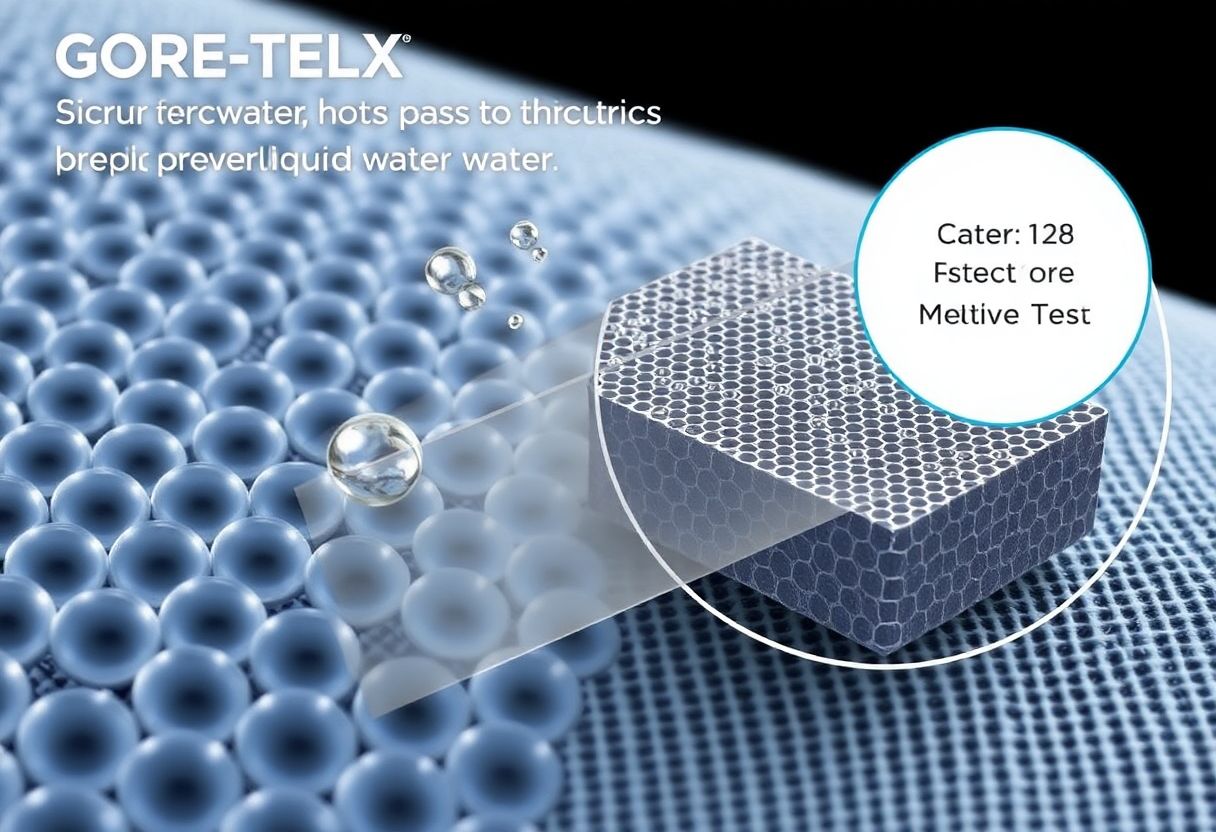
The secret to GORE-TEX's performance is its unique microstructure. The ePTFE layer contains an astounding 9 billion pores per square inch. Each of these pores is approximately 20,000 times smaller than a water droplet, yet 700 times larger than a water vapor molecule. This vast difference in size is the key to understanding how GORE-TEX functions:
- Water droplets, such as rain or snow, are far too large to pass through these tiny pores, ensuring you stay dry from external moisture.
- Water vapor molecules, produced by your body as sweat, are small enough to easily pass through, allowing moisture to escape and preventing that clammy feeling associated with less advanced waterproof materials.
Keeping the Elements at Bay: The Waterproof Mechanism
When rain or snow hits a GORE-TEX garment, several factors work in concert to prevent water from penetrating:
-
Surface Tension: The microscopic size of the pores creates high surface tension, making it extremely difficult for water droplets to be forced through, even under pressure.
-
Hydrophobic Properties: The ePTFE material itself is hydrophobic, meaning it naturally repels water at a molecular level.
-
Durable Water Repellent (DWR) Coating: The outer fabric layer is treated with a DWR finish, causing water to bead up and roll off the surface before it even reaches the ePTFE membrane.
These combined properties ensure that even in heavy rain or when pressed against wet surfaces (like sitting on damp ground), water doesn't make its way through the GORE-TEX membrane.
Breathability: The Key to Comfort
While keeping external water out is crucial, allowing internal moisture to escape is equally important for comfort and performance. GORE-TEX achieves this through two primary mechanisms:
-
Diffusion: The concentration gradient between the warm, moist air next to your skin and the cooler, drier air outside drives water vapor molecules through the pores. This process occurs naturally, without any need for pumps or power sources.
-
Convection: As you move, air circulates through the garment, helping to push moisture vapor out through the membrane. This is why GORE-TEX tends to work best when you're active, as your movement enhances the breathability of the fabric.
The breathability of GORE-TEX is measured in terms of Moisture Vapor Transmission Rate (MVTR), typically expressed in grams of water vapor per square meter of fabric per 24-hour period (g/m²/24hr). High-end GORE-TEX fabrics can achieve MVTR ratings of over 20,000 g/m²/24hr, allowing a significant amount of moisture to escape.
Beyond the Basics: Advanced GORE-TEX Technologies
Since its invention, GORE-TEX has continued to evolve, with several specialized variations developed for specific use cases:
-
GORE-TEX Pro: Designed for extreme conditions, GORE-TEX Pro offers enhanced durability and breathability. It uses a 3-layer construction with a more robust outer fabric and a specially designed backer textile. GORE-TEX Pro is the choice for serious mountaineers and outdoor professionals who need the utmost in protection and performance.
-
GORE-TEX Active: Optimized for high-output activities, GORE-TEX Active prioritizes maximum breathability. It uses a lighter, thinner membrane and construction, making it ideal for activities like trail running or fast-paced hiking where moisture management is crucial.
-
GORE-TEX Paclite: Ultra-lightweight and packable, GORE-TEX Paclite is designed for minimalist adventures where every ounce counts. It sacrifices some durability for exceptional packability, making it popular for emergency shells and travel gear.
-
GORE-TEX Infinium: A newer addition to the lineup, GORE-TEX Infinium prioritizes comfort and performance over absolute waterproofing. It's used in products where water resistance (rather than complete waterproofing) is sufficient, allowing for even greater breathability and comfort.
Each of these variations tweaks the basic GORE-TEX formula to optimize for specific use cases and environments, showcasing the versatility and ongoing innovation of the technology.
The Accidental Discovery: GORE-TEX's Origin Story
The story of GORE-TEX's invention is a classic tale of scientific serendipity. In 1969, Bob Gore, son of Bill and Vieve Gore who founded W. L. Gore & Associates, was experimenting with polytetrafluoroethylene (PTFE), better known by its brand name Teflon. His goal was to create a plumber's tape by stretching heated PTFE to make it more porous.
After multiple failed attempts at slowly stretching the material, Gore became frustrated and gave the PTFE a sharp, forceful yank. To his surprise, instead of breaking, the PTFE expanded into a microporous structure with remarkable properties:
- Extremely strong for its weight
- Highly porous
- Hydrophobic (water-repelling)
This new material, which became known as expanded PTFE (ePTFE), was the foundation for GORE-TEX. The Gore team quickly realized the potential of this accidental discovery, and after several years of development, the first GORE-TEX product, a tent, hit the market in 1976, revolutionizing outdoor gear.
GORE-TEX in the Real World: Applications Beyond Outdoor Gear
While GORE-TEX is most commonly associated with outdoor clothing and gear, its unique properties make it valuable in a surprising array of applications:
-
Medical Devices: GORE-TEX is used in various medical implants, including vascular grafts and heart valve repair patches. Its biocompatibility and durability make it an excellent choice for these critical applications.
-
Aerospace: The fabric's lightweight yet durable nature has led to its use in space suits and other aerospace applications where reliability under extreme conditions is paramount.
-
Military Gear: Armed forces around the world utilize GORE-TEX in uniforms and equipment, appreciating its ability to keep personnel dry and comfortable in diverse environments.
-
Industrial Filters: The microporous structure of ePTFE makes it an excellent filtration material, used in industrial air and liquid filters.
-
Electronics: GORE-TEX membranes are used in some electronic devices to allow pressure equalization while preventing water ingress.
These diverse applications showcase the versatility of the technology and its impact far beyond the world of outdoor recreation.
The Environmental Equation: GORE-TEX and Sustainability
As with many synthetic materials, there are environmental considerations surrounding GORE-TEX:
-
Production of PTFE: The base material for GORE-TEX has historically been linked to environmental and health concerns, particularly regarding the use of perfluorooctanoic acid (PFOA) in its production. However, Gore has made significant efforts to address these issues, eliminating PFOA from its manufacturing process in 2013.
-
Durability vs. Biodegradability: GORE-TEX products are known for their longevity, which can be seen as a positive environmental attribute as it reduces the need for frequent replacement. However, at the end of their life, GORE-TEX items don't biodegrade easily, posing challenges for disposal.
-
Microfiber Shedding: Like other synthetic fabrics, GORE-TEX can shed microfibers during washing, potentially contributing to microplastic pollution in waterways.
Gore has been proactive in addressing these concerns, developing more environmentally friendly manufacturing processes and exploring recycling programs for used GORE-TEX products. The company has set ambitious sustainability goals, including becoming carbon neutral by 2050 and eliminating PFCs of environmental concern from their consumer fabrics by 2023.
Care and Maintenance: Keeping GORE-TEX at Peak Performance
To ensure GORE-TEX continues to perform at its best, proper care and maintenance are essential:
-
Regular Cleaning: Dirt, oils, and other contaminants can clog the pores of the GORE-TEX membrane, reducing its breathability. Wash GORE-TEX items regularly following the manufacturer's instructions, typically using a technical wash designed for waterproof fabrics.
-
Reapplying DWR: The outer water-repellent coating can wear off over time, especially with frequent use or washing. When water stops beading on the surface of the fabric, it's time to reapply a DWR treatment. This can be done at home with spray-on or wash-in products, or professionally.
-
Avoid Fabric Softeners and Dry Cleaning: These can damage the GORE-TEX membrane and coatings, compromising the fabric's performance.
-
Tumble Dry on Low Heat: After washing, tumble drying on low heat helps restore the DWR coating and maintain the fabric's performance. The heat helps reactivate the water-repellent properties of the DWR.
-
Proper Storage: Store GORE-TEX items clean and dry, away from direct sunlight which can degrade the fabric over time.
By following these care instructions, users can significantly extend the life and performance of their GORE-TEX gear, maximizing both their investment and the environmental benefits of a long-lasting product.
The Future of Waterproof Breathable Fabrics
As technology advances and environmental concerns grow, the future of waterproof breathable fabrics like GORE-TEX is likely to evolve in several exciting directions:
-
Sustainable Materials: Research into bio-based or recycled alternatives to traditional ePTFE is ongoing. We may see future versions of GORE-TEX or competing technologies that offer similar performance with a reduced environmental footprint.
-
Smart Fabrics: Integration of electronics and adaptive materials could lead to fabrics that actively adjust their properties based on conditions. Imagine a jacket that can increase its breathability when you start to overheat, or enhance its insulation when temperatures drop.
-
Improved Performance: Continued refinement of the balance between waterproofing and breathability is likely. Future fabrics may offer even better moisture management, potentially approaching the performance of our own skin in regulating temperature and humidity.
-
New Applications: As the technology behind waterproof breathable fabrics advances, we're likely to see expansion into new industries and use cases beyond traditional outdoor gear. From improved medical textiles to innovative architectural materials, the principles behind GORE-TEX could find novel applications.
-
Enhanced Durability: Future iterations may focus on increasing the longevity of the waterproof and breathable properties, reducing the need for reapplication of DWR coatings and extending the usable life of products.
Conclusion: The Enduring Impact of GORE-TEX
GORE-TEX has fundamentally changed how we approach outdoor activities and protective clothing. Its unique combination of waterproofing and breathability has enabled countless adventures and improved comfort in challenging conditions, from everyday rain protection to extreme mountaineering expeditions.
Understanding how GORE-TEX works – from the microscopic pores that keep water out while letting vapor escape, to the layered construction that provides durability and comfort – gives us a deeper appreciation for the science and engineering behind this remarkable material.
As we look to the future, the principles behind GORE-TEX will continue to inspire innovations in material science, pushing the boundaries of what's possible in protective fabrics. Whether you're scaling a mountain, braving a rainstorm, or simply looking for all-weather comfort, the science of GORE-TEX and its counterparts will keep you dry and comfortable for years to come.
The story of GORE-TEX is more than just a tale of innovative fabric – it's a testament to the power of accidental discoveries in science, the importance of continuous refinement and development, and the profound impact that materials science can have on our daily lives and adventures. As we continue to push the limits of human exploration and outdoor pursuits, technologies like GORE-TEX will undoubtedly play a crucial role in enabling us to go further, stay out longer, and experience the world in new and exciting ways.