The Science of Stopping: How Brakes Work and Why They Matter
Brakes are the unsung heroes of vehicle safety, quietly performing their crucial role day in and day out. While we may take them for granted, the science and engineering behind brakes is a fascinating journey through physics, materials science, and technological innovation. In this comprehensive exploration, we'll delve into the inner workings of brakes, from the basic principles to cutting-edge advancements, and understand why they are so vital to our daily lives.
The Fundamental Physics of Braking
At its core, braking is an exercise in energy conversion. When a vehicle is in motion, it possesses kinetic energy, which is a function of its mass and velocity. The formula for kinetic energy (KE = ½mv²) reveals why heavier vehicles moving at higher speeds are more challenging to stop – their kinetic energy increases exponentially with velocity.
To bring a vehicle to a halt, this kinetic energy must be transformed into another form, typically heat. This is where the principle of friction comes into play. Friction is the resistive force that occurs when two surfaces in contact move relative to each other. In the case of brakes, this friction is intentionally created to generate heat and dissipate the vehicle's kinetic energy.
The work-energy theorem in physics states that the work done by the braking force equals the change in the vehicle's kinetic energy. This work is calculated as force multiplied by distance, which explains why it takes more distance to stop a vehicle at higher speeds or with greater mass.
Types of Brakes: A Diverse Array of Stopping Power
Different vehicles employ various types of brakes, each designed to meet specific needs and operating conditions. Let's examine some of the most common brake systems:
Bicycle Brakes
Bicycles typically use one of two main types of brakes:
-
Caliper Brakes: These brakes use rubber pads that squeeze against the wheel rim when activated. The friction between the pads and the rim slows the bicycle down. While simple and lightweight, their effectiveness can be reduced in wet conditions.
-
Disc Brakes: Increasingly popular on modern bicycles, disc brakes operate similarly to those on cars. A metal disc (rotor) is attached to the wheel hub, and brake pads squeeze this disc to create friction. Disc brakes offer superior stopping power, especially in wet conditions, but are typically heavier and more complex than caliper brakes.
Automotive Brakes
Cars and other motor vehicles use more sophisticated braking systems to handle their greater mass and speed:
-
Disc Brakes: Most common on the front wheels of cars (and often on all four wheels in modern vehicles), disc brakes consist of a metal disc (rotor) that rotates with the wheel, and a caliper that houses the brake pads. When the brakes are applied, hydraulic pressure forces the pads against the rotor, creating friction to slow the wheel.
-
Drum Brakes: Often found on the rear wheels of older or less expensive vehicles, drum brakes consist of a drum that rotates with the wheel and brake shoes that press outward against the inner surface of the drum when activated. While less efficient at heat dissipation than disc brakes, drum brakes can provide more braking force for parking brakes.
-
Handbrake or Parking Brake: This is typically a mechanical system that operates on the rear wheels, designed to keep the vehicle stationary when parked.
Specialized Vehicle Brakes
Other types of vehicles have braking systems tailored to their specific needs:
-
Motorcycles: Generally use disc brakes similar to those on cars, but smaller and often with more exposed rotors for better cooling.
-
Aircraft: Employ a combination of wheel brakes (similar to car disc brakes but much larger), air brakes (panels that create aerodynamic drag), and sometimes reverse thrust from the engines.
-
Trains: Use various systems including friction brakes on wheels, dynamic braking (which turns the electric motors into generators to create resistance), and air brakes for pneumatic systems.
The Anatomy of Car Brakes: A Closer Look
Let's dive deeper into the two primary types of car brakes: disc brakes and drum brakes.
Disc Brakes: Precision and Power
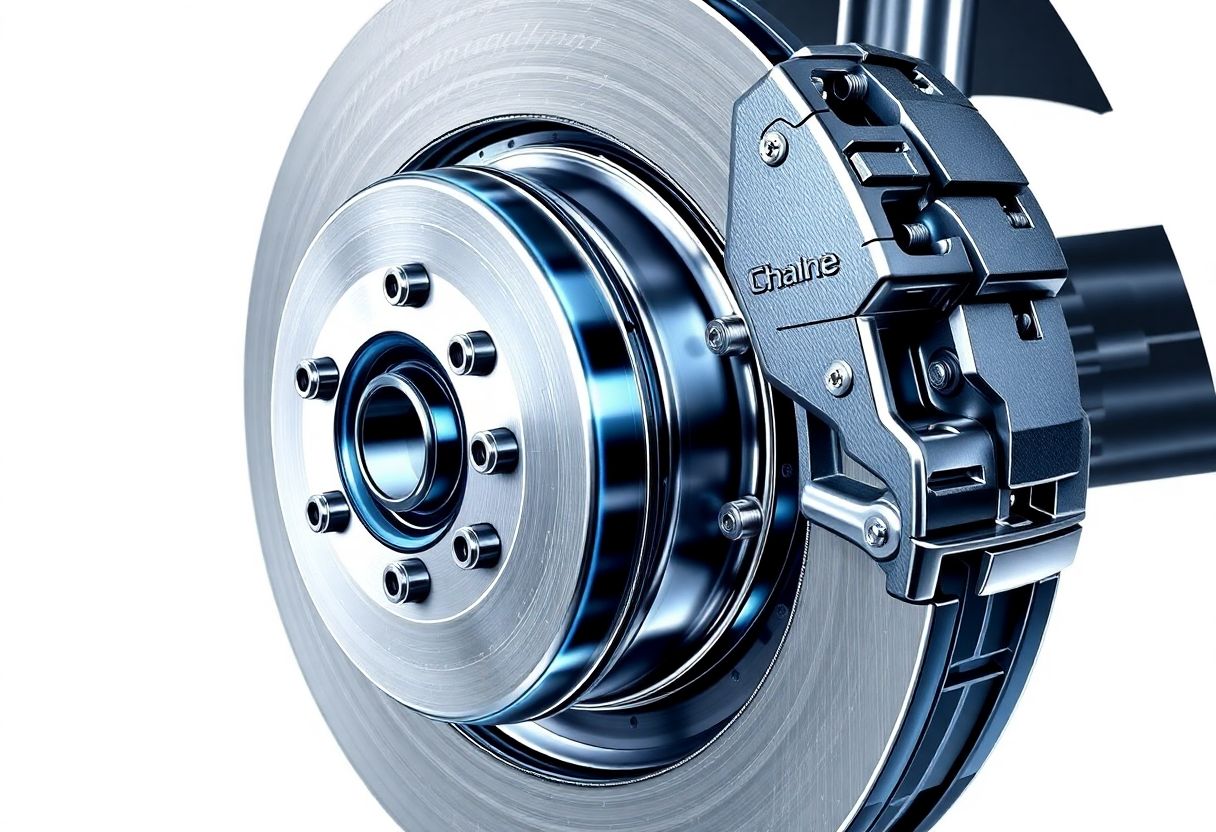
Disc brakes are the most common type found in modern vehicles, particularly on the front wheels where most of the braking force is needed. They consist of several key components:
-
Brake Rotor (Disc): This is a flat, circular piece of metal attached to the wheel hub. It rotates with the wheel and is the surface against which the brake pads create friction.
-
Brake Caliper: This component straddles the rotor and houses the brake pads and pistons. It's connected to the hydraulic system and is responsible for squeezing the pads against the rotor.
-
Brake Pads: These are the friction materials that press against the rotor. They're designed to wear down over time, protecting the more expensive rotor.
-
Pistons: Located within the caliper, these push the brake pads against the rotor when hydraulic pressure is applied.
When the driver presses the brake pedal, hydraulic pressure increases in the brake lines. This pressure pushes the pistons in the brake caliper, forcing the brake pads against the spinning rotor. The resulting friction between the pads and rotor slows the wheel's rotation, and by extension, the vehicle.
Disc brakes offer several advantages:
- Excellent heat dissipation due to their exposed design
- Self-adjusting as pads wear down
- Less prone to brake fade (reduction in braking performance due to overheating)
- Generally provide better braking performance, especially in wet conditions
Drum Brakes: Traditional Reliability
While less common on modern vehicles, drum brakes are still found on the rear wheels of some cars, particularly in less expensive models. They consist of:
-
Brake Drum: A cylindrical part that rotates with the wheel. The inner surface of this drum is where the braking action occurs.
-
Brake Shoes: Curved pieces lined with friction material. These press outward against the inner surface of the drum to create braking force.
-
Wheel Cylinder: This component pushes the brake shoes outward when hydraulic pressure is applied.
-
Return Springs: These pull the brake shoes back to their resting position when the brake pedal is released.
When the brakes are applied, hydraulic pressure activates the wheel cylinder, which in turn pushes the brake shoes outward. The shoes press against the inner surface of the drum, creating friction that slows the wheel's rotation.
Drum brakes have some unique characteristics:
- They can provide more braking force for their size, making them useful for parking brakes
- They're more protected from the elements, which can be advantageous in some conditions
- However, they're more prone to brake fade and can be more challenging to service
The Hydraulic System: Multiplying Force
One of the key innovations in modern braking systems is the use of hydraulics to multiply the force applied by the driver's foot. This system allows a relatively small input force to create a much larger braking force – essential for stopping a heavy, fast-moving vehicle.
Here's how it works:
- The driver presses the brake pedal.
- The pedal is connected to a piston in the master cylinder.
- As the piston moves, it creates pressure in the brake fluid.
- This pressure is transmitted through brake lines to each wheel.
- At each wheel, the pressure pushes larger pistons in the brake calipers or wheel cylinders.
- These larger pistons apply much more force than the driver's foot originally did.
This force multiplication is based on Pascal's principle, which states that pressure applied to an enclosed fluid is transmitted equally in all directions. By using cylinders of different sizes, the hydraulic system can multiply the force significantly.
For example, if the master cylinder piston has an area of 1 square inch and each wheel cylinder piston has an area of 10 square inches, the force applied at each wheel will be 10 times greater than the force applied to the brake pedal.
Brake Materials: Engineering for Extreme Conditions
The materials used in brake components must withstand incredible stresses. During normal driving, brake temperatures can easily reach 500°C (932°F), and in high-performance or racing situations, they can exceed 1000°C (1832°F). This requires materials with exceptional heat resistance and consistent performance across a wide temperature range.
Brake Rotors
Brake rotors are typically made of cast iron, which offers a good balance of performance, durability, and cost. Cast iron has several advantages for this application:
- High thermal capacity, allowing it to absorb large amounts of heat
- Good thermal conductivity to dissipate heat quickly
- Relatively low cost and easy to manufacture
For high-performance applications, carbon-ceramic composite rotors are sometimes used. These offer significant weight savings and even better heat performance, but at a much higher cost.
Brake Pads
Brake pads are composed of friction materials bonded to a steel backing plate. There are several types of friction materials, each with its own characteristics:
-
Organic Compounds: Made from materials like rubber, glass, resins, and Kevlar. These are quiet and easy on rotors but wear quickly and don't perform well at high temperatures.
-
Semi-Metallic: Contain 30-65% metals like steel, copper, or iron. These offer good heat transfer and durability but can be noisy and may wear rotors faster.
-
Ceramic: Composed of ceramic fibers, nonferrous filler materials, and bonding agents. These offer quiet operation, low wear, and good performance across a wide temperature range, but are more expensive.
The choice of brake pad material involves balancing factors like performance, durability, noise, dust production, and cost.
Advanced Braking Technologies
Modern vehicles incorporate a range of advanced technologies to enhance braking performance and safety:
Anti-lock Braking Systems (ABS)
ABS prevents wheels from locking up during hard braking, maintaining steering control and reducing stopping distances on most surfaces. It works by:
- Monitoring wheel speed through sensors
- Detecting when a wheel is about to lock up
- Rapidly pulsing the brakes on that wheel to prevent lockup
This allows the driver to maintain steering control while braking hard, a crucial safety feature.
Electronic Brake-force Distribution (EBD)
EBD automatically varies the force applied to each wheel's brakes based on road conditions, speed, and vehicle load. This optimizes braking performance and helps maintain vehicle stability during braking.
Brake Assist
This system detects emergency braking situations (based on how quickly the brake pedal is pressed) and automatically applies maximum brake force. Studies have shown that many drivers don't brake hard enough in emergencies, and Brake Assist helps compensate for this.
Regenerative Braking
Used in electric and hybrid vehicles, regenerative braking converts some of the vehicle's kinetic energy back into electrical energy, charging the battery. This not only increases efficiency but also reduces wear on the friction brakes.
The Evolution of Brakes: A Brief History
The history of brakes is a testament to human ingenuity and the constant drive for safer, more efficient transportation:
-
Ancient times: Simple friction brakes were used on horse-drawn vehicles, often just a lever pressing a wood or leather pad against the wheel.
-
1800s: The first automobiles used wooden block brakes, similar to those on horse-drawn carriages.
-
Early 1900s: Mechanical drum brakes became standard, offering improved performance but requiring significant physical effort from the driver.
-
1920s: Hydraulic brakes were introduced, making it easier for drivers to apply sufficient force to stop vehicles.
-
1950s: Disc brakes began to appear on production cars, offering better performance and fade resistance.
-
1970s onwards: Electronic systems like ABS started to be introduced, marking the beginning of the modern era of brake technology.
Maintaining Your Brakes: A Matter of Safety
Proper brake maintenance is crucial for vehicle safety. Here are some key points to remember:
-
Regularly inspect brake pads and rotors for wear. Most vehicles have wear indicators that will make a squealing noise when the pads need replacement.
-
Pay attention to how your vehicle responds when you brake. If you notice any pulsation, pulling to one side, or increased stopping distance, have your brakes checked.
-
Have your brakes professionally inspected according to your vehicle's maintenance schedule, typically every 12,000 to 15,000 miles.
-
Brake fluid should be checked and replaced periodically, as it can absorb moisture over time, reducing its effectiveness.
Brakes in Different Environments
The performance of brakes can vary significantly under different conditions:
-
Wet roads: Water can form a film between the brake pad and rotor, temporarily reducing friction. Modern brake designs incorporate features to help remove this water film quickly.
-
Icy roads: The greatly reduced friction between tires and road makes braking distances much longer. ABS is particularly valuable in these conditions.
-
High altitudes: Thinner air can affect brake cooling, potentially leading to brake fade on long downhill stretches.
-
Steep descents: Prolonged braking can lead to overheating and brake fade. In these conditions, engine braking (using a lower gear) can help reduce the load on the brakes.
The Future of Braking
As vehicle technology advances, so do brakes. Some exciting developments on the horizon include:
-
Electrified Braking: More efficient, responsive brake-by-wire systems that could eliminate the need for hydraulic components.
-
AI-assisted Braking: Predictive systems that anticipate the need to brake based on traffic patterns, road conditions, and other factors.
-
Advanced Materials: New composites and nanomaterials could lead to lighter, more durable, and more effective brake components.
-
Integration with Autonomous Systems: As self-driving technologies advance, braking systems will need to work seamlessly with a wide array of sensors and decision-making algorithms.
Conclusion: The Critical Role of Brakes in Vehicle Safety
Brakes are a marvel of engineering that combines principles of physics, materials science, and mechanical engineering to perform the crucial task of bringing us safely to a stop. From the simple friction of bicycle brakes to the complex, computer-controlled systems in modern cars, brakes exemplify how scientific understanding translates into practical, life-saving technology.
The next time you press your brake pedal, take a moment to appreciate the intricate interplay of forces and energy conversions happening beneath your feet. It's a testament to human ingenuity and our ongoing quest for safer, more efficient transportation.
Remember, while brakes are designed to keep us safe, they rely on proper maintenance and responsible use. By understanding how brakes work, we can better appreciate their importance and ensure they're always ready when we need them most. In the grand symphony of automotive technology, brakes may not always get the spotlight, but they're undoubtedly one of the most critical components keeping us safe on the roads.