The Timeless Art of Mechanical Timekeeping: How Pendulum Clocks Work
In an age of digital precision, the gentle tick-tock of a pendulum clock evokes a sense of nostalgia and wonder. These marvels of mechanical engineering, which once ruled our timekeeping world, continue to fascinate horologists and enthusiasts alike. This comprehensive exploration delves into the intricate workings of pendulum clocks, unraveling the physics, engineering, and artistry behind these timeless timepieces.
The Pendulum: The Heartbeat of Time
At the core of every pendulum clock lies its namesake – the pendulum. This simple yet ingenious device serves as the regulator, the steady heartbeat that governs the clock's timekeeping ability.
The Physics of Pendular Motion
The pendulum's timekeeping prowess stems from a property known as isochronism, first observed by Galileo Galilei in the 16th century. Galileo noticed that the period of a pendulum's swing remains constant, regardless of the amplitude (for small angles). This discovery laid the foundation for precise mechanical timekeeping.
The motion of a pendulum is governed by a fundamental equation:
T = 2π√(L/g)
Where T represents the period (time for one complete swing), L is the length of the pendulum, and g is the acceleration due to gravity. This equation reveals that a pendulum's period depends solely on its length and the strength of gravity, independent of the bob's weight or the swing's amplitude (within certain limits).
Energy Conversion: The Perpetual Dance
As a pendulum swings, it performs an elegant dance of energy conversion. At the highest points of its arc, the pendulum possesses maximum potential energy. As it swings downward, this potential energy transforms into kinetic energy, reaching its peak at the lowest point. This continuous conversion between potential and kinetic energy allows the pendulum to maintain its rhythmic motion.
In an ideal, frictionless world, this energy conversion would continue indefinitely. However, real-world factors like air resistance and friction at the pivot point gradually diminish the pendulum's energy. This is where the clock's mechanism steps in, providing small, regular impulses to sustain the pendulum's motion.
The Clockwork: Harnessing Pendular Precision
While the pendulum provides a reliable timekeeper, it requires an intricate mechanism to translate its regular oscillations into the familiar movement of clock hands. This is where the marvels of mechanical engineering come into play.
Power Sources: Gravity's Pull and Spring's Tension
Pendulum clocks require a source of energy to drive their mechanisms and keep the pendulum swinging. Two primary power sources have been employed throughout history:
-
Falling weights: Often seen in larger clocks like grandfather clocks, this method uses the potential energy of suspended weights. As the weights gradually descend, they transfer energy to the clock's mechanism.
-
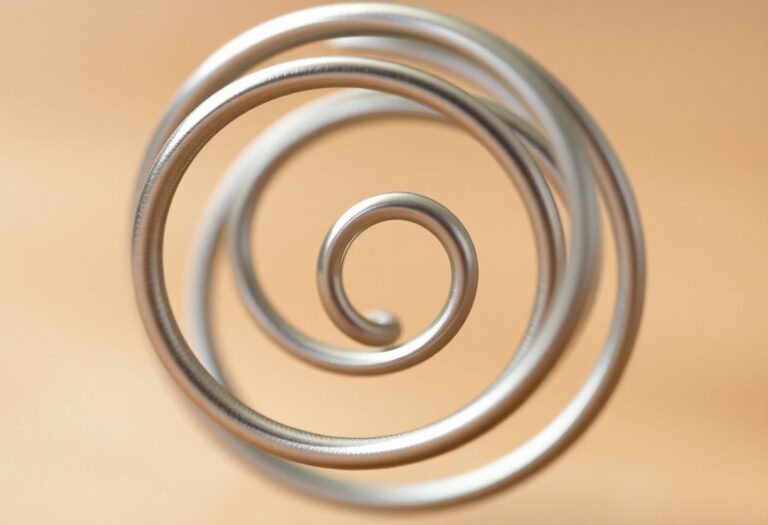
Coiled springs: More common in smaller clocks, a tightly wound spring slowly uncoils, releasing its stored energy to power the clock.
Both methods provide a relatively constant force over time, ensuring steady and reliable operation.
The Escapement: Bridging Pendulum and Clockwork
The escapement is the unsung hero of the pendulum clock, serving as the critical link between the pendulum's oscillations and the timekeeping mechanism. This ingenious device performs two essential functions:
- It allows the clock's gears to advance in discrete, controlled steps.
- It provides small, regular impulses to the pendulum, sustaining its motion.
One of the most common and effective designs is the anchor escapement, developed in the 17th century. Its operation is a marvel of precision engineering:
- An anchor-shaped piece, connected to the pendulum, rocks back and forth with each swing.
- This anchor engages with a toothed wheel called the escape wheel.
- As the pendulum swings, the anchor alternately catches and releases the escape wheel's teeth.
- Each release allows the escape wheel to rotate slightly, advancing the clock's timekeeping.
- Simultaneously, this action imparts a small push to the anchor, which in turn gives energy to the pendulum.
This intricate dance creates the characteristic "tick-tock" sound we associate with pendulum clocks. The escapement's design is crucial for accuracy, as it must balance the need to provide energy to the pendulum with the goal of minimizing interference with its natural motion.
The Gear Train: Counting the Moments
Once the escapement allows the escape wheel to rotate in precise increments, this motion is transmitted through a series of gears known as the gear train. This system serves to reduce the rotational speed, translating the rapid oscillations of the pendulum into the slower movements we observe on the clock face.
Typically, the final gear in this train rotates once per hour and is directly connected to the clock's minute hand. Additional gearing further reduces this speed to drive the hour hand at 1/12 the rate of the minute hand. Some more complex clocks incorporate additional complications, such as date displays, moon phase indicators, or even astronomical functions, all driven by this same gear train.
The precise ratios of these gears are carefully calculated to ensure accurate timekeeping. For example, if a pendulum has a period of two seconds (one second per swing), the escape wheel might have 30 teeth. This would result in the escape wheel making one complete rotation every 60 seconds, perfectly aligned with our sexagesimal time system.
Refining Precision: The Evolution of Pendulum Clocks
Since Christiaan Huygens constructed the first practical pendulum clock in 1656, clockmakers have continuously refined their designs in pursuit of ever-greater accuracy. This relentless quest for precision has led to numerous innovations and improvements.
Compensating for Nature's Variables
One of the primary challenges faced by early pendulum clock makers was the effect of temperature changes on the pendulum's length. As temperature fluctuates, the pendulum rod expands or contracts, altering its effective length and thus its period. Several ingenious solutions were developed to address this issue:
-
Mercury pendulums: These clever designs used a column of mercury enclosed in a glass vial as the bob. As the pendulum rod lengthened due to heat, the mercury would expand upwards, maintaining the pendulum's center of mass at a constant position.
-
Gridiron pendulums: Invented by John Harrison (of marine chronometer fame), this design used rods of different metals with opposing thermal expansion properties. By carefully calculating the lengths and arrangements of these rods, the overall thermal expansion could be effectively cancelled out.
-
Invar pendulums: Developed in the early 20th century, Invar is a nickel-steel alloy with an exceptionally low coefficient of thermal expansion. Pendulums made from this material are far less susceptible to temperature-induced variations.
Escapement Innovations
The quest for accuracy also drove continual refinement of the escapement mechanism:
-
The deadbeat escapement: Invented by George Graham in 1715, this improvement on the anchor escapement reduced the recoil of the escape wheel, resulting in more consistent energy transfer and improved timekeeping.
-
The grasshopper escapement: Developed by John Harrison for his marine chronometers, this unique design offered very low friction and didn't require lubrication, making it ideal for long-term accuracy.
The Pinnacle of Pendulum Precision
By the early 20th century, the most accurate pendulum clocks, such as the Shortt-Synchronome clock, could achieve astonishing precision, keeping time to within a few seconds per year. These marvels of engineering often incorporated:
- Temperature and pressure-controlled environments to minimize external influences
- Multiple pendulums (one for timekeeping, one for providing impulses) to reduce interference
- Electrical rather than mechanical impulses to the pendulum for more consistent energy transfer
The Shortt-Synchronome clock, in particular, was so accurate that it was used as a primary time standard in many astronomical observatories until the advent of quartz clocks in the 1940s.
The Decline and Enduring Legacy of Pendulum Clocks
Despite their remarkable accuracy and the ingenuity of their design, pendulum clocks have inherent limitations that eventually led to their displacement as precision timekeepers:
-
Sensitivity to movement: The reliance on gravity means that pendulum clocks must remain stationary to function correctly, making them unsuitable for mobile applications.
-
Gravity dependence: Since the pendulum's period is influenced by the strength of gravity, these clocks will run at slightly different rates at different altitudes or latitudes.
-
Regular maintenance: Most pendulum clocks require manual winding at regular intervals to replenish their energy source.
These limitations, combined with the development of more accurate and convenient timekeeping technologies like quartz and atomic clocks, led to the decline of pendulum clocks as precision timekeepers by the mid-20th century.
However, the legacy of pendulum clocks extends far beyond their role as timekeepers. Their development spurred advances in physics, engineering, and precision manufacturing that have had far-reaching impacts. The quest for accurate pendulum clocks drove improvements in metallurgy, bearing design, and our understanding of thermal expansion. The precise gears required for these clocks laid the groundwork for the development of other complex mechanisms and machines.
Moreover, pendulum clocks played a crucial role in the standardization of time, which was essential for the development of modern transportation and communication systems. The ability to keep accurate time over long periods was vital for navigation, particularly for determining longitude at sea, a problem that plagued mariners for centuries.
Conclusion: The Enduring Fascination of Mechanical Timekeeping
Today, as we check the time on our smartphones or atomic clock-synchronized devices, it's easy to take precise timekeeping for granted. Yet the gentle swing of a pendulum and the rhythmic tick-tock of a mechanical clock continue to captivate us. Pendulum clocks represent a perfect synthesis of science, engineering, and artistry – functional sculptures that mark the passage of time with grace and precision.
These marvels of mechanical engineering remind us of an era when the measurement of time itself was a grand challenge, tackled with ingenuity and persistence. In their steady, reliable motion, we can observe a microcosm of the cosmic rhythms that govern our universe, translated into a scale we can appreciate and understand.
The story of the pendulum clock is, in many ways, a reflection of human progress itself – a tale of observation, theory, experimentation, and refinement. It demonstrates how even complex problems can often be solved with elegant, simple principles, given enough time and dedication.
While they may no longer be at the cutting edge of timekeeping technology, pendulum clocks continue to be produced, collected, and cherished. They serve not only as beautiful decorative pieces but as tangible links to our horological heritage. In an age of digital ephemera, there's something profoundly satisfying about a timepiece that can continue to mark the hours with nothing more than the force of gravity and the ingenuity of its design.
So the next time you encounter a pendulum clock, take a moment to appreciate the centuries of innovation encapsulated in its steady rhythm. Listen to its tick-tock, watch the hypnotic swing of its pendulum, and marvel at the intricate dance of gears and levers within. In doing so, you're not just observing a timekeeper – you're witnessing a testament to human ingenuity and our timeless fascination with measuring the passage of time.