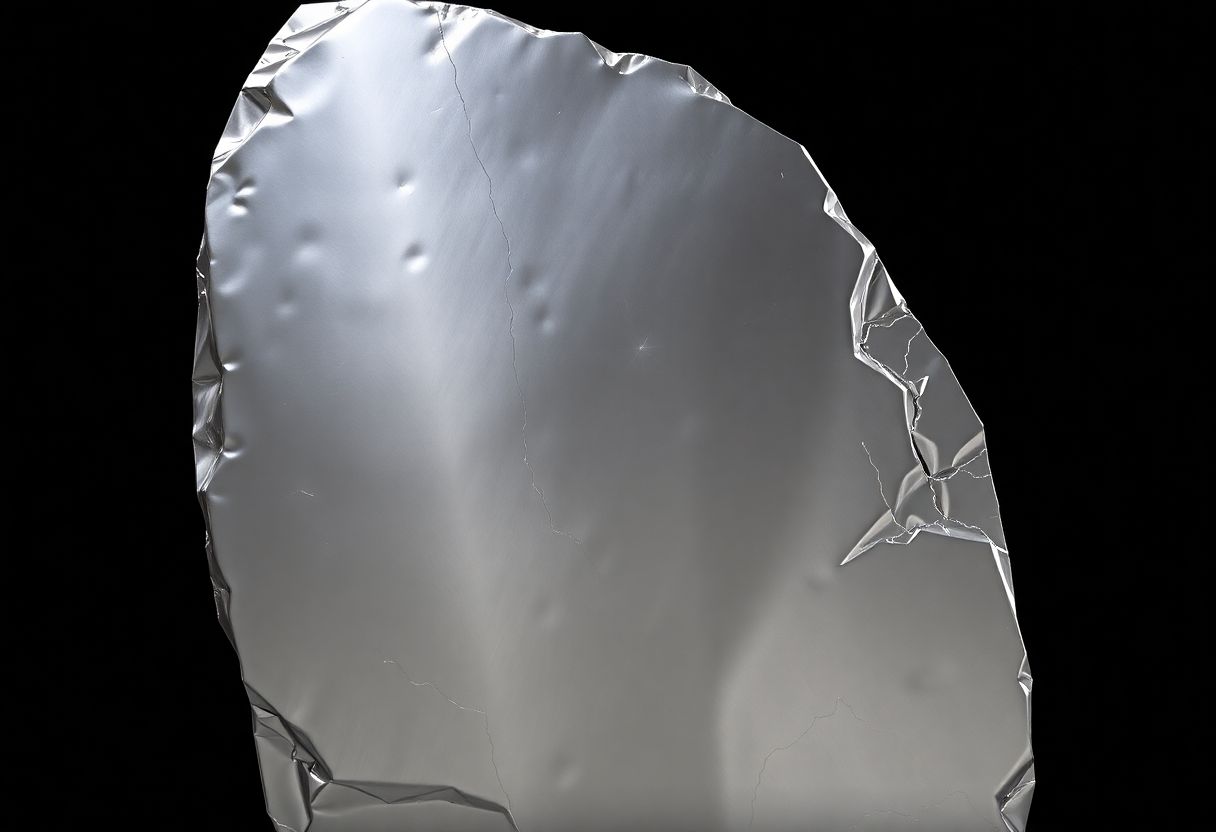
The Titan of Metals: Unveiling the Wonders of Titanium
Imagine a metal as strong as steel but weighing only half as much, impervious to rust, and capable of withstanding extreme temperatures. This isn't the stuff of science fiction—it's titanium, a remarkable element that has revolutionized industries from aerospace to medicine. Named after the Titans of Greek mythology, titanium truly lives up to its powerful namesake. In this comprehensive exploration, we'll delve deep into the world of titanium, uncovering its properties, applications, and the fascinating science that makes this versatile metal so extraordinary.
The Marvels of Titanium: An Overview
Titanium has earned its reputation as a wonder metal through a unique combination of properties that make it invaluable across countless applications. Its exceptional strength-to-weight ratio stands out as perhaps its most celebrated attribute – titanium is as strong as steel but astonishingly 45% lighter. This characteristic alone has made it the material of choice for aerospace engineers seeking to maximize aircraft performance while minimizing fuel consumption.
But titanium's benefits extend far beyond its impressive strength-to-weight ratio. The metal exhibits remarkable corrosion resistance, forming a protective oxide layer when exposed to air that renders it virtually immune to rust and degradation in harsh environments. This self-healing property allows titanium components to maintain their integrity for decades, even when subjected to saltwater, acids, or other corrosive substances.
Titanium also distinguishes itself through its heat resistance, maintaining its strength at temperatures that would compromise many other metals. This thermal stability, combined with a relatively low coefficient of thermal expansion, makes titanium ideal for applications involving extreme temperature fluctuations or sustained high-heat exposure.
Perhaps most intriguingly, titanium possesses a high degree of biocompatibility. It's non-toxic and well-tolerated by the human body, allowing for its extensive use in medical implants and prosthetics. The metal's ability to osseointegrate – to fuse directly with bone tissue – has revolutionized orthopedic and dental procedures, providing patients with durable, long-lasting solutions.
The Science Behind Titanium's Extraordinary Properties
To truly appreciate titanium's capabilities, we must examine its atomic structure and the quantum mechanics that govern its behavior. Titanium (Ti) occupies the 22nd position on the periodic table, situated in the transition metal series. Its atomic structure, with 22 protons and 22 electrons, gives rise to a partially filled d-orbital in its electron configuration: [Ar] 3d² 4s².
This electronic arrangement is key to understanding titanium's remarkable strength and reactivity. The partially filled d-orbital allows titanium atoms to form strong metallic bonds with neighboring atoms, contributing to the metal's high tensile strength and elevated melting point of 1660°C (3020°F). The d-orbital electrons also participate in covalent bonding when titanium forms compounds, explaining the metal's diverse chemistry and ability to form stable oxides.
Titanium's corrosion resistance, one of its most valuable traits, stems from its rapid formation of a protective oxide layer. When exposed to oxygen, titanium quickly develops a thin, adherent film of titanium dioxide (TiO₂) on its surface. This layer, measuring just a few nanometers in thickness, acts as a barrier, preventing further oxidation and protecting the underlying metal. The oxide film is remarkably stable and self-healing; if damaged, it will quickly reform in the presence of oxygen.
Dr. Melissa Thompson, a materials scientist at MIT, describes this phenomenon eloquently: "Titanium's oxide layer is like a self-repairing suit of armor, constantly renewing itself to protect the metal from corrosion. This unique property is what allows titanium to remain pristine in environments that would rapidly degrade other metals."
Titanium in Aerospace: Pushing the Boundaries of Flight
The aerospace industry has long been at the forefront of titanium utilization, leveraging the metal's exceptional properties to create lighter, faster, and more efficient aircraft. The now-retired Concorde supersonic airliner stands as perhaps the most iconic example of titanium's capabilities in this field.
Flying at twice the speed of sound (Mach 2), the Concorde's skin would heat up to over 100°C (212°F) during flight. Titanium's ability to withstand these temperatures while maintaining structural integrity was crucial to the aircraft's design and operation. The Concorde's skin could stretch up to 25 cm (10 inches) during flight due to heat expansion, a testament to titanium's thermal stability and elasticity.
In modern aircraft design, titanium continues to play a vital role. The Boeing 787 Dreamliner, for instance, incorporates titanium alloys in approximately 15% of its structure. This extensive use of titanium allows for significant weight reduction compared to traditional aluminum designs, translating directly into improved fuel efficiency and range.
The Airbus A350 XWB similarly relies on titanium for critical components such as landing gear assemblies and engine pylons. These parts must withstand enormous stresses and temperature variations, making titanium the ideal material choice.
Dr. James Chen, an aerospace engineer at NASA's Langley Research Center, emphasizes titanium's importance: "In the pursuit of more efficient and environmentally friendly aircraft, titanium is indispensable. Its use allows us to push the boundaries of aircraft performance while simultaneously reducing fuel consumption and emissions."
Titanium in Medicine: Transforming Patient Care
Titanium's impact on medical science has been nothing short of revolutionary. Its biocompatibility – the ability to coexist with living tissue without adverse effects – has opened up new frontiers in implant technology and surgical techniques.
The science of osseointegration lies at the heart of titanium's success in orthopedic and dental implants. When a titanium implant is placed in bone, the body's osteoblasts (bone-forming cells) attach directly to the titanium surface. Over time, new bone grows around and into the implant, creating a strong, permanent bond. This process, first discovered by Swedish orthopedic surgeon Per-Ingvar Brånemark in the 1950s, has transformed the field of implantology.
Dr. Sarah Lewis, an orthopedic surgeon at Johns Hopkins Hospital, explains: "Titanium doesn't just replace bone—it becomes a part of it, creating a living interface between metal and tissue. This integration allows for implants that can last a lifetime, dramatically improving patients' quality of life."
Beyond orthopedics, titanium finds applications in a wide range of medical devices:
- Cardiovascular implants, such as artificial heart valves and pacemaker casings
- Neurosurgical plates and mesh for skull reconstruction
- Surgical instruments, prized for their strength and ability to hold a sharp edge
The metal's low magnetic susceptibility also makes it compatible with magnetic resonance imaging (MRI) scans, an important consideration for long-term implants.
Titanium in Everyday Life: More Than Just Industrial Applications
While aerospace and medicine might be titanium's most high-profile domains, this versatile metal touches our lives in many other ways, often unnoticed. Its unique properties make it ideal for a variety of consumer and architectural applications.
In eyewear, titanium frames offer unparalleled durability and comfort. Their lightweight nature reduces pressure on the nose and ears, while their strength resists bending and breaking. Titanium's hypoallergenic properties also make it an excellent choice for those with sensitive skin or metal allergies.
The jewelry industry has embraced titanium for its strength, light weight, and resistance to tarnishing. Titanium rings, in particular, have gained popularity for their modern aesthetic and durability. The metal can be anodized to produce vibrant colors, allowing for creative designs that maintain their luster over time.
In the world of sports, titanium has found its way into high-performance equipment. Golf club heads made from titanium alloys allow for larger sweet spots without increasing weight, helping players achieve greater distances. Bicycle frames benefit from titanium's strength-to-weight ratio and vibration-damping properties, providing a responsive yet comfortable ride.
Architecture has also been transformed by titanium's unique qualities. The Guggenheim Museum Bilbao in Spain, designed by Frank Gehry, features a striking exterior clad in titanium panels. The metal's ability to change appearance under different lighting conditions creates a dynamic, ever-changing façade that has become an iconic landmark.
The Chemistry of Titanium: From Ore to Pure Metal
The production of pure titanium is a complex and energy-intensive process, reflecting the metal's strong affinity for oxygen. The most common method for producing titanium metal is the Kroll process, named after its inventor, William Kroll.
The process begins with titanium-containing ore, typically ilmenite (FeTiO₃) or rutile (TiO₂). This ore is first converted to titanium tetrachloride (TiCl₄) through a chlorination process:
TiO₂ + 2Cl₂ + C → TiCl₄ + CO₂
The titanium tetrachloride is then reduced with magnesium at high temperatures (800-850°C) in an inert argon atmosphere:
TiCl₄ + 2Mg → Ti + 2MgCl₂
This reaction produces a porous mass of titanium metal known as titanium sponge, along with magnesium chloride. The sponge is purified through vacuum distillation to remove any remaining magnesium and magnesium chloride. Finally, the purified titanium sponge is melted in a vacuum arc furnace to produce ingots of pure titanium metal.
While effective, the Kroll process is energy-intensive and expensive, contributing to titanium's higher cost compared to metals like steel or aluminum. This has led researchers to explore alternative production methods that could make titanium more economically viable for a broader range of applications.
Dr. Derek Fray, a materials scientist at the University of Cambridge, has been at the forefront of developing new titanium production techniques. His team's work on the FFC Cambridge process, an electrochemical method for directly reducing titanium dioxide to titanium metal, shows promise for more efficient and cost-effective production. "Our goal is to make titanium as common and affordable as aluminum," Dr. Fray explains. "This could open up entirely new markets for titanium, from automotive components to consumer electronics."
Titanium Alloys: Enhancing Performance Through Metallurgy
While pure titanium offers impressive properties, alloying it with other elements can further enhance its performance for specific applications. Titanium alloys are classified into three main categories based on their microstructure: alpha alloys, beta alloys, and alpha-beta alloys.
The most widely used titanium alloy is Ti-6Al-4V, an alpha-beta alloy containing 6% aluminum and 4% vanadium. This alloy offers an excellent balance of strength, toughness, and corrosion resistance, making it the go-to choice for aerospace and biomedical applications. The aluminum adds strength and reduces density, while vanadium helps stabilize the beta phase, improving formability.
Beta titanium alloys, containing elements like molybdenum, vanadium, or chromium, offer improved formability and heat treatment capabilities. These alloys can achieve higher strengths than alpha-beta alloys and are often used in aerospace applications requiring high strength and good fatigue resistance.
A particularly fascinating titanium alloy is Nitinol, a nickel-titanium alloy with shape memory and superelastic properties. When deformed, Nitinol can return to its original shape upon heating or, in its superelastic form, immediately spring back to shape after deformation. These unique properties have found applications in medical devices, such as stents and orthodontic wires, as well as in actuators and sensors.
Dr. Julie Anderson, a metallurgist at the Colorado School of Mines, emphasizes the importance of ongoing alloy development: "As we continue to push the boundaries of material performance, titanium alloys offer a fertile ground for innovation. By fine-tuning composition and processing, we can create alloys tailored to specific applications, opening up new possibilities in fields from aerospace to energy production."
Environmental Considerations and Sustainability
While titanium offers numerous benefits in terms of performance and longevity, its production does raise environmental considerations. The energy-intensive nature of the Kroll process contributes to a significant carbon footprint for titanium production. Additionally, the mining of titanium ores can have local environmental impacts, including habitat disruption and potential water pollution.
However, it's crucial to consider these impacts in the context of titanium's entire lifecycle. The metal's exceptional durability and corrosion resistance mean that products made from titanium tend to have very long lifespans, reducing the need for replacement and potentially offsetting some of the production impacts over time. Moreover, titanium is 100% recyclable, although the recycling process itself is complex and energy-intensive.
The aerospace industry, one of the largest consumers of titanium, has been at the forefront of developing closed-loop recycling systems for titanium scrap. Boeing, for instance, has implemented programs to recycle titanium shavings and offcuts from manufacturing processes, significantly reducing waste and the need for virgin material.
Dr. Elena Rodriguez, an environmental engineer specializing in life cycle assessment, offers a nuanced perspective: "When evaluating titanium's environmental impact, we must consider its entire lifecycle. While production is energy-intensive, the metal's longevity and recyclability can lead to net positive outcomes in many applications, particularly when it replaces materials with shorter lifespans or enables more efficient technologies."
The Future of Titanium: Innovations on the Horizon
As research into titanium continues, new applications and improvements are constantly emerging, promising to expand the metal's already impressive range of uses.
Titanium foams, ultra-lightweight materials with a porous structure, are being developed for aerospace and biomedical applications. These materials could revolutionize orthopedic implants by providing a structure that more closely mimics natural bone, promoting better integration and reducing the risk of implant failure.
In the field of energy storage, titanium-based materials are showing promise for next-generation batteries. Titanium dioxide nanotubes, for instance, are being investigated as a potential anode material for lithium-ion batteries, offering the possibility of faster charging times and increased energy density.
Perhaps most intriguingly, titanium is finding its way into the realm of quantum computing. Researchers have demonstrated that titanium atoms embedded in silicon carbide can act as qubits – the basic units of quantum information. This discovery could pave the way for more robust and scalable quantum processors, potentially accelerating the development of practical quantum computers.
Dr. Yuki Tanaka, a quantum physicist at the University of Tokyo, expresses excitement about these developments: "Titanium's unique electronic properties make it a fascinating candidate for quantum applications. As we explore new ways to manipulate and control quantum states, titanium-based systems could play a crucial role in realizing the promise of quantum computing."
Conclusion: The Enduring Legacy of Titanium
From the depths of the ocean to the edges of space, from the human body to the buildings that shape our skylines, titanium continues to push the boundaries of what's possible in material science. Its unparalleled combination of strength, lightness, and corrosion resistance makes it indispensable in countless applications, and ongoing research promises to unlock even more potential.
As we look to the future, titanium will undoubtedly play a crucial role in addressing global challenges – from more efficient transportation to advanced medical treatments, from sustainable energy production to next-generation computing. The story of titanium is far from over; in many ways, it's just beginning.
This remarkable metal, named after mythological giants, continues to stand tall in the world of materials science, a true titan among elements. As we continue to unlock its secrets and harness its potential, titanium will remain at the forefront of technological innovation, shaping the world around us in ways both seen and unseen. The age of titanium is not just upon us – it's here to stay, promising a future of lighter, stronger, and more durable technologies that will help us tackle the challenges of the 21st century and beyond.