The Fascinating World of Teflon: Exploring the Look and Science of Nonstick Pans
Introduction: The Culinary Magic of Nonstick Surfaces
Picture this: You're in your kitchen on a lazy Sunday morning, ready to whip up the perfect omelet. As you crack eggs into your favorite pan, you can already envision the delicate folds of perfectly cooked egg sliding effortlessly onto your plate. No sticking, no mess, just culinary perfection. This everyday kitchen magic is brought to you by a remarkable substance known as Teflon, the brand name for polytetrafluoroethylene (PTFE). But what exactly does Teflon look like, and how does it perform its nonstick wizardry? Let's embark on an in-depth exploration of the fascinating world of Teflon and nonstick cookware.
The Visual Landscape of Teflon
At first glance, a Teflon-coated pan presents a distinct and easily recognizable appearance. The surface is typically a smooth, dark gray or black color that exudes an air of sleekness and modernity. This coloration is not merely aesthetic; it's a result of the unique properties of the Teflon coating. The darkness of the surface helps to evenly distribute heat across the pan, while its smooth texture is the first visual clue to its nonstick capabilities.
When you run your fingers across a Teflon-coated surface, you'll notice it feels remarkably slick, almost silky to the touch. This tactile sensation is a direct result of Teflon's molecular structure, which we'll delve into later. The surface often has a subtle, satin-like finish rather than a high gloss, which contributes to its understated elegance in the kitchen.
One of the most striking visual characteristics of a Teflon coating is its uniformity. When properly applied, the coating appears even and consistent across the entire cooking surface of the pan. This uniformity is crucial for ensuring that the nonstick properties are maintained across the entire cooking area.
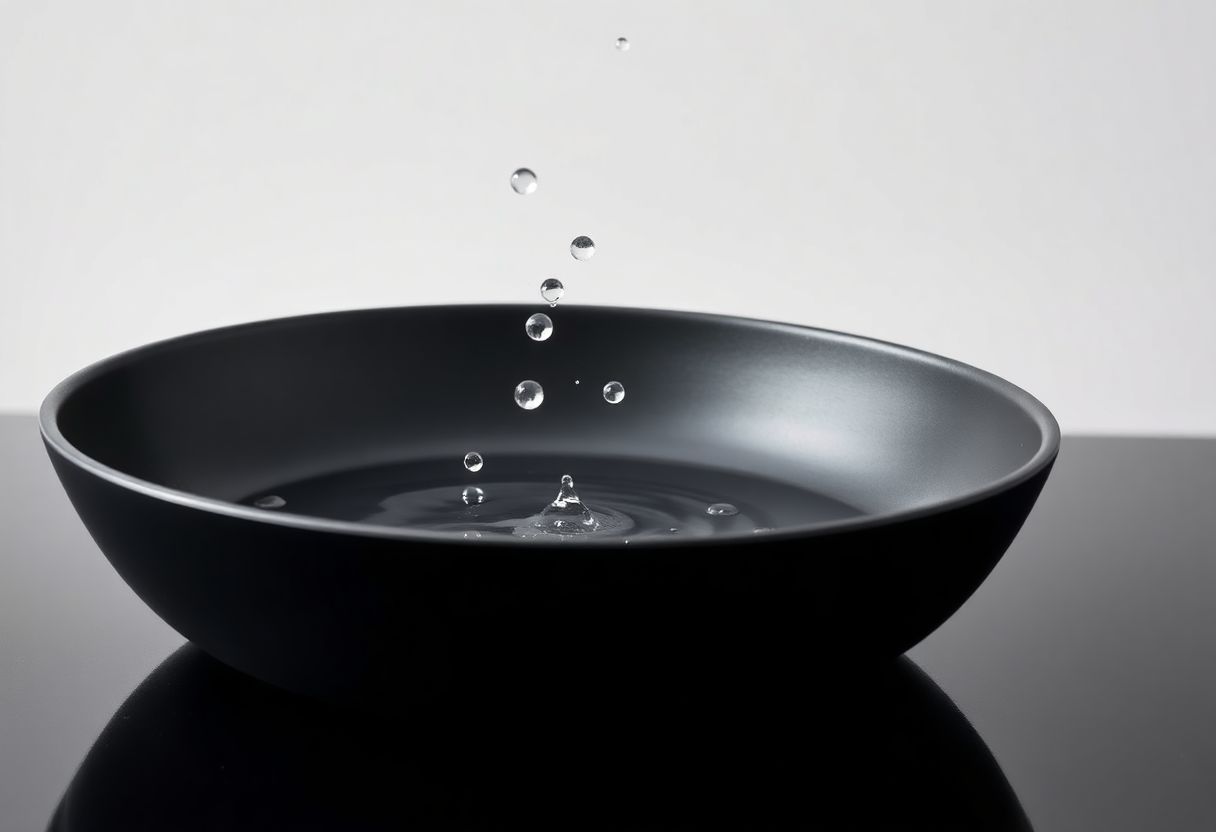
To truly appreciate the unique visual properties of Teflon, consider conducting a simple experiment. Take a Teflon-coated pan and tilt it slightly. Now, pour a small amount of water onto the surface. You'll observe something remarkable: instead of spreading out as it would on most surfaces, the water forms into distinct droplets that easily glide around the pan. This behavior is not just visually intriguing; it's a powerful demonstration of Teflon's exceptional nonstick properties at work.
The Science Behind Teflon's Appearance
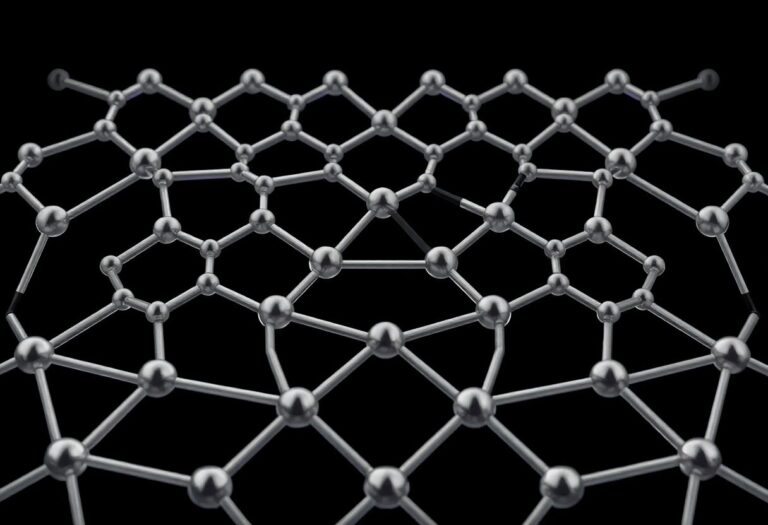
To understand why Teflon looks and behaves the way it does, we need to dive deep into its molecular structure. Teflon is composed of long chains of carbon atoms, with each carbon atom bonded to two fluorine atoms. This creates a molecule that resembles a smooth, uniform rod at the microscopic level.
When these rod-like molecules are packed together, they form a surface with incredibly low friction. Imagine a bunch of tiny, slippery logs lined up side by side – this is analogous to how Teflon molecules arrange themselves, creating a surface that's incredibly smooth at the microscopic level.
This molecular arrangement is the key to Teflon's unique appearance and behavior. The fluorine atoms surrounding the carbon chain create a surface that repels almost everything it comes into contact with. This is why water beads up so dramatically on Teflon surfaces, and why food slides off so easily during cooking.
The smoothness of Teflon at the molecular level is truly remarkable. According to research published in the journal "Langmuir" by scientists at the Max Planck Institute for Polymer Research, the surface of PTFE (Teflon) is so smooth that it can repel liquids and even tiny particles with unprecedented efficiency. The researchers found that the contact angle of water droplets on a PTFE surface can exceed 160 degrees, which is close to the theoretical maximum of 180 degrees for a completely non-wetting surface.
Comparing Teflon to Other Cooking Surfaces
To better appreciate Teflon's unique appearance and properties, it's instructive to compare it to other common cooking surfaces:
Stainless Steel: In contrast to Teflon's dark, matte surface, stainless steel presents a shiny, reflective appearance. While smooth, it lacks the slippery feel of Teflon. When water is poured on stainless steel, it tends to spread out rather than bead up, illustrating the difference in surface energy between the two materials.
Cast Iron: Cast iron cookware typically has a dark, slightly rough surface. It can feel somewhat grainy or porous to the touch, especially when unseasoned. While properly seasoned cast iron does have some nonstick properties, water tends to bead up less dramatically than on Teflon.
Copper: Copper cookware is known for its distinctive reddish-orange color and bright sheen. Like stainless steel, it's smooth but not slippery, and water behaves similarly on its surface, spreading out rather than beading.
Ceramic: Ceramic cookware often features a white or light-colored surface that can be quite glossy. While some ceramic coatings are designed to be nonstick, they generally don't achieve the same level of slickness as Teflon. Water may bead up more than on metal surfaces, but less than on Teflon.
These comparisons highlight how unique Teflon's appearance and surface properties are in the world of cookware. Its combination of a dark, uniform surface with exceptional nonstick properties sets it apart from traditional cooking materials.
The Fascinating History of Teflon: From Accidental Discovery to Kitchen Essential
The story of Teflon's discovery is a classic tale of scientific serendipity that rivals the accidental discoveries of penicillin or X-rays. In 1938, a young chemist named Roy Plunkett was working for DuPont, tasked with developing new refrigerants. Plunkett was experimenting with tetrafluoroethylene (TFE) gas, which he stored in small cylinders and cooled with dry ice.
One day, Plunkett and his assistant discovered that one of the TFE cylinders no longer released gas when its valve was opened. Curiously, the cylinder had maintained its weight, suggesting that the gas had not escaped. Intrigued, Plunkett cut open the cylinder and found it coated with a strange, slippery, white substance.
This waxy material turned out to be polytetrafluoroethylene (PTFE), formed when the TFE gas had spontaneously polymerized. Plunkett quickly recognized the potential of this new substance, which exhibited remarkable properties: it was extremely slippery, chemically inert, and had a high melting point.
DuPont patented this new material in 1941 and registered the Teflon trademark in 1944. Initially, Teflon found applications in industrial and military settings due to its unique properties. It was used in the Manhattan Project during World War II to coat valves and seals in pipes holding highly reactive uranium hexafluoride.
It wasn't until the 1950s that Teflon began its journey into the kitchen. French engineer Marc Grégoire, inspired by his wife Colette, successfully bonded PTFE to aluminum, creating the first nonstick cookware. This led to the creation of the Tefal company (known as T-fal in North America) in 1956, which began producing nonstick pans for the European market.
In the United States, Marion Trozzolo introduced "The Happy Pan," the first U.S.-made Teflon-coated frying pan, in 1961. The product was an instant success, revolutionizing home cooking and setting the stage for the widespread adoption of nonstick cookware in kitchens around the world.
The Art and Science of Applying Teflon to Cookware
The process of creating a Teflon-coated pan is a fascinating blend of chemistry and engineering. It involves several carefully controlled steps to ensure the Teflon adheres properly to the cookware and provides its signature nonstick properties:
-
Surface Preparation: The journey begins with the base metal of the pan, typically aluminum or stainless steel. The surface of the metal is roughened through a process called grit blasting. This creates a multitude of tiny "anchors" or irregularities on the metal surface, which will help the Teflon coating grip more securely.
-
Primer Application: A primer layer is then applied to the roughened metal surface. This primer serves as a crucial intermediary between the metal and the Teflon coating, enhancing adhesion and durability. The primer often contains materials that are compatible with both the metal substrate and the Teflon coating.
-
Teflon Application: The star of the show, the Teflon coating itself, is then sprayed onto the primed surface. This is typically done in multiple layers to ensure complete coverage and optimal nonstick performance. The Teflon is applied in a liquid form, containing PTFE particles suspended in a carrier liquid.
-
Curing Process: After application, the pan undergoes a high-temperature curing process. The cookware is baked at temperatures around 800°F (427°C). This heat serves multiple purposes:
- It evaporates the carrier liquid, leaving behind the PTFE particles.
- It causes the PTFE particles to melt and flow, creating a smooth, continuous surface.
- It bonds the Teflon firmly to the primer and the metal substrate.
This curing process is critical in achieving the smooth, dark surface we associate with nonstick cookware. The high temperature also contributes to the durability of the coating, helping it withstand the rigors of everyday cooking.
Recent advancements in coating technology have led to the development of multi-layer systems. For example, some high-end nonstick cookware may have three layers: a primer for adhesion, a middle layer for durability, and a top layer optimized for release properties. These sophisticated coating systems can significantly enhance the performance and longevity of the nonstick surface.
It's worth noting that the exact details of Teflon application processes are often closely guarded trade secrets. Different manufacturers may have proprietary techniques to enhance durability, improve nonstick properties, or achieve specific aesthetic effects.
The Microscopic Marvels of Teflon
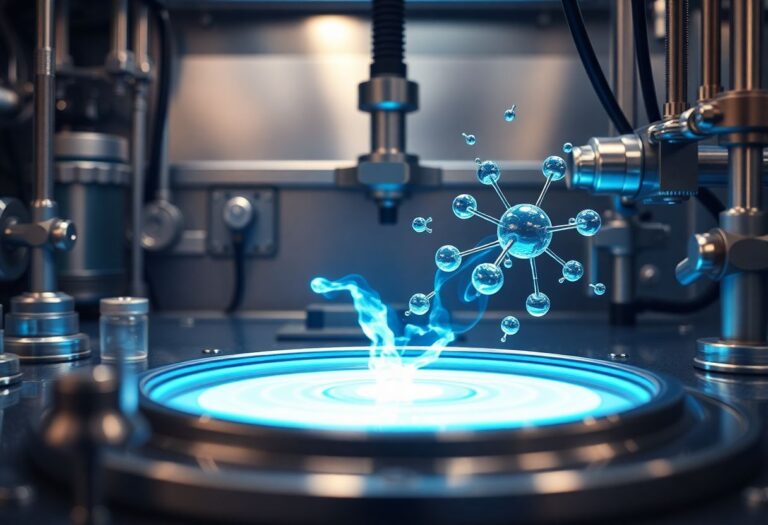
To truly understand why Teflon looks and behaves the way it does, we need to zoom in to the molecular level. If we could examine a Teflon surface with an electron microscope, we'd discover a fascinating world that explains its unique properties:
At this microscopic scale, the surface of Teflon is incredibly smooth. Unlike many other materials that appear smooth to the naked eye but reveal a landscape of peaks and valleys under magnification, Teflon maintains its smoothness even at the molecular level. This extreme smoothness means there are very few irregularities for food particles or liquids to cling to.
The secret to this smoothness lies in Teflon's molecular structure. Each carbon atom in the PTFE molecule is bonded to two fluorine atoms. Fluorine is highly electronegative, meaning it strongly attracts electrons. This creates a powerful shield around the carbon backbone of the molecule.
When these molecules are packed together to form a surface, the result is a sea of fluorine atoms creating an almost impenetrable barrier. This fluorine-rich surface repels nearly everything – water, oil, and even other chemicals slide right off.
To visualize this, imagine a perfectly waxed car on a rainy day. Water beads up and rolls off the surface with ease. Now, imagine this effect amplified many times over at the molecular level – that's similar to how most substances interact with Teflon.
This molecular structure also explains why Teflon has such low friction. The fluorine atoms create a smooth, uniform surface with very little for other materials to "grab" onto. It's as if the molecular world is trying to ice skate on a surface so slippery that it can barely maintain contact.
Research published in the journal "Nature Materials" by scientists at the University of Manchester has shed further light on Teflon's unique properties at the nanoscale. Using advanced imaging techniques, they found that liquids on a PTFE surface can form a layer just one molecule thick, which slides across the surface with virtually no friction. This phenomenon, known as "superlubricity," helps explain why Teflon is so exceptionally slippery and nonstick.
Teflon's Unique Properties: More Than Just Nonstick
While Teflon's nonstick capabilities are its most famous attribute, its unique molecular structure endows it with several other remarkable properties:
-
Heat Resistance: Teflon can withstand temperatures up to about 500°F (260°C) without degrading. This high heat resistance is due to the strong carbon-fluorine bonds in the PTFE molecule, which require significant energy to break.
-
Chemical Inertness: The fluorine shield that makes Teflon nonstick also makes it highly resistant to chemical reactions. This is why Teflon-coated cookware doesn't react with acidic foods and why Teflon is used in chemical storage and handling equipment.
-
Low Friction: The same properties that make food slide easily off a Teflon pan also give it one of the lowest coefficients of friction of any solid. This makes it valuable in applications ranging from bearings and gears to windshield wipers.
-
Hydrophobic and Oleophobic: Teflon repels both water (hydrophobic) and oil (oleophobic), a rare combination that makes it useful in waterproof, breathable fabrics and stain-resistant coatings.
-
Electrical Insulation: The strong carbon-fluorine bonds in PTFE also make it an excellent electrical insulator, leading to its use in the production of cables and connector assemblies in the electronics industry.
These properties combine to make Teflon a versatile material with applications far beyond the kitchen, from industrial machinery to space exploration.
Beyond the Kitchen: Teflon's Wide-Ranging Applications
While our focus has been on nonstick cookware, Teflon's unique appearance and properties make it valuable in a surprising array of applications:
In the world of fashion and textiles, Teflon is used to create water-resistant and stain-resistant fabrics. The next time you see rain beading up on a jacket or spills sliding off a tablecloth, you might be witnessing Teflon at work.
In industrial settings, Teflon's low friction and chemical resistance make it ideal for bearings, seals, and gaskets in machinery. Its ability to perform in extreme conditions has even led to its use in space exploration equipment.
The construction industry has found innovative uses for Teflon as well. The roof of the O2 Arena in London, for example, is coated with Teflon-coated glass fiber fabric. This creates a durable, weather-resistant surface that's also translucent, allowing natural light to filter into the structure.
In the medical field, Teflon's nonstick and biocompatible properties have proven invaluable. It's used as a coating for catheters, making them easier to insert and remove. Teflon is also used in some artificial body parts, where its low friction properties can reduce wear and extend the life of the implant.
These diverse applications showcase how Teflon's unique surface properties – its smoothness, chemical inertness, and low friction – continue to find new and innovative uses across various industries.
The Lifespan of Teflon Coatings: Understanding Wear and Tear
While Teflon coatings are remarkably durable, they're not indestructible. Over time, the appearance and performance of Teflon-coated pans can change:
The smooth, dark surface may become scratched or worn, especially if metal utensils are used. These scratches not only affect the pan's appearance but can also compromise its nonstick properties.
As the coating wears, its nonstick capabilities may gradually diminish. You might notice food starting to stick in certain areas of the pan, particularly where the coating has been damaged.
The color of the coating might fade or become uneven over time. This can be due to normal wear and tear, but it can also result from overheating or the use of harsh cleaning methods.
In some cases, particularly with lower-quality or older cookware, the Teflon coating may begin to peel or flake. This is a clear sign that the pan has reached the end of its useful life and should be replaced.
These changes are visual indicators that the Teflon coating is degrading. While a well-cared-for Teflon-coated pan can last for years, it's important to monitor its condition and replace it when necessary to maintain food safety and cooking performance.
Caring for Teflon-Coated Cookware: Preserving Appearance and Function
To maintain the sleek appearance and nonstick functionality of Teflon-coated pans, proper care is essential:
Use wooden, silicone, or nylon utensils instead of metal to avoid scratching the surface. Even small scratches can accumulate over time and affect the pan's performance.
Clean your Teflon-coated cookware with soft sponges or cloths, avoiding abrasive scrubbers that can damage the coating. Mild dish soap and warm water are usually sufficient for cleaning; avoid harsh detergents or scouring powders.
When storing Teflon-coated pans, consider placing a soft cloth or paper towel between them to prevent scratching or chipping. If you're stacking your pans, be mindful of how they nest together to