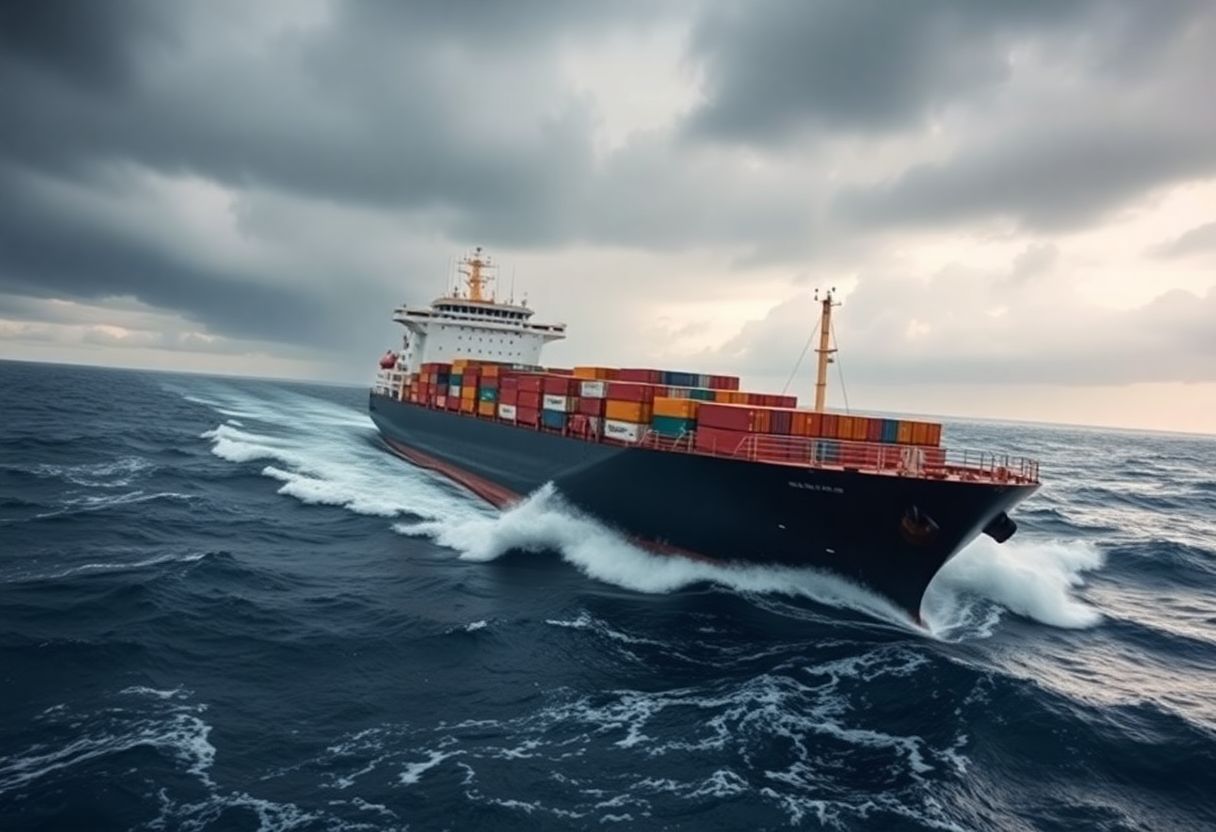
The Marvels of Maritime Engineering: How Ships Conquer the Seas
In the vast tapestry of human innovation, few achievements rival the ingenuity and impact of maritime technology. Ships, those magnificent vessels that traverse our planet's waterways, embody centuries of scientific progress and engineering prowess. From ancient wooden boats to modern mega-carriers, the evolution of maritime vessels tells a story of human perseverance, scientific discovery, and technological advancement. In this comprehensive exploration, we'll dive deep into the fascinating world of ships, unraveling the complex principles that keep them afloat, propel them across oceans, and navigate the world's waters with precision.
The Foundations of Flotation: Buoyancy and Beyond
At the heart of every ship's ability to stay afloat lies the fundamental principle of buoyancy. This concept, first articulated by the ancient Greek polymath Archimedes, forms the bedrock of maritime engineering. Archimedes' Principle states that an object immersed in a fluid experiences an upward force equal to the weight of the fluid it displaces. This upward force, known as buoyant force or upthrust, is what keeps ships from sinking into the depths.
To understand how massive steel behemoths can float on water, we must consider the interplay between weight, volume, and density. While it might seem counterintuitive that a ship made of dense materials like steel can float, the secret lies in its design. Ships are engineered with large hollow spaces, effectively reducing their overall density to less than that of water. This principle explains why a solid steel ball would sink, but a steel ship of the same weight, with its hollow interior, would float.
The concept of displacement is crucial in ship design. Naval architects meticulously calculate the volume of water a ship will displace when fully loaded. This displacement must generate enough buoyant force to counteract the ship's total weight. The shape of a ship's hull is carefully engineered to maximize buoyancy while minimizing water resistance, a delicate balance that affects both flotation and efficiency.
Propulsion: From Wind to Nuclear Power
The methods by which ships move through water have undergone a remarkable evolution. Ancient mariners relied solely on wind power, using sails to harness the energy of prevailing winds. While sailing ships still exist today, primarily for recreational purposes, modern commercial and military vessels employ a variety of sophisticated propulsion systems.
The most common propulsion method in modern ships is the engine-powered propeller. Large diesel engines or gas turbines drive massive propellers, pushing water backward to propel the ship forward. These engines can generate enormous power; for instance, the largest container ships boast engines producing over 100,000 horsepower, capable of moving vessels weighing hundreds of thousands of tons.
In recent years, environmental concerns have spurred innovation in ship propulsion. Liquefied Natural Gas (LNG) is gaining popularity as a cleaner alternative to traditional marine fuels. Some cutting-edge designs incorporate electric propulsion systems, often in hybrid configurations with conventional engines. These systems can significantly reduce emissions, especially in port areas where air quality is a concern.
Perhaps the most powerful propulsion system used in ships is nuclear power. While primarily limited to military vessels and some specialized civilian ships like icebreakers, nuclear propulsion offers unparalleled endurance. Nuclear-powered ships can operate for years without refueling, a significant advantage for vessels that need to remain at sea for extended periods.
Navigation: Charting a Course Through the Digital Age
The art and science of navigation have undergone a revolutionary transformation in recent decades. While traditional methods using celestial navigation and paper charts are still taught and sometimes used as backups, modern ships rely heavily on a suite of advanced electronic systems.
Global Positioning System (GPS) technology forms the backbone of contemporary maritime navigation. GPS receivers on ships can determine their position with remarkable accuracy, often within a few meters. This positional data is integrated with Electronic Chart Display and Information Systems (ECDIS), which have largely replaced traditional paper charts. ECDIS provides real-time information about the ship's position, surrounding waters, and potential hazards.
Radar systems play a crucial role in navigation, especially in conditions of poor visibility. Modern marine radar can detect objects at distances of several nautical miles, helping ships avoid collisions with other vessels, landmasses, or icebergs. Additionally, Automatic Identification System (AIS) technology allows ships to broadcast their position, course, and speed to other vessels, enhancing situational awareness and safety at sea.
Sonar technology, while more commonly associated with submarine warfare, also plays a vital role in commercial shipping. Echo sounders use sonar to measure water depth, crucial for navigating in shallow waters or when approaching port. Some advanced systems can even create detailed maps of the seafloor, aiding in safe navigation and underwater resource exploration.
Stability: The Delicate Balance of Forces
Keeping a ship upright and stable is a complex interplay of forces that naval architects must carefully consider. The stability of a ship depends on the relationship between its center of gravity (the point where the ship's weight is concentrated) and its center of buoyancy (the point where the upward buoyant force acts).
A key concept in ship stability is the metacenter, a theoretical point that determines whether a ship will right itself when tilted. If the metacenter is above the center of gravity, the ship will tend to return to an upright position when disturbed. Naval architects design ships to ensure this condition is met under various loading conditions.
Ballast systems play a crucial role in maintaining ship stability. These systems allow the ship to take on or discharge water to adjust its draft, trim, and stability. In modern ships, ballast water is carefully managed not only for stability but also to prevent the spread of invasive aquatic species between different ecosystems.
The importance of stability cannot be overstated. History is replete with examples of ships that capsized due to stability issues, often with tragic consequences. The disaster of the MS Estonia in 1994, which claimed over 850 lives, highlighted the critical nature of maintaining stability in rough seas and led to significant changes in maritime safety regulations.
Types of Ships: A Diverse Fleet for Every Need
The world's oceans are plied by a diverse array of vessels, each designed for specific purposes. Understanding this variety provides insight into the breadth of maritime engineering and the global economic importance of shipping.
Cargo ships form the backbone of international trade. Container ships, capable of carrying thousands of standardized containers, have revolutionized global commerce. The largest of these, such as the OOCL Hong Kong, can carry over 21,000 twenty-foot equivalent units (TEUs). Bulk carriers transport unpackaged cargo like grain, coal, or ore, while tankers move vast quantities of liquids such as oil or chemicals.
Passenger ships range from small ferries to enormous cruise ships. The largest cruise ships, like Royal Caribbean's Oasis-class vessels, are floating cities, carrying over 6,000 passengers and 2,000 crew members. These ships are marvels of engineering, incorporating advanced stabilization systems for passenger comfort and extensive safety features.
Military vessels represent some of the most technologically advanced ships afloat. Aircraft carriers, the centerpiece of many naval fleets, are essentially floating airbases, capable of projecting air power across the globe. Submarines, operating in the three-dimensional environment beneath the waves, incorporate some of the most sophisticated propulsion, navigation, and weapons systems ever developed.
Specialized ships serve unique roles in maritime operations. Icebreakers, with reinforced hulls and powerful engines, can forge paths through Arctic and Antarctic ice. Research vessels carry advanced scientific equipment to study the oceans and climate. Offshore drilling platforms, while not typically mobile, are remarkable feats of maritime engineering, capable of extracting oil and gas from deep beneath the ocean floor.
Environmental Considerations: Navigating Towards Sustainability
The shipping industry, while vital to global trade, faces significant environmental challenges. Maritime transport accounts for about 3% of global greenhouse gas emissions, a figure that could rise without intervention. In response, the industry is exploring various technologies and practices to reduce its environmental impact.
Fuel efficiency is a primary focus. Ship designers are developing more streamlined hull shapes and energy-efficient engines to reduce fuel consumption. Some ships now use exhaust gas cleaning systems, or "scrubbers," to reduce sulfur emissions in compliance with new international regulations.
Alternative fuels are gaining traction. Liquefied Natural Gas (LNG) is increasingly used as a cleaner alternative to heavy fuel oil. Some ships are being designed to use hydrogen fuel cells or advanced biofuels. Electric and hybrid propulsion systems, while still in their infancy for large ocean-going vessels, show promise for reducing emissions, especially in port areas.
Ballast water management is another critical environmental concern. Ships take on and discharge massive amounts of ballast water to maintain stability, potentially transporting invasive species across oceans. New regulations require ships to treat ballast water before discharge, spurring the development of various treatment technologies.
The concept of "slow steaming," where ships operate at reduced speeds to save fuel, has gained popularity. This practice not only reduces emissions but can also lead to significant cost savings for shipping companies.
Safety at Sea: Lessons Learned and Technologies Applied
Maritime safety has improved dramatically over the past century, driven by technological advances and lessons learned from past tragedies. The sinking of the Titanic in 1912 led to the creation of the International Convention for the Safety of Life at Sea (SOLAS), which continues to evolve and set global standards for maritime safety.
Modern ships are equipped with an array of life-saving equipment. Lifeboats and life rafts are designed to launch quickly and safely, even in rough seas. Personal flotation devices have become more effective and comfortable. Fire safety systems on ships include advanced detection and suppression technologies, crucial given the potential for fires in the confined spaces of a ship.
Weather monitoring and forecasting capabilities have greatly enhanced maritime safety. Ships now have access to real-time weather data and can adjust their routes to avoid dangerous conditions. Satellite communication systems ensure that ships can maintain contact with shore-based support and summon help in emergencies.
The implementation of the Global Maritime Distress and Safety System (GMDSS) has revolutionized emergency communications at sea. This system ensures that a ship in distress can quickly alert rescue authorities and nearby vessels, greatly improving the chances of a successful rescue operation.
The Future of Shipping: Innovations on the Horizon
As we look to the future, the maritime industry stands on the brink of transformative changes. Autonomous ships, once the stuff of science fiction, are becoming a reality. Companies and research institutions are developing self-navigating vessels that could revolutionize maritime transport, potentially improving safety and efficiency while reducing crew costs.
The push for environmental sustainability is driving innovation in green technologies. Research into zero-emission vessels is advancing, with projects exploring the use of hydrogen fuel cells, advanced battery systems, and even wind-assisted propulsion using modern interpretations of sails.
The concept of "smart ships" is gaining traction, with vessels increasingly integrating artificial intelligence and Internet of Things (IoT) technologies. These systems can optimize route planning, predict maintenance needs, and improve overall operational efficiency.
3D printing technology could transform shipboard operations, allowing for the on-demand manufacturing of spare parts. This could significantly reduce the need for ships to carry extensive inventories of replacement components, saving space and improving flexibility.
Conclusion: The Enduring Legacy of Maritime Innovation
From the humble rafts of our ancestors to the technological marvels that ply the seas today, ships have played an indispensable role in human history. They have connected continents, facilitated trade, enabled scientific discovery, and shaped the course of nations. The principles that allow these vessels to float, move, and navigate are a testament to human ingenuity and our ever-expanding understanding of the natural world.
As we face global challenges like climate change and resource management, the maritime industry continues to evolve and adapt. The ships of tomorrow will likely be cleaner, more efficient, and more automated than ever before. Yet, they will still rely on the fundamental principles of buoyancy, propulsion, and navigation that have guided vessels for millennia.
The story of ships is, in many ways, the story of human progress itself. It is a narrative of overcoming natural barriers, of harnessing the power of wind and waves, and of pushing the boundaries of what is possible. As we look to the future, ships will undoubtedly continue to play a crucial role in our global society, connecting us, sustaining us, and carrying us forward into new frontiers of exploration and discovery.