The Magic of Regenerative Braking: How Tesla is Revolutionizing Energy Efficiency
In the world of electric vehicles, few technologies have made as significant an impact as regenerative braking. At the forefront of this innovation stands Tesla, a company that has not only embraced this technology but has refined it to new heights. This article delves deep into the fascinating world of regenerative braking, exploring its principles, implementation, and the profound impact it's having on the future of sustainable transportation.
Understanding the Basics: Energy in Motion
To truly appreciate the genius of regenerative braking, we must first understand the fundamental concept of kinetic energy. In physics, kinetic energy is the energy possessed by an object due to its motion. The faster an object moves, the more kinetic energy it has. In the context of a moving vehicle, this energy is substantial.
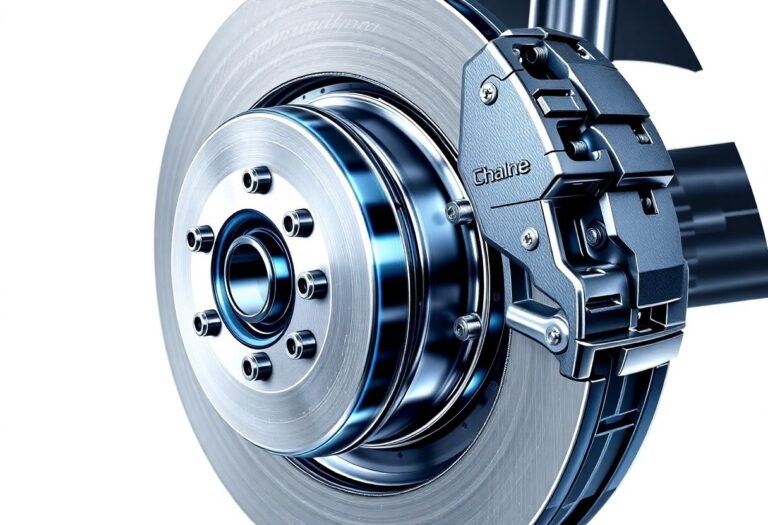
Traditionally, when a driver applies the brakes, all of this kinetic energy is converted into heat through friction. The brake pads clamp down on the rotors, creating resistance that slows the car down. This process effectively wastes all the energy that was used to get the car moving in the first place. It's here that regenerative braking offers a revolutionary solution, providing a way to recapture and reuse this previously lost energy.
The Tesla Approach: Turning Motors into Generators
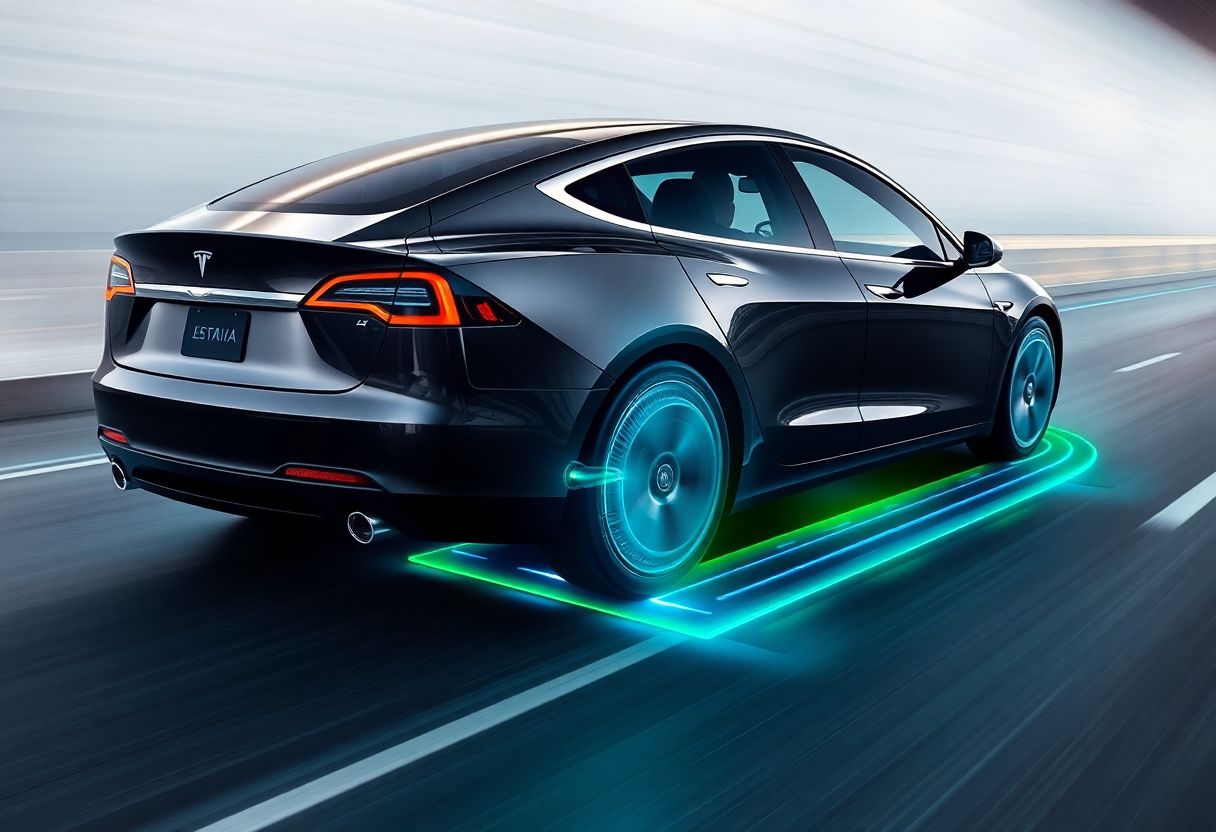
Tesla's implementation of regenerative braking is a marvel of engineering that transforms the electric motors in their vehicles into generators when the car is decelerating. This process is both elegant and efficient:
When a Tesla is moving forward, electricity flows from the battery to the electric motors, turning the wheels and propelling the car. However, as soon as the driver lifts their foot off the accelerator pedal, the system switches gears. The electric motors that were just powering the wheels now start working in reverse. The momentum of the car continues to turn the wheels, which in turn spin the motor.
As the motor spins backwards, it acts as a generator, producing electricity. This newly generated electricity is then fed back into the car's battery pack, effectively recharging it. The process of generating electricity creates resistance, which slows the car down – much like traditional brakes, but without the friction and wasted energy.
The Science Behind the Magic: Electromagnetic Induction
At the heart of regenerative braking lies the principle of electromagnetic induction, discovered by Michael Faraday in the 19th century. An electric motor is composed of magnets and coils of wire. When electricity flows through these coils, it creates a magnetic field that turns the motor. In regenerative braking, this process is reversed.
The spinning of the motor (driven by the car's momentum) moves the magnets past the coils. This movement of magnets near the coils induces an electric current in the wires, following Faraday's law of induction. This induced current is the electricity that gets fed back into the battery. It's the same principle used in power plants to generate electricity, just on a smaller scale and in reverse!
Benefits of Regenerative Braking in Tesla Vehicles
The advantages of regenerative braking are numerous and significant:
Increased Efficiency: By recapturing energy that would otherwise be lost, regenerative braking substantially increases the overall efficiency of the vehicle. This translates directly to extended range on a single charge. Studies have shown that regenerative braking can recapture between 60% to 70% of the kinetic energy that would otherwise be lost in braking, extending a Tesla's range by 10-15% or more, depending on driving conditions.
Reduced Brake Wear: Since much of the braking is done through the electric motors, there's significantly less wear and tear on the traditional brake components. This results in lower maintenance costs and longer-lasting brakes. In fact, many Tesla owners report that their brake pads last well over 100,000 miles, compared to the typical 50,000 miles for conventional vehicles.
Improved Driving Experience: Tesla has fine-tuned their regenerative braking system to provide a smooth, consistent deceleration that many drivers find intuitive and enjoyable. In many situations, drivers can use a single-pedal driving technique, rarely needing to use the brake pedal. This not only simplifies the driving experience but also increases overall efficiency by maximizing the use of regenerative braking.
Environmental Impact: By increasing efficiency and reducing the need for replacement brake components, regenerative braking contributes significantly to the overall environmental benefits of electric vehicles. Less brake pad wear means fewer particulates released into the atmosphere, and the increased efficiency translates to less energy consumption overall.
Tesla's Implementation: One-Pedal Driving and Customization
Tesla has taken regenerative braking to the next level by integrating it seamlessly into the driving experience. One of the most notable features is one-pedal driving. In most situations, Tesla drivers can control the speed of their car using just the accelerator pedal. Pressing down makes the car go faster, while lifting off slows it down through regenerative braking.
Moreover, Tesla allows drivers to adjust the strength of the regenerative braking effect. Some drivers prefer a stronger effect for maximum energy recapture and one-pedal driving, while others might choose a milder setting that feels more like a traditional car. This customization ensures that the driving experience can be tailored to individual preferences while still maximizing efficiency.
The system also intelligently adapts to different conditions. For instance, it can automatically reduce the regenerative braking effect in slippery conditions to prevent unexpected loss of traction. Furthermore, when using Tesla's navigation system, the car can predictively adjust regenerative braking based on upcoming turns or stops, maximizing efficiency even further.
Real-World Impact: Energy Savings in Tesla Vehicles
The impact of regenerative braking on a Tesla's efficiency is substantial and measurable. While the exact amount of energy recaptured varies based on driving conditions, terrain, and driving style, real-world data suggests significant benefits.
In urban environments with frequent stops, regenerative braking can recapture up to 70% of the kinetic energy that would otherwise be lost. This translates to tangible benefits in terms of extended range and reduced energy consumption. In stop-and-go traffic or hilly terrain, where traditional cars are at their least efficient, Teslas can significantly reduce their energy consumption through regenerative braking.
To put this into perspective, let's consider a typical urban commute. Without regenerative braking, a 20-mile city drive might require 6 kWh of energy. With regenerative braking, the same drive might only use 4.5 kWh – a 25% reduction in energy consumption. Over the course of a year, this could translate to thousands of kilowatt-hours saved, reducing both the environmental impact and the cost of charging.
Challenges and Future Developments
While regenerative braking offers numerous benefits, it's not without its challenges. The system is less effective at very low speeds, which is why Teslas still include traditional friction brakes. Additionally, if the battery is fully charged, it can't accept the energy from regenerative braking, reducing its effectiveness. Cold weather can also impact the battery's ability to accept charge, limiting regenerative braking in certain conditions.
However, Tesla continues to innovate and improve this technology. Future developments may include even more efficient energy recapture systems, advanced predictive algorithms using AI and machine learning to optimize regenerative braking based on traffic patterns and road conditions, and further integration with other vehicle systems for even greater efficiency gains.
Conclusion: Regenerative Braking as a Key to Sustainable Transportation
Regenerative braking represents more than just a clever feature in Tesla vehicles – it's a fundamental shift in how we think about energy use in transportation. By recapturing energy that was once lost, we're not just making cars more efficient; we're taking a significant step towards a more sustainable future.
As Tesla continues to refine and improve this technology, regenerative braking serves as a perfect example of how innovative engineering can address some of our most pressing environmental challenges. It's a reminder that sometimes, the most powerful solutions come not from grand, sweeping changes, but from rethinking the basic principles of how our everyday technologies work.
The next time you see a Tesla silently gliding to a stop at a traffic light, remember: it's not just slowing down – it's actively recapturing energy, pushing the boundaries of efficiency, and helping to drive us towards a cleaner, greener future. This technology, once the stuff of science fiction, is now a daily reality, thanks to the innovative spirit of companies like Tesla and the endless possibilities of electric vehicle technology.