The Marvels of Modern Elevation: How Elevators Work
Have you ever wondered about the ingenious technology that whisks you effortlessly up dozens of floors in mere seconds? As a science and technology enthusiast, I find elevators to be one of the most fascinating yet underappreciated marvels of modern engineering. These vertical transportation systems have revolutionized architecture and urban living, enabling the development of skyscrapers and fundamentally changing how we navigate tall buildings. In this comprehensive guide, we'll explore the intricate mechanics, clever physics, and cutting-edge innovations behind elevator technology.
The Core Components: Anatomy of an Elevator
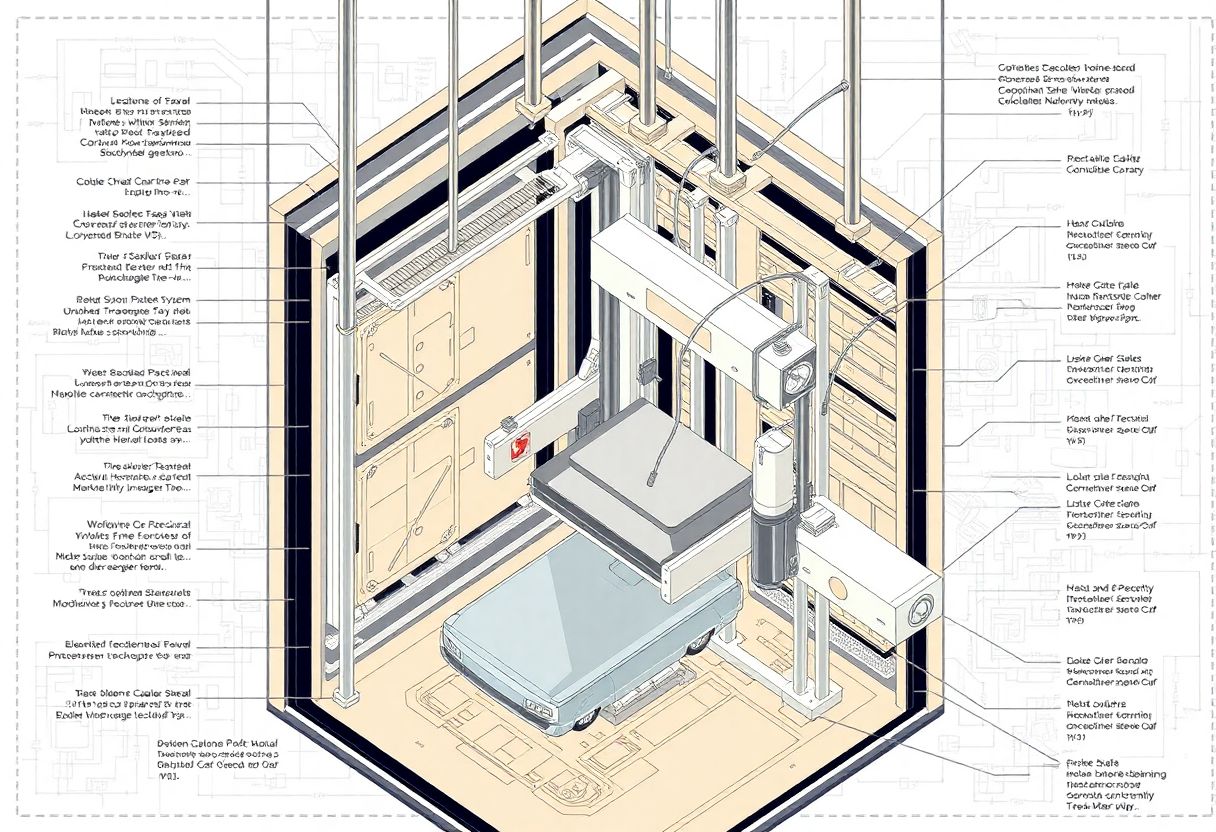
At its heart, an elevator consists of several key components working in harmony. The most visible part is the car – the enclosed compartment that passengers ride in. But it's the hidden elements that truly make the magic happen. A complex hoisting system of steel cables, pulleys, and an electric motor provides the lifting force. Counterweights, typically weighing about as much as the car when it's 40-50% full, balance the load and improve energy efficiency. Guide rails keep the car perfectly aligned as it travels up and down the shaft.
Perhaps most crucial is the sophisticated control system – the brains of the operation. This computerized marvel manages every aspect of the elevator's movement, from responding to passenger requests to ensuring smooth acceleration and precise stops at each floor. Finally, a host of safety devices stand ready to prevent accidents, forming multiple layers of protection for passengers.
Physics in Action: The Science of Vertical Transport
From a physics perspective, elevators are essentially machines that manipulate gravitational potential energy. As the car ascends, it gains potential energy due to its increased height relative to the ground. The electric motor must perform work to overcome gravity and friction, converting electrical energy into the mechanical energy of motion.
This is where the genius of the counterweight system comes into play. By using a weight that balances out most of the car's mass, the motor's workload is dramatically reduced. It only needs to overcome the difference in weight between the car and the counterweight, plus any passengers or cargo. This clever design not only conserves energy but also allows for smoother acceleration and deceleration.
The hoisting system typically employs a traction sheave – a grooved wheel that the cables pass over. Friction between the cables and the sheave grooves provides the gripping force. When the motor turns the sheave, the cables move, raising or lowering the car. This setup allows for excellent control over the elevator's movement.
Traction vs. Hydraulic: Two Paths to Ascension
While the traction elevator system described above is most common in tall buildings, there's another type worth exploring: hydraulic elevators. Instead of cables and counterweights, these use a hydraulic ram to push the car up. A powerful pump forces oil into a cylinder, extending a piston that lifts the elevator.
Hydraulic systems excel in low to mid-rise buildings, offering simpler mechanics and lower initial costs. However, they're less energy-efficient for taller structures. Traction elevators, with their cable-based design, can reach much greater heights and speeds, making them the go-to choice for skyscrapers.
Safety First: The Mechanisms Keeping Passengers Secure
The safety features in modern elevators are nothing short of extraordinary. Multiple redundant systems work together to prevent accidents and protect passengers in even the most unlikely scenarios.
The safety brake, invented by Elisha Graves Otis in 1852, remains a fundamental component. This ingenious device uses spring-loaded clamps attached to the car. If the hoisting cables were to fail, the springs would push the clamps outward, gripping the guide rails and stopping the car from falling. This invention was so revolutionary that it essentially launched the entire skyscraper era by making people feel safe in tall buildings.
Another critical safety element is the speed governor. This precision instrument constantly monitors the elevator's velocity. If the car begins moving too fast – perhaps due to a malfunction – the governor triggers the braking system. It can cut power to the motor, activate mechanical brakes, or both, bringing the elevator to a controlled stop.
Modern elevators also employ multiple cables, each individually capable of supporting the full weight of a loaded car. This redundancy ensures that even if one cable were to fail, the others would keep passengers safe. At the bottom of the shaft, robust buffer systems provide a last line of defense, ready to cushion the car in the extremely unlikely event of an uncontrolled descent.
The Brains of the Operation: Control Systems and Algorithms
The control systems in today's elevators are marvels of computer engineering. They manage every aspect of operation, from processing passenger requests to optimizing energy usage. In tall buildings with multiple elevators, sophisticated algorithms work to minimize wait times and maximize efficiency.
These elevator algorithms are fascinating examples of applied mathematics and computer science. They can predict and respond to traffic patterns, sometimes even learning and improving their performance over time through artificial intelligence. For instance, they might recognize that the ground floor gets busier around lunchtime and preemptively send cars there to reduce waiting.
Some of the most advanced systems use "destination dispatch" technology. Instead of simply pressing up or down, passengers enter their desired floor on a keypad in the lobby. The system then groups people going to nearby floors into the same elevator, reducing stops and improving overall efficiency.
From Steam Power to Smart Tech: The Evolution of Elevators
The history of elevator technology is a testament to human ingenuity. Early elevators in the 1800s were manually operated, often pulled by ropes. The introduction of steam power in the mid-19th century made them more practical, but it was the advent of electric elevators in the 1880s that truly revolutionized the technology.
The 20th century saw a cascade of innovations: push-button controls, automatic doors, and increasingly sophisticated safety features. By the turn of the millennium, computerized control systems and destination dispatch were pushing the boundaries of what elevators could do.
Today, we're on the cusp of even more exciting developments. Ropeless elevator systems using magnetic levitation technology promise to revolutionize building design, allowing cars to move both vertically and horizontally. Some companies are developing elevators that can generate electricity as they descend, feeding power back into the building's electrical grid. Ultra-high-speed elevators, capable of traveling at more than 20 meters per second, are being installed in the world's tallest skyscrapers.
Beyond Transportation: The Broader Impact of Elevators
It's hard to overstate the impact elevators have had on our world. They've enabled the construction of skyscrapers, fundamentally altering urban skylines and allowing cities to grow vertically instead of just spreading outward. This has transformed urban planning, land use, and even social dynamics in high-rise living.
Elevators have also played a crucial role in improving accessibility. For people with mobility challenges, they've opened up opportunities and spaces that were previously inaccessible. In many ways, the elevator has been a great equalizer, allowing everyone to access the upper floors of buildings with ease.
The Future Ascends: Innovations on the Horizon
As a science enthusiast, I'm thrilled by the potential innovations in elevator technology. Ropeless systems using linear motors and magnetic levitation could transform how we think about building design. Imagine elevators that can move sideways as well as up and down, allowing for incredible architectural possibilities.
Energy efficiency is another exciting frontier. Some companies are developing systems that can recover and store the energy generated by descending elevators, much like regenerative braking in electric cars. Others are exploring ways to make the entire elevator system more sustainable, from the materials used in construction to the power sources that drive them.
The integration of elevators with smart building systems and the Internet of Things (IoT) is also promising. Elevators could communicate with other building systems to optimize energy usage, predict maintenance needs before problems occur, and even interact with personal devices to provide a seamless user experience.
As buildings continue to reach new heights, elevator technology will need to keep pace. Engineers are already working on systems capable of traveling over 1000 meters vertically, presenting unique challenges in terms of cable strength, air pressure changes, and passenger comfort.
Conclusion: Elevating Our Understanding
From their humble beginnings to today's high-tech marvels, elevators have become an indispensable part of our vertical world. They represent a perfect fusion of basic physics principles and cutting-edge technology, safely and efficiently transporting millions of people every day.
As we've explored, the seemingly simple act of moving between floors involves an intricate dance of mechanical, electrical, and computer systems. From the clever use of counterweights to the sophisticated algorithms managing traffic flow, every aspect of elevator design is optimized for safety, efficiency, and performance.
The next time you step into an elevator, take a moment to appreciate the engineering marvel you're experiencing. Feel the smooth acceleration, listen to the precise movements, and consider the complex systems working behind the scenes to give you a seamless ride. In many ways, elevators are a microcosm of human technological achievement – constantly evolving, innovating, and pushing the boundaries of what's possible.
As we look to the future, elevators will undoubtedly continue to play a crucial role in shaping our urban environments and architectural ambitions. With ongoing advancements in materials science, energy technology, and computer systems, the potential for innovation seems limitless. One thing is certain: as our buildings reach ever greater heights, the humble elevator will be there to take us to the top, one floor at a time.